
The boteco — Rio's corner bar, explained
What is a boteco and how do you order at one?
A boteco is a casual, usually open-front corner bar serving cold draft beer and small snacks, often standing or at a shared table. Most run a tab — you're handed a card (comanda) when you sit down, everything you order gets marked on it, and you settle the full bill at the end rather than paying per round.
A boteco is the default, everyday version of going out in Rio — cheap, unticketed, and open from lunch through late at night. This guide covers how to actually order at one: the tab system, what to drink and eat, the unwritten etiquette, and named spots worth seeking out.
| What | Open-front corner bar, chopp and shared petiscos |
| Cost | Around R$60-100/person for an evening |
| Payment | Tab (comanda) settled at the end, not per round |
| When | Late morning through well past midnight |
| Booking | None — walk in and take a table or the counter |
Where the format comes from
Botecos trace back to small general stores and taverns that sold a mix of dry goods and drink, gradually shedding the retail side over the 20th century to become the food-and-drink-only format seen today. That retail-store ancestry still shows in some of the oldest surviving botecos, which keep a slightly old-fashioned, wood-counter-and-shelving look rather than the more designed interiors of newer bars.
The format spread and standardised alongside Rio’s own growth as a working city — a boteco near a factory, office district, or dockside neighbourhood served the practical function of a fast, cheap, reliable stop between work and home, which is part of why the tab-and-settle-later system exists: it kept service quick for a crowd coming in and out on tight lunch breaks, rather than requiring a full payment transaction at every single round.
More than a bar — a daily institution
A boteco is not a bar in the nightlife sense; it’s a neighbourhood fixture that opens at lunchtime, fills up after work, and stays open into the night, serving the same regulars a cold chopp and a plate of fried snacks on repeat. Every neighbourhood in Rio has one — often several — and reading a boteco correctly (how to order, how the tab works, what not to expect) matters more for a good night than picking the “best” one, because the good ones are mostly good for the same reasons: cold beer served properly, food cooked fresh, and a crowd that’s mostly local.
Boteco versus botequim — same word, mostly
You’ll see both boteco and botequim used, often interchangeably; botequim is the slightly more formal, older term, while boteco is the everyday word most cariocas actually use. Neither implies a fixed size or level of polish — some are a handful of stools around a counter with no seating at all, others run to a full dining room with table service, and a few blur into what would elsewhere be called a proper restaurant while keeping the boteco pricing and informality. What unifies the category isn’t decor, it’s the format: a cold-beer-and-shared-snacks model, an open or semi-open storefront, and a crowd that treats the place as a regular stop rather than a destination booked in advance.
The tab system — the thing that trips visitors up
At most botecos, nobody pays as they go. When you sit down, a server hands you a small card or notepad (a comanda), and every order — beer, snacks, a second round — gets written or scanned onto it. You keep the card until you’re ready to leave, hand it back, and pay the full total at once. Losing the card is a real problem: some botecos charge a flat penalty fee (often around R$30-50) if you can’t produce it, on the assumption you might be trying to walk out on an unpaid tab. Keep it on the table, not in a pocket, and don’t leave it behind.
A 10% service charge (taxa de serviço, sometimes called couvert) is usually added automatically to the final bill — it’s technically optional to pay but customary, and staff don’t expect anything further on top. Full context on tipping generally is at Tipping in Brazil, and the mechanics of a typical order-to-payment flow are broken down step by step at How to order in a boteco.
Chopp: how it’s actually served
Chopp (draft lager, pronounced roughly “shop-y”) is the default boteco drink, and it’s served in small glasses — usually 300ml — specifically so it doesn’t have time to go warm or flat before you finish it. Ordering a large glass “to save trips” is a rookie move locals don’t make; a good boteco will refill your small glass constantly rather than sell you one big one. A well-run chopp tap is judged on its collar of foam (colarinho) — a proper pour has a thick, tight head, not a thin film. Expect to pay roughly R$8-14 (US$1.50-2.50) per small glass.
Petiscos — the food that makes it a meal
Petiscos are the shared, deep-fried bar snacks that turn a couple of chopps into an actual dinner. The staples worth knowing by name: bolinho de bacalhau (salt-cod fritters), isca de peixe (battered, fried strips of white fish),** torresmo** (crispy fried pork skin),** pastel** (a thin-pastry pocket, usually cheese or meat filled — see Street food in Rio for more on this one), and batata frita (fries, almost always available as a safe fallback). Most botecos price these R$25-50 per plate, meant for two or three people to share, not one person alone — ordering two or three different petiscos across a table is the normal way to eat here, not one main dish each.
a bar and food tour with a local guide is the fastest way to get a working list of petiscos worth ordering without guessing off a menu in Portuguese on night one.
Etiquette that isn’t written down anywhere
A few unwritten habits are worth knowing. Splitting the bill among a group is normal and expected to be done evenly at the end, not itemised per person — nobody at a boteco table tracks who ordered what round by round. Standing at the counter rather than taking a table is completely normal, especially at lunchtime or for a quick single round, and doesn’t carry the “waiting for a table” connotation it might elsewhere.
Getting a server’s attention is done by eye contact or a raised hand, not by calling out loudly across the room, though a friendly “moço” (to a male server) or “moça” (to a female server) works if eye contact isn’t landing. Finally, lingering is expected, not rushed — nobody will bring the bill unprompted the way some restaurants do elsewhere; you ask for it (“a conta, por favor”) when you’re actually ready to leave, which can be hours after you sat down without anyone hurrying you along.
Named botecos worth seeking out
Bar Luiz, in Centro Histórico, has run since 1927 and keeps a German-leaning menu (sausages, cold cuts) alongside the standard petiscos — one of the oldest continuously operating botecos in the city, and a genuinely different flavour of old Rio from the beachfront strip. Amarelinho, on the Cinelândia square facing the Theatro Municipal, is a classic outdoor boteco good for people-watching before or after a show — see Theatro Municipal guide.
Bar Urca, in Urca, is famous less for the food than for where you eat it: regulars buy a chopp and a petisco inside, then sit on the seawall outside facing Guanabara Bay for sunset — arrive by late afternoon, it fills up fast on a clear evening. Jobi, in Leblon, has been serving the same crowd since the 1950s and is a solid, unpretentious option away from the tourist strip. Belmonte is a chain with several Zona Sul locations rather than a single address — reliable, always busy, and a fair barometer of what an “ordinary good” boteco looks like if you don’t want to chase a single famous spot.
Live music botecos, beyond Lapa’s big venues
Not every boteco with music is a formal samba club. Pagode — a more intimate, guitar-and- percussion offshoot of samba, often played by a small circle of musicians rather than a full stage show — turns up unannounced at plenty of ordinary neighbourhood botecos on weekend afternoons and evenings, especially around Lapa and Santa Teresa, without the cover charge or reservation a dedicated venue would require.
There’s no reliable schedule for this — it’s word-of-mouth and local habit rather than listed programming — but if you hear a cavaquinho and a tamborim from a bar as you walk past on a Sunday afternoon, that’s worth stopping for over whatever plan you already had. The more structured, ticketed samba scene is covered separately at Samba clubs in Rio and Live music in Rio if you want something you can actually plan around in advance.
Cervantes, in Copacabana, sits at the border of boteco and lanchonete — technically a sandwich counter more than a bar, but it functions as a late-night boteco stop for the neighbourhood, open past 3am on weekends and best known for the towering filé americano steak sandwich covered at What to eat in Rio de Janeiro. It’s worth including on a mental list even though it doesn’t fit the classic mould, because it demonstrates how loosely the format’s edges are drawn in practice — plenty of good boteco-adjacent spots don’t look like the textbook version.
Lapa and the bar-crawl version of a boteco night
In Lapa, botecos sit shoulder to shoulder with live-music venues and get folded into a full night out rather than a single stop — see Lapa nightlife guide and Rio bar crawl guide for how that circuit works, and Boteco culture in Rio for the wider social role botecos play beyond just food and drink.
a Lapa pub crawl with cachaça tastings and live samba covers several botecos and bars in one guided night, useful on a first visit when navigating Lapa’s late-night crowd solo feels like a lot to figure out.
A short ordering glossary
A handful of words cover most of a boteco visit.
“Mais um” — one more (of whatever you just had) — is the single most useful phrase, said to flag a server for another round without needing to repeat the full order. “A conta, por favor” — the bill, please — is how you ask to settle up; nobody brings it unasked. “Gelada” means ice-cold, worth specifying if you want your chopp or beer as cold as possible, since serving temperature does vary bar to bar.
“Petisco” covers the whole category of shared fried snacks, useful as a catch-all if you want to ask a server what’s good that day without naming a specific dish. ) is a normal question if you’ve misplaced it on a crowded table. None of this is essential — plenty of boteco staff in Zona Sul handle some English — but using even a few of these makes ordering noticeably smoother.
A boteco crawl, if one stop isn’t enough
Rather than committing to a single boteco for a whole evening, a short crawl of two or three spots within walking distance of each other is a genuinely normal way locals spend a night — one stop for the first round and a petisco, a second for a change of atmosphere or better music, a third if the night’s still going. Botafogo and Lapa both have enough boteco density within a few blocks to do this without needing a taxi between stops, and doing it this way avoids the single biggest risk of picking one boteco off a list — that it turns out to be an off night, with a lukewarm tap or a dead crowd, and you’ve got no easy plan B.
What not to expect
A boteco is not a restaurant with table service in the formal sense — don’t expect a printed English menu everywhere, a wine list, or air conditioning at the classic open-front spots. Seating is often plastic chairs on the sidewalk, and it can get loud. That’s the format, not a flaw in a particular place — if you want quiet and polish, a boteco isn’t the right stop; see Where to stay in Rio de Janeiro and Rio de Janeiro on a budget for the wider planning context if a low-key, inexpensive night out is what you’re after generally.
a Copacabana local bars food tour is a reasonable warm-up if the sidewalk-and-plastic-chairs format sounds unfamiliar and you’d rather have someone else pick the first few stops.
Frequently asked questions about botecos
Do I need to speak Portuguese to order?
No, though a handful of words help — “mais um” (one more) is the single most useful phrase for flagging a server for another round. Full phrase list at Portuguese phrases for Rio.
Is it safe to lose track of what I’ve ordered?
The comanda card tracks it for you — check the running total on it periodically if you want to keep an eye on the bill, since nothing is itemised until you settle up.
What time do botecos open and close?
Most open by late morning or lunchtime and stay open well past midnight, later on Friday and Saturday. There’s no universal closing time — it depends on the crowd.
Is a boteco appropriate for a family lunch?
Yes, during the day — many are genuinely family-friendly at lunch, with the loud, drinking crowd building later in the evening. See Rio de Janeiro with kids for more.
How much should I budget for a boteco night?
Roughly R$60-100 (US$11-19) per person for a few rounds of chopp and shared petiscos — one of the cheaper nights out available in the city.
Do I tip on top of the service charge?
Not expected. The 10% service charge already covers it; rounding up in cash is appreciated but not required.
Can I pay by card?
Yes, at nearly all botecos in Zona Sul and Centro today, though smaller neighbourhood spots may still be cash-preferred — carrying some cash is a sensible backup either way, see Money and payments in Rio de Janeiro.
Is chopp the same as regular bottled beer?
No — chopp is draft, unpasteurised in the traditional sense, and served colder and fresher than a bottle. Most botecos also stock bottled beer (cerveja) if you prefer it.
Is it normal to eat a full dinner at a boteco?
Yes, particularly if you order two or three petiscos across a table for a group — it’s less formal than a restaurant dinner, but it’s a genuine way to eat a full evening meal rather than just a pre-dinner snack, and plenty of cariocas do exactly that several nights a week.
Rio food & drink tours on GetYourGuide
Verified deep-linked GetYourGuide tours. Book through these links and we earn a small commission at no cost to you.
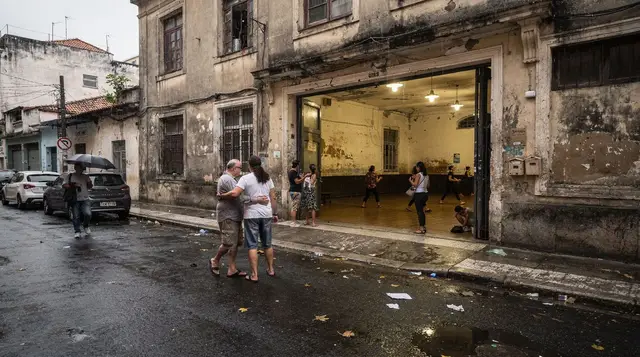
Rio: Pub Crawl in Lapa with Cachaça Tasting and Live Samba

Full Day in Rio: Christ, Sugarloaf, Selarón & Barbecue Lunch
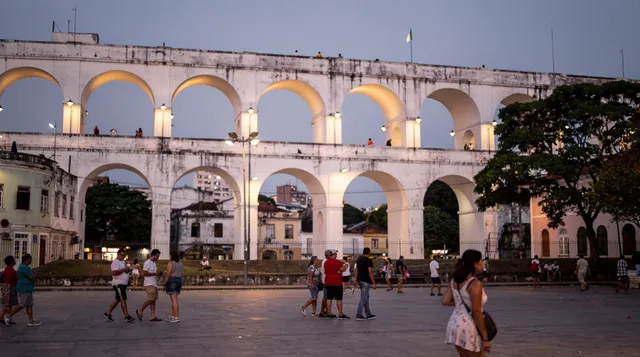
Rio de Janeiro: Brazilian Music at Rio Scenarium with Dinner
Photos show the destination, not the operator's own pictures.