The posto system is the map you actually need
| Where | Zona Sul, between Leme and Fort Copacabana |
| Cost | Free beach; chair/umbrella rental R$20–30/day |
| Time needed | 2–3 days as a base; half a day to see it properly |
| Getting there | Metro Linha 1: Cardeal Arcoverde, Siqueira Campos, Cantagalo |
| Best time | April–June or September–November for fewer crowds |
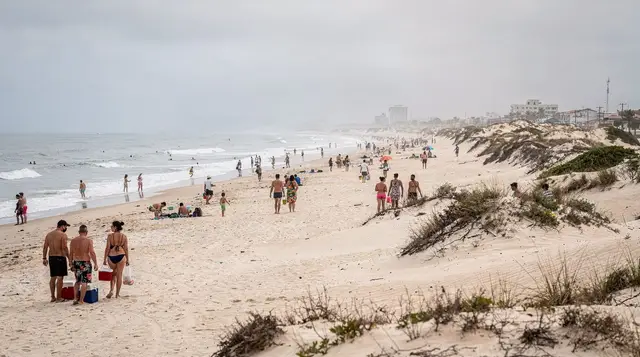
Copacabana runs for just over four kilometres between Fort Copacabana at its southern tip and Leme at its northern end, and the only map that matters here isn’t street names — it’s the numbered lifeguard posts (postos) that punctuate the sand roughly every 400–600 metres. Cariocas use them as addresses. “Meet me at Posto 4” means something specific; “meet me on Copacabana beach” doesn’t. For the full breakdown of what each number means and why locals treat it as gospel, see the posto system explained.
The short version: Posto 1 sits at the Leme end, quieter and more residential, popular with older locals and a slightly rougher edge near the Chapéu Mangueira and Babilônia favelas that rise directly behind it — fine by day, best avoided walking the sand alone late at night. Posto 2, in front of the Copacabana Palace hotel, is where the beach starts to feel like postcard Rio: wide, busy, tourist-heavy. Posto 3 and 4 are the family stretch — calmer water, food carts, less hustle. Posto 5 gets busy with a younger, working-class crowd from the surrounding streets. Posto 6, down toward Fort Copacabana, is quieter and more residential again, with older Cariocas and long-time neighbourhood regulars.
None of this is really about safety in the sense of one posto being “dangerous” and another “safe” — it’s about crowd, noise, and who you’ll be sitting next to. The one hard rule that does matter: don’t linger on the sand after dark anywhere along the beach. The lit promenade above it, Avenida Atlântica, is a different story — busy, well-lit, and comfortable to walk until late.
Avenida Atlântica and the promenade
The wave-pattern black-and-white mosaic along Avenida Atlântica was laid out by Roberto Burle Marx in the 1970s and is as much a symbol of Rio as the beach itself. It’s a genuinely pleasant place to walk, run, or cycle at almost any hour — wide, lit, lined with kiosks (quiosques) serving coconut water, beer, and simple snacks, and busy with joggers from dawn well past sunset. For a plain look at what a Sunday here actually involves, from the street closing to car traffic to the volume of people using it, read Sunday on the Avenida Atlântica.
The kiosks are a reasonable barometer of price creep: a coconut water (água de coco) runs roughly R$8–12 (about US$1.50–2.20), a can of Brahma or Antarctica R$8–10. Anything much above that, especially near Posto 2 in high season, is a tourist markup rather than a fair local price — walk twenty metres to the next kiosk and it usually drops.
Fort Copacabana and the quiet south end
At the far southern tip, past Posto 6, Fort Copacabana (Forte de Copacabana) is a working Brazilian Army installation open to visitors, with a small military history museum and — more to the point for most people — a genuinely good view back up the length of the beach and across to Ipanema and Arpoador. There’s a beachfront café inside the fort grounds, Confeitaria Colombo’s Copacabana outpost, which is touristy but pleasant for a coffee with that view. Entry is a few reais; it’s an easy add-on to a walk down from Posto 4 or 5, not a destination in its own right.
This end of the beach is noticeably calmer than the middle stretch — fewer vendors, fewer people, a more residential feel bleeding into Ipanema once you cross past the fort and the Jardim de Alah canal further along.
Eating without the tourist markup
Copacabana’s restaurant scene ranges from genuinely good to aggressively mediocre, often within the same block. The rule that holds up: anywhere with a tout on the street pulling in tourists, a laminated multilingual menu, and photos of the food is charging 30–50% more than a place with none of those things a block back from the beach. Rodízio-style churrascarias directly on the beachfront are almost always the worst-value version of that format in the city — the better ones, with genuinely good cuts and a fair per-person price, tend to be one or two streets inland, away from the highest foot traffic. For a wider look at how to order well and avoid the tourist mark-up city-wide, see what to eat in Rio.
Botecos (neighbourhood bar-diners) on Rua Santa Clara and Rua Bolívar, a few blocks inland, are consistently better value than anything directly on the beachfront. A per-kilo lunch (comida a quilo) — pay by weight at a self-serve buffet — runs R$45–70 (roughly US$8–13) for a full plate and is the most reliable lunch format anywhere in the neighbourhood. For a structured food outing rather than wandering: Copacabana food tour with seven tastings covers the boteco-and-street-food range in one guided evening, which is a reasonable way to shortcut past the mediocre tourist-facing places if you’re only in the neighbourhood for a night or two.
Nightlife and the rooftop scene
Copacabana’s nightlife skews toward hotel bars, rooftop lounges, and a handful of genuinely good live-music botecos rather than nightclubs — for the club scene proper, most Cariocas head across town or to Zona Sul’s newer bar strips further along the coast. That said, the rooftop bars along and just behind Avenida Atlântica, several with Sugarloaf views, are worth an evening: a night on Copacabana’s rooftops and in its nightclubs covers a run of them with a local guide, which solves the real problem with rooftop-hopping here — knowing which ones have a cover charge, a dress code, or a drink minimum before you’re standing at the door.
For dance rather than drinks, samba classes are a genuine local pastime, not just a tourist activity — plenty of Cariocas take a weekly class the same way someone elsewhere might take a gym class:
a one-hour samba class in Copacabana or IpanemaFor the wider nightlife picture across the city, see Lapa nightlife guide and samba clubs in Rio.
Sport on the sand
Footvolley (futevôlei) — volleyball played without hands — was invented on Copacabana beach in the 1960s, and the courts near Posto 4 and 5 are still where the sport is taken most seriously. Watching a fast game between regulars is free and genuinely worth twenty minutes; playing one is harder than it looks. Learn footvolley in the exact place where the sport was created is a straightforward beginner session, ninety minutes, with equipment provided.
Stand-up paddleboarding is popular here too, mostly at sunrise before the wind picks up and the beach fills in:
Copacabana sunrise stand-up paddleFor the broader picture of beach sport culture across Rio, including beach volleyball courts and where footvolley shows up elsewhere in the city, see futevôlei and beach sports.
Getting there and getting around
Copacabana has its own metro stops — Cardeal Arcoverde, Siqueira Campos, and Cantagalo — on Line 1, which makes it one of the easiest neighbourhoods in Rio to reach without a car. From Galeão International Airport, the fixed-price airport transfer is the least stressful option for a first arrival with luggage:
Galeão airport transfer to Copacabana, Ipanema and downtownRide-hailing apps work reliably throughout the neighbourhood and are cheaper and more transparent than hailing a street taxi, especially late at night when street taxis sometimes round fares up for tourists. For the full transport picture, including the metro line’s operating hours and which of Rio’s two airports you’re more likely to land at, see getting around Rio.
Safety, specifically
Copacabana is heavily policed relative to most of Rio — there’s a visible tourist police post (Delegacia Especial de Apoio ao Turismo, or DEAT) near Posto 5 — and the promenade is comfortable to walk at almost any hour because it’s simply never empty. The beach itself is a different matter after dark: it empties out, the lighting is worse than the promenade above it, and periodic phone and bag-snatching incidents (arrastões, fast group grabs, though rare, do happen) make the sand itself not worth crossing at night. Stay on Avenida Atlântica.
By day, the main risk isn’t violent crime but low-grade opportunism: bags left unattended while swimming, phones flashed openly while filming, and — on the flashiest jewellery-shop-lined blocks near Posto 2 — the occasional distraction theft. Carry a photocopy of your passport rather than the original, leave valuables at the hotel, and you’ll have an uneventful trip. For the fleet-wide picture with more specific, non-alarmist detail, see the Rio safety guide and is Rio safe for tourists.
When to visit
Copacabana is at its most crowded — genuinely uncomfortable in places — around New Year’s Eve, when up to two million people gather for the Réveillon fireworks display fired from barges offshore. If that’s the draw, plan for it specifically: see New Year’s Eve in Copacabana for logistics, because casual walk-up access on the day is not realistic.
Outside of Carnival and New Year’s, April–June and September–November offer the best trade-off: fewer people on the sand, daytime temperatures still comfortable (24–28°C / 75–82°F), and hotel rates noticeably lower than December–February peak season. For the wider seasonal comparison across the city, see best time to visit Rio.
Where to stay if you base yourself here
Copacabana remains the single most practical base for a first Rio trip: metro access, a huge range of hotel price points, and everything within walking distance. The trade-off against Ipanema — quieter, better restaurants, marginally safer at night, but pricier — is worth thinking through before booking; see Copacabana vs Ipanema for a direct comparison, and where to stay in Rio for the full neighbourhood-by-neighbourhood breakdown.
A day on the beach, realistically
The rhythm of a Copacabana beach day follows a pattern most first-timers don’t expect. Cariocas arrive early — 7 to 9am — for a swim and a walk or run along the promenade before the heat and crowds build, then largely clear off the sand between roughly noon and 3pm, when the sun is highest and the beach itself becomes uncomfortably hot underfoot. The crowd rebuilds in the late afternoon, when the light softens and groups arrive after work for a beer at a kiosk and a swim before dark. If you want the beach at its calmest and safest to simply relax on, mid-morning is the window — busy enough that you’re not exposed, quiet enough that you’re not fighting for space.
Vendors work the sand constantly, selling everything from grilled cheese on a stick (queijo coalho) to sarongs, sunglasses, and cold Mate Leão iced tea out of coolers. None of it requires you to buy, and a polite “não, obrigado” is universally understood and respected — nobody lingers after a clear no. Prices are rarely marked; ask before you accept anything, since a small number of vendors will quote a tourist a higher number than they’d quote a local.
Swimming itself needs a note: Copacabana’s surf can produce a strong undertow, especially near the rocks at either end (by the fort to the south, by the Leme headland to the north). The flags flown by lifeguards — green for calm, yellow for caution, red for no swimming — are worth actually reading; Brazilian lifeguards (salva-vidas, usually stationed in the small red-and-white towers at each posto) do enforce red-flag closures and will call people back in.
A four-day sample for basing yourself in Copacabana
For travellers using Copacabana as a genuine multi-day base rather than a quick look, a workable rhythm spreads the neighbourhood’s strengths across a few days rather than trying to see everything at once. Day one: settle in, walk the full Avenida Atlântica promenade end to end to get oriented, and pick a posto that suits your pace for the rest of the stay. Day two: an early swim, then the walk to Arpoador and Ipanema for a change of scene and a different dinner strip.
Day three: Fort Copacabana and the quiet south end in the morning, a food tour or footvolley lesson in the afternoon, rooftop drinks in the evening. Day four: use Copacabana’s metro access as a springboard — Urca and Sugarloaf or Centro are both a short ride away, returning to Copacabana for dinner and the familiarity of a base you already know.
This spreads pace realistically rather than cramming everything into the first 24 hours, which is the more common mistake first-time visitors make with a beach-heavy base like this one — burning out on beach time in the first two days and having nothing left for the neighbourhood’s other genuine strengths.
Where the shopping actually is
Avenida Nossa Senhora de Copacabana, running parallel to the beach one block inland, is the neighbourhood’s real commercial spine — pharmacies, banks, supermarkets, and the everyday shops that have nothing to do with tourism, which is a useful reality check if the beachfront itself starts to feel like a stage set. It’s also where most of Copacabana’s ATMs are, and using a bank-branch ATM (Bradesco, Itaú, Banco do Brasil) here rather than a standalone beachfront machine is the safer and cheaper choice — standalone machines carry a materially higher skimming risk and worse exchange fees.
The Sunday antiques and collectibles market at Praça do Lido, near Posto 3, is smaller and more local than Ipanema’s hippie fair but worth a wander if you’re already in the neighbourhood — old vinyl, militaria, secondhand cameras, and the kind of stallholders who’ll happily talk for twenty minutes about a single item.
Frequently asked questions about Copacabana
Is Copacabana beach clean?
Rio’s Zona Sul beaches, Copacabana included, have improved substantially since the pre-2016-Olympics sewage upgrades, and the sand and shoreline are cleaned daily by municipal crews. Water quality varies by day and is affected by heavy rain, which flushes stormwater drains into the bay — after a big storm, it’s reasonable to skip swimming for a day.
Which posto should I pick as a first-timer?
Posto 3 or 4, for the calmest, most family-oriented stretch with easy metro access at Cantagalo, or Posto 5 if you want more energy and a younger local crowd. Posto 2, directly in front of the Copacabana Palace, is the most convenient for first-timers who want to be near everything but comes with more hawkers and higher prices.
Is it safe to walk from Copacabana to Ipanema?
Yes, by day — it’s a pleasant walk of about 30–40 minutes along the coast through Arpoador, and one of the better free things to do in the neighbourhood, since it covers three distinct stretches of beach and the rock outcrop between them in a single stroll. At night, take a car or ride-hail rather than walking the beach path, since lighting and foot traffic thin out in places, particularly on the stretch approaching Arpoador.
How much should a taxi or ride-hail cost within Copacabana?
A short ride within the neighbourhood — say, from Posto 2 to Posto 6 — typically runs R$12–20 (about US$2.20–3.60) on a ride-hailing app. Street taxis use a metered fare that’s broadly comparable but less transparent upfront, and drivers occasionally quote a flat “tourist” price instead of using the meter; insisting on the meter (taxímetro) or simply switching to an app resolves this instantly.
Do I need to tip on Copacabana’s beach service?
A 10% service charge is usually already included on restaurant bills (look for “serviço” on the check) and isn’t obligatory to add on top. For drinks bought directly from a beach vendor walking the sand, rounding up is appreciated but not expected.
Is Copacabana touristy in a bad way?
It’s touristy in the sense that it’s crowded, has hawkers, and some restaurants overcharge — but it’s also a real, dense, working neighbourhood with more permanent residents than any comparable strip in Ipanema. It doesn’t feel like a resort enclave; it feels like Rio.
What’s the deal with the beach chairs and umbrellas?
Vendors rent plastic chairs and umbrellas directly on the sand for roughly R$20–30 (about US$4–5.50) per set for the day, no reservation needed — just flag down anyone carrying a stack of chairs. Haggling a little is normal and expected.
Is Leme part of Copacabana or separate?
Leme is technically its own small neighbourhood but functions as Copacabana’s quiet northern extension, separated only by a rocky headland (Morro do Leme) you can walk around on the sand at low tide. It has the same posto-numbering logic feeding into it and is worth the extra ten-minute walk for a noticeably calmer beach.
Copacabana versus Ipanema, briefly
| Copacabana | Ipanema | |
|---|---|---|
| Character | Dense, loud, genuinely lived-in | Quieter, more upscale, better restaurants |
| Price level | Budget to mid-range hotel options | Pricier across the board |
| Metro access | Three stations, excellent | Good, slightly fewer options |
| Night safety | Promenade good; empty sand risky | Similarly safe on lit streets |
| Best for | First-timers wanting a classic hotel-and-beach base | Travellers prioritising restaurants and a calmer pace |
Neither is objectively better for every traveller — see Copacabana vs Ipanema for the fuller breakdown if you’re deciding between the two as a base.