
Is Rio de Janeiro safe for tourists? An honest answer
Here’s the honest answer, the way a local friend would give it to you over a beer rather than the way a headline or a travel brochure would: yes, Rio is safe for tourists, in the same sense that any dense, large, unequal city is safe — meaning millions of ordinary days happen here without incident, and a smaller number of specific, learnable situations account for almost everything that goes wrong. Neither the fear-driven version of Rio nor the “just use common sense” version does you any good. This is the version in between.
| Real risk | Opportunistic theft, not violence |
| Undeserved reputation | Copacabana promenade, Lapa at night, favelas generally |
| Deserves more caution | Empty Centro after dark, the sand after sunset, isolated trailheads |
| Top habit | Phone secured, out of sight, when not in use |
| Transport at night | Licensed app (Uber), never a street-hailed cab |
Places, rated honestly
| Place | Reputation | Actual risk level | What to do |
|---|---|---|---|
| Copacabana promenade | Feels risky | Low — busy, watched, patrolled | Normal street sense |
| Lapa at night | Feels chaotic | Low in the crowd, higher alone at the edges | Stay in the crowd, leave together |
| Favelas (community tours) | Feels dangerous | Low with the right operator | Go with a community-based guide only |
| Empty Centro after dark | Feels fine, it’s downtown | Genuinely higher | Go and leave by car |
| The sand after sunset | Feels like an extension of the day | Genuinely higher | Avoid unless at an organised event |
| Isolated trailheads, off-hours | Feels adventurous | Genuinely higher alone | Go with others, busiest hours |
Why the question feels so loaded
Rio’s murder rate and headline crime statistics get quoted constantly, and they’re real — but they’re driven overwhelmingly by territorial conflict between armed groups, concentrated in specific parts of the city that have essentially nothing to do with where tourists spend their time. It’s a bit like judging the safety of a US city trip by its citywide gun violence statistics without noting that almost all of it clusters in a handful of neighbourhoods a visitor would never set foot in. That doesn’t make Rio’s problems less serious for the people who live with them — it means the statistic is the wrong tool for answering “should I, a tourist staying in Copacabana, worry about this.”
The question tourists should actually be asking is narrower: what specifically happens to visitors, where, and when. That’s a much shorter, much more answerable list.
What actually happens to visitors
Almost all of it is opportunistic theft, not violence. A phone lifted off a café table or out of a hand held loosely for a photo. A bag left on a towel while someone swims. A distraction — someone asking the time, dropping something near you — while a second person takes something a few metres away. It’s fast, non-violent, and entirely preventable with boring, specific habits: a zipped pocket, a crossbody bag worn in front of you, never leaving anything unattended on the sand, not even for two minutes. The full practical breakdown, situation by situation, is in the Rio safety guide and beach safety in Rio — this post is the “why,” that one is the “how.”
Genuinely violent incidents aimed at tourists exist but are not the baseline experience of visiting. The honest ratio, based on what actually shows up in consulate reports and tourism police logs, skews heavily toward theft and away from assault. Treating every stranger as a threat doesn’t make your trip safer, it just makes it worse.
The places that get an undeserved reputation
Copacabana’s promenade is one of the busiest, most watched stretches of the city — kiosks, joggers, police patrols, tourists, at almost any hour until late. It’s an easy place to feel unsafe simply because it’s unfamiliar, and it mostly isn’t.
Lapa at night looks chaotic to a first-time visitor — loud, crowded, samba spilling out of open bars — and is, for the most part, a genuine street party that thousands of ordinary people are part of every weekend. The actual risk sits at the edges: peeling off alone onto a quiet side street at 3am because you followed the music somewhere the crowd thinned out. Stay in it, leave with the people you came with, take a car for the door-to-door trip. More in nightlife safety in Rio.
Favelas carry the heaviest reputation of anything on this list, and it’s the most misapplied. A favela is a neighbourhood — Rocinha, Vidigal, Santa Marta, hundreds of others — where a large share of Rio’s population lives an entirely ordinary life. Some are genuinely affected by conflict between armed groups or between those groups and police, and that’s a real, serious problem for residents, not a reason to treat the word “favela” as a synonym for danger.
The honest distinction: go with a community-based operator from the neighbourhood itself if you’re curious, and don’t wander in on your own because you saw a viewpoint online. The longer version, including who runs the good tours, is in the truth about favela tours.
The places that deserve more caution than they get
Empty Centro after dark. Centro Histórico is packed with office workers and tourists on a weekday afternoon and close to deserted once they go home. An empty financial district at night is a genuinely different place than the same streets at 2pm, in Rio as in most cities. If you’re there for dinner or a show, go and come back by car.
The sand after sunset. The lit, busy Avenida Atlântica above the beach stays comfortable to walk on until late. Step down onto the actual sand after dark, though, and you’re somewhere unlit and unwatched. There’s no real reason to be there unless you’re at an organised event.
Isolated trailheads early or late. The approach to hikes like Dois Irmãos has seen occasional robberies of solo hikers at quiet hours, for the obvious reason that quiet and isolated is exactly what makes a spot a target. Go with others, or during the busiest hours. More in hiking safety in Rio.
If you’d rather not judge a trailhead’s mood on the spot, joining a group is the simplest fix: something like a guided hike up to the Christ the Redeemer statue puts you on the path with a guide and other walkers instead of alone. The same logic applies to Corcovado on foot and the wider Tijuca forest: the company is the safety measure.
Why the reputation outruns the reality
Rio’s reputation was built over decades by real, serious events — and travel journalism, understandably, reports the exceptional rather than the ordinary. Nobody writes “two million people had an uneventful Tuesday on Ipanema beach.” The result is a city whose danger, in the popular imagination, is smeared evenly across a place where it’s actually concentrated in specific, avoidable pockets. Locals who’ve lived here their whole lives navigate it constantly without incident, using exactly the kind of situational judgment — which streets, which hours, which behaviours — that this whole site tries to hand you in advance.
What actually reduces your risk, in order of how much it matters
Use a licensed transport app rather than hailing on the street, especially at night — see Uber and taxis in Rio. The arrival leg deserves the same thinking, since it’s the moment you’re tired, carrying luggage and least familiar with the city: a pre-arranged option such as a private transfer waiting for you at the airport removes the haggling and the guesswork, and Rio airport transfer options compares the alternatives. Carry a stripped-down version of yourself on the beach and at night: minimal cash, one card, no visible jewellery, phone in a zipped pocket. Know roughly which streets go quiet after dark rather than treating the whole map as uniformly fine. And if something is demanded of you — hand it over immediately, without negotiating; a phone is replaceable and almost every incident ends the moment you comply.
None of that requires anxiety. It requires the same low-effort street sense you’d use in Barcelona, Naples, or downtown Los Angeles, applied consistently rather than only when something already feels wrong.
What consulates and travel advisories actually say, and how to read them
Government travel advisories for Brazil tend to read more alarming than the lived experience of most visitors, partly because they’re written to cover the entire country — including areas with genuinely different risk profiles than Zona Sul — and partly because advisories are, by design, conservative documents meant to flag the worst case rather than describe the median trip. Reading one is worth doing for the specific neighbourhood-level detail some of them include, but treating the headline rating alone as the full picture will leave you more anxious than the reality warrants. Cross-reference it against practical, neighbourhood- specific guidance rather than relying on either source alone.
The perspective of someone who actually lives here
Ask a longtime carioca how they think about safety and you’ll rarely hear a single number or rule — you’ll hear a set of contextual habits so automatic they don’t register as effort: which of two nearby streets to take home, what time a particular corner starts feeling different, keeping a bag angled a certain way on a bus. None of it is dramatic, and none of it stops them from living an entirely normal life in the city — going to work, meeting friends at a boteco, taking their kids to the beach on a Sunday. That’s the real texture behind the “millions of ordinary days” claim at the top of this post: it’s not an abstraction, it’s simply what daily life here actually looks like for the people who never think to write about it.
Balancing caution with actually enjoying the trip
The single most common mistake among safety-conscious first-time visitors isn’t underestimating risk, it’s overcorrecting into a kind of low-grade anxiety that shadows the whole trip — refusing to walk anywhere, avoiding neighbourhoods that are genuinely fine, treating every interaction with a stranger as suspicious. That approach doesn’t meaningfully reduce risk beyond what the specific, targeted habits in this post already cover, and it trades away a real chunk of what makes Rio worth visiting — the street life, the casual conversations, the ability to wander a market or a beach without feeling on edge. The goal of everything above is to let you set that anxiety down, not carry it with you the whole trip.
What to actually do if something happens
Report a theft at a tourist police station (Delegacia Especializada de Apoio ao Turista, DEAT) — there’s one in Leblon that specifically handles tourist cases, with English-speaking staff used to processing the paperwork travel insurance requires. Don’t expect a stolen phone or bag to be recovered; the point of the report is the official record for your insurance claim, not an active investigation. For anything more serious, contact your consulate — most have a 24-hour emergency line for exactly this. Keep a photo of your passport and travel insurance details somewhere separate from the originals (cloud storage, email to yourself) so a lost or stolen bag doesn’t also mean losing access to the documents you need to replace it.
How this compares to other big cities
Rio’s specific risk profile — opportunistic theft concentrated in learnable situations, genuine violence concentrated in areas tourists don’t visit — isn’t unusual among major world cities; it’s broadly comparable to the street-smart calculus visitors already apply in Barcelona, Naples, Mexico City, or parts of the US. What’s different is mainly the reputation, inflated by decades of exceptional-event coverage rather than a uniquely dangerous baseline experience for someone spending a normal week in Zona Sul.
Frequently asked questions about safety in Rio
Is Rio more dangerous than other big South American cities?
Its reputation is worse than several comparably sized cities on the continent, partly because it’s the most internationally famous. The specific risk to tourists — mostly opportunistic theft — is broadly comparable to other major tourist cities in the region.
Should solo female travellers be more cautious in Rio?
The calculus shifts slightly — mainly around being a more isolated target late at night — but it’s entirely manageable with the same habits everyone else uses, plus a few specifics. Full detail in solo travel in Rio.
Is it safe to bring kids to Rio?
Yes — the bigger practical concerns with children are sun, water safety, and crowd density rather than crime specifically. See Rio with kids.
Are favela tours safe and ethical?
They can be both, with the right operator — one based in or closely tied to the specific community, guided by residents. See the truth about favela tours before booking anything.
What’s the one habit that matters most?
Keeping your phone secured and out of sight when it’s not in use — in a zipped pocket or a crossbody bag worn in front of you, never held loosely for a photo longer than necessary, never on a towel while you swim. It accounts for more prevented incidents than any other single habit.
Does Carnival change the safety picture?
Crowd density goes up sharply, and with it, pickpocketing in dense blocos crowds — far more than violent crime. The same core habits apply with extra emphasis.
What should I do if I’m robbed in Rio?
Hand over what’s demanded without negotiating — almost every incident ends the moment you comply. Afterward, report it at a tourist police station (DEAT, with a Leblon location used to tourist cases) for the official record your travel insurance will need, and contact your consulate for anything more serious.
Is it safe to use an ATM in Rio?
Yes, inside a bank branch or shopping mall during opening hours — avoid standalone street ATMs at night, and treat currency exchange kiosks as a separate, worse-value option rather than a safety concern specifically.
tours.safety
Verified deep-linked GetYourGuide tours. Book through these links and we earn a small commission at no cost to you.
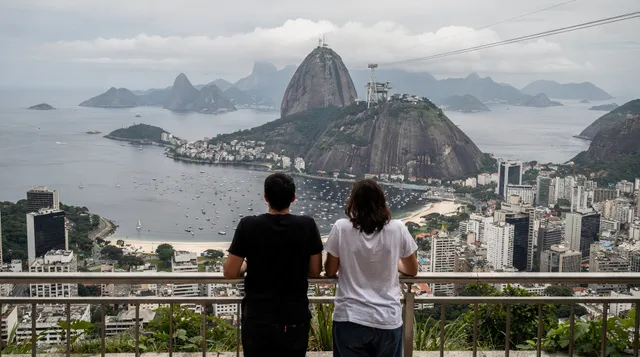
From Rio de Janeiro: Sugarloaf Mountain Tour with Cable Car

Boat Tour Open Bar A Floor Arraial do Cabo
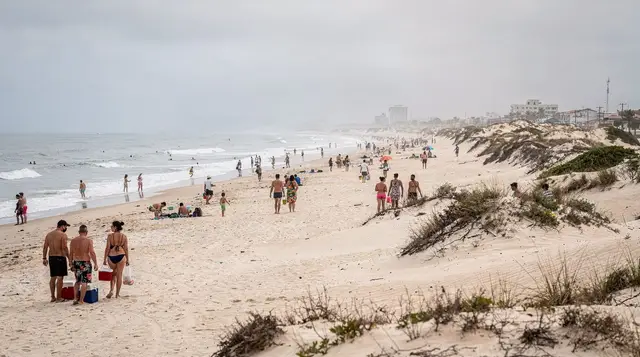
Rio de Janeiro: Arraial do Cabo Scuba Diving Day Trip
Photos show the destination, not the operator's own pictures.