
Samba clubs in Rio — the real roda vs the dinner show
What's the difference between a real samba club and a tourist samba show in Rio?
A roda de samba is a live, unscripted circle of musicians that locals actually go to — free or a low cover, no set choreography, no ticketed seating. A dinner show is a polished, seated performance with a fixed program, professional dancers, and a cover of R$150-300 including a meal, built for visitors rather than for locals. Both are genuine music; only one is what a carioca means by "going out for samba."
Two things get called “samba club,” and they’re not the same night
Search “samba show Rio” and the results are dominated by seated, ticketed, professionally produced performances — dancers in feathers, a fixed running order, dinner included, English-speaking hosts. Ask a carioca where they’re going for samba on a Friday and they’ll name a bar with a table of musicians in the corner, no stage, no schedule, and a crowd that’s there to dance, not watch. Both exist in Rio, both are worth knowing about, and confusing one for the other is the single most common disappointment first-time visitors report about Rio’s music scene. This guide draws the line clearly and tells you which of the well-known names — Carioca da Gema, Rio Scenarium, Trapiche Gamboa — falls on which side.
| Real roda | Carioca da Gema, Trapiche Gamboa, Pedra do Sal (free) |
| Produced show | Rio Scenarium, dinner shows (Ginga Tropical) |
| Cover | R$20-90 (roda/samba house), R$150-300 (dinner show) |
| Where | Mostly Lapa; Trapiche Gamboa is further out in Gamboa |
| Book ahead? | Yes for Rio Scenarium/dinner shows; less so for rodas |
What a roda de samba actually is
A roda de samba (literally “samba wheel”) is musicians sitting or standing in a rough circle — guitar, cavaquinho, pandeiro, sometimes a tamborim and a surdo drum — playing songs the whole room knows, with anyone welcome to sing along, dance, or just stand near the circle with a beer. There’s no stage separating performer from audience, no set list handed out in advance, and no formal start or end time beyond “whenever the musicians feel like stopping.” It happens in bars, on street corners, and at scheduled weekly gatherings that locals plan their week around. The best-known of these, Pedra do Sal on Monday nights, is free, outdoors, and about as far from a dinner show as Rio nightlife gets.
This is what most cariocas mean when they say they’re “going to samba” — not a performance they’re watching, but a room they’re participating in.
What a dinner show actually is
A samba dinner show is a produced entertainment product: a fixed venue, a seated arrangement facing a stage, professional dancers in costume, a choreographed program that usually runs 60-90 minutes, and a price that bundles a meal or drinks with the ticket.
It’s built specifically for visitors who want a guaranteed, English-friendly, one-stop introduction to Brazilian music and dance without navigating a neighbourhood or a language barrier — and for what it is, it can genuinely be a good night: the musicianship is usually excellent, the costumes and choreography are a real craft, and nobody walks out disappointed by the production values. What it is not is what a local means by “a night of samba.” It is closer, in spirit, to a flamenco tablao in Seville than to a neighbourhood peña.
the Ginga Tropical folkloric show with optional dinner is a straightforward, well-reviewed example of this category — worth booking if a produced show with dinner is genuinely what you want, and worth going into with accurate expectations about what it is.
Carioca da Gema, Rio Scenarium, and Trapiche Gamboa — where each one sits
These three names come up constantly in Rio samba searches, and they occupy different points on the roda-to-show spectrum rather than one clear side of it.
Carioca da Gema, on Rua Mem de Sá in Lapa, is the closest of the three to a genuine roda — small, unpretentious, packed shoulder-to-shoulder on a good night, with a rotating lineup of samba and pagode acts that play to a room of dancers rather than seated watchers. Cover runs R$40-70. Arrive by 10pm on a weekend or expect to queue.
Rio Scenarium, a few doors down on Rua do Lavradio, is the most visually spectacular of the three — three floors of a converted antique warehouse, crammed with old furniture, mirrors, and film props as decor — and leans more toward a produced night out than a neighbourhood roda, with a bigger, more polished band and a crowd that’s a genuine mix of locals and visitors. Cover runs R$60-90, higher for reserved tables.
Brazilian music at Rio Scenarium with dinner is the honest way to book this one — it delivers a spectacular room and strong musicianship, and it should be understood as sitting closer to the dinner-show end of the spectrum than Carioca da Gema, even though the music itself is live and largely improvised.
Trapiche Gamboa, out past Porto Maravilha in the Gamboa docks near Pedra do Sal, is the most local of the three by a wide margin — cheap cover (R$20-40), an unpolished room, and a crowd that skews heavily toward Rio residents rather than tour groups. It’s less convenient to reach and less immediately impressive than Rio Scenarium, and that’s precisely the trade-off: less spectacle, more of the real thing.
The honest recommendation
If you want one big, memorable, photogenic night with excellent music and don’t mind that it’s built for visitors, book Rio Scenarium or a dinner show and enjoy it for what it is — there’s no shame in a produced night out, and the craft on stage is real. If you want to understand what a carioca actually does on a Friday, spend the cover at Carioca da Gema or make the trip to Trapiche Gamboa, and better still, go to Pedra do Sal on a Monday at least once, free, outdoors, and unmistakably local. Doing one of each on a longer trip — a produced show for the spectacle, a roda for the reality — gives a genuinely fuller picture than either alone.
Beyond Lapa: a favela roda done right
A small number of community-based tours pair a genuine roda de samba with a visit to a favela on terms set by the community itself, rather than a drive-by. These are worth distinguishing sharply from the generic “favela tour” category, which favela tours done right covers in full — the short version is that an operator working directly with residents, sharing revenue locally, and setting clear photography rules is a different product from a bus that stops for photos and leaves.
the Santa Marta favela tour with barbecue and samba is one such community-run evening — a genuinely local roda rather than a produced show, run with and for the neighbourhood it takes place in.
How the music itself differs, not just the room
The gap between a roda and a dinner show isn’t only about seating and ticketing — the music itself is structured differently. A roda plays a shared repertoire of samba standards the whole room knows, chosen in the moment by whoever’s leading, with songs running long or short depending on how the crowd responds; nobody in the circle is following a printed set list.
A dinner show runs a fixed program built to showcase range — a segment of traditional samba, a segment of more contemporary pop-samba, a costume change, a choreographed number — engineered to hold a seated audience’s attention for a defined run time rather than to keep a dancing crowd moving. Musicians who play both formats will tell you plainly that the roda is where they play for themselves and each other; the show is where they perform for an audience. Both are legitimate craft, and recognising the difference changes what you should expect to feel in the room.
A short history of why Lapa became the centre of this
Lapa’s transformation from a fading, semi-abandoned red-light district into the country’s best-known samba destination happened mostly in the 1990s and 2000s, when a handful of entrepreneurs and musicians began restoring the neighbourhood’s 19th-century townhouses as live music venues, drawn by cheap rents and the area’s genuine samba history — Rio’s older samba schools and composers have long-standing ties to the surrounding Centro and Estácio neighbourhoods.
Carioca da Gema, opened in 2000, is generally credited as the first of the modern wave; Rio Scenarium followed a few years later in a much larger building, explicitly designed as a bigger, more spectacular draw. The result today is a strip that functions as both a genuine live-music destination and a case study in how a neighbourhood’s nightlife economy can be built, deliberately, around one specific cultural export.
What locals actually think of the dinner-show category
It’s worth saying plainly: most cariocas do not go to samba dinner shows, and plenty have never set foot in one, in the same way most Parisians don’t regularly attend a cabaret revue built for visitors. That doesn’t mean the shows are disliked or resented — they’re simply understood as a different product serving a different audience, and the musicians who perform in them are frequently the same working professionals who play rodas on their nights off. The honest framing for a visitor isn’t “avoid the tourist trap,” which overstates the case and implies something dishonest is happening; it’s “know which product you’re buying,” which is accurate and lets you choose deliberately rather than by accident.
What to expect on price, across all three formats
| Format | Cover | What’s included |
|---|---|---|
| Street roda (Pedra do Sal) | Free | Nothing — buy drinks from street vendors |
| Neighbourhood roda (Carioca da Gema, Trapiche Gamboa) | R$20-70 | Entry only; drinks and food separate |
| Produced samba house (Rio Scenarium) | R$60-90+ | Entry; food and drink usually separate or optional add-on |
| Dinner show (Ginga Tropical and similar) | R$150-300 | Full seated show, usually with dinner or drinks bundled |
Rough USD conversion at roughly R$5 to the dollar: R$20-70 is $4-14, R$150-300 is $30-60.
Timing and how the two formats differ in pace
A dinner show runs on a schedule — doors at a set time, a defined program, an end time you can plan transport around. A roda has no such structure: musicians might start at 8pm or 10pm, play for twenty minutes or three hours, and the “best” part of the night is unpredictable rather than guaranteed. This matters for planning — if you have an early flight or a fixed dinner reservation elsewhere, the scheduled predictability of a dinner show is a genuine practical advantage, not just a compromise.
Booking ahead vs showing up
Rio Scenarium and dinner shows generally require or strongly reward advance booking, particularly on weekends, since capacity is fixed and a full house is common. Carioca da Gema and Trapiche Gamboa are more forgiving of a same-day decision — arriving before 10pm on all but the busiest weekend nights usually secures entry without a wait — but neither guarantees a table, and standing room near the band is the realistic expectation once a room fills.
If the trip’s schedule is tight and a specific night is the only option, book ahead regardless of venue; if there’s flexibility, showing up and adjusting based on which room feels right that night is a genuinely valid approach to Lapa’s samba strip, since several venues sit within a few minutes’ walk of each other.
Doing more than one in a single night
Because Carioca da Gema, Rio Scenarium, and several smaller rooms sit on or near the same short stretch of Rua do Lavradio, it’s entirely possible to pay a cover at one, stay for a few songs, and move to another later in the night — a mini crawl within the samba-club category itself, distinct from the wider Rio bar crawl guide, which covers Lapa alongside Botafogo and Baixo Leblon. This works best after 11pm, once the earlier, quieter sets have given way to the night’s main acts, and it’s a reasonable way to sample both the more local and more produced ends of the spectrum in one evening rather than choosing between them in advance.
Getting there and getting home
All three named venues sit inside or near Lapa, reachable the same way as the rest of a Lapa night out — by car or rideshare rather than on foot from the beach neighbourhoods, and the same getting-home logic applies regardless of which format you choose: book your ride out before the night winds down, don’t walk the quiet connecting streets alone late at night, and see Lapa nightlife guide and nightlife safety in Rio for the full detail. Trapiche Gamboa, being further from the main Lapa strip, is worth combining with a car that waits or a return trip booked in advance rather than trying to flag something down in Gamboa at midnight.
What a first-timer should actually book
If this is a single Rio trip and only one samba-club night fits the schedule, the honest recommendation depends on what matters most: choose Carioca da Gema for the closest approximation to a real local night out at a manageable cost, choose Rio Scenarium for the single most spectacular room and the strongest all-round production values, or choose a guided Lapa night — see Lapa nightlife guide — if the plan is to sample several venues rather than commit to one. None of these is a wrong choice; they simply optimise for different things, and knowing which one you’re optimising for before you book beats picking a name off a list without context.
What the room actually sounds and feels like, format by format
It’s worth describing the sensory difference plainly, since photos of either format look similar from a distance. Inside a roda, the sound is dense and close — a cavaquinho and pandeiro a few feet away, no amplification separating you from the musicians, and a crowd singing along loudly enough that you can feel it as much as hear it.
A produced show runs through a proper sound system with a mixed, balanced mix, closer to a concert than a bar — clearer for picking out individual instruments, less raw and physical than standing shoulder-to-shoulder with a roda’s crowd. Neither is objectively “better” sounding; they’re simply different listening experiences, and knowing which one you actually want going in avoids the mismatch where a visitor expecting concert-hall clarity ends up at a packed, sweaty Carioca da Gema, or a visitor chasing raw intimacy ends up at a polished, seated show instead.
What to wear, and what not to worry about
Neither format has a real dress code. A roda skews casual — comfortable clothes you don’t mind sweating or spilling a caipirinha on, closed or sturdy shoes given the crowd, nothing you’d call “dressed up.” Rio Scenarium and dinner shows lean slightly smarter given the more produced setting, but “smart casual” covers it comfortably; nobody is turned away for wearing shorts and a nice shirt. What’s worth planning for regardless of venue is the walk or ride there and back — Lapa’s cobbled streets are uneven underfoot, and heels or delicate shoes are a genuine liability on the approach even if the venue itself is fine.
A first Lapa samba night, planned start to finish
For a visitor building a single evening around this guide, a workable plan looks like: arrive in Lapa by taxi or rideshare around 9:30-10pm, have dinner at one of the neighbourhood’s casual restaurants or botecos before the music starts in earnest, then choose a venue based on what you read above — Carioca da Gema for the closest thing to a local night, Rio Scenarium for spectacle, or a booked dinner show if structure and a guaranteed seat matter more than authenticity.
Budget for a cover charge plus drinks at whichever venue, and book your ride home before midnight rather than trying to find one on a crowded street later — see Lapa nightlife guide for the fuller evening structure, including how a samba stop fits alongside Lapa’s other bars.
Frequently asked questions about samba clubs in Rio
Which is more “authentic,” Carioca da Gema or Rio Scenarium?
Carioca da Gema sits closer to a genuine neighbourhood roda in scale and crowd; Rio Scenarium is more spectacular and more visitor-oriented, though the music itself is live and largely improvised at both. Neither is fake — they’re different products serving different expectations.
Do I need to book ahead?
For a produced show or Rio Scenarium on a weekend, yes. For Carioca da Gema or Trapiche Gamboa, arriving early (before 10pm) usually beats the need for a reservation, though weekend nights can still mean a queue.
Is a dinner show worth the higher price?
For a guaranteed, structured, English-friendly introduction to Brazilian music with excellent production values, yes. It is not a substitute for the experience of a real roda, and shouldn’t be marketed to yourself as one.
Where is the closest thing to a “free” samba experience?
Pedra do Sal on Monday nights — outdoors, on the historic steps of Little Africa, no cover, and the most genuinely local roda within easy reach of central Rio.
Can I dance if I don’t know how?
Yes, at any of the roda-format venues — nobody expects visitors to dance well, and the room is generally welcoming to a clumsy attempt. If you want a head start, gafieira dance halls covers where to take a short class first.
Are these venues safe for solo travellers?
Yes — all three are indoor, staffed, and busy on weekend nights, which makes them lower-risk than the street scene outside. The safety consideration is the same as anywhere in Lapa: how you get there and back, not the venue itself. See nightlife safety in Rio.
Is Trapiche Gamboa hard to get to?
It’s a short drive from Lapa but outside easy walking distance, and the Gamboa docks area is quiet after dark — arrive and leave by car or rideshare rather than on foot, and see getting around Rio for the wider transport picture.
tours.samba-nightlife
Verified deep-linked GetYourGuide tours. Book through these links and we earn a small commission at no cost to you.
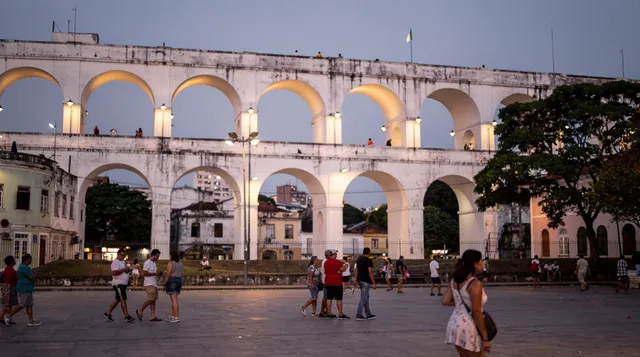
Rio Samba Bus: Hop-on Hop-off City Tour in Rio de Janeiro

samba class in Ipanema
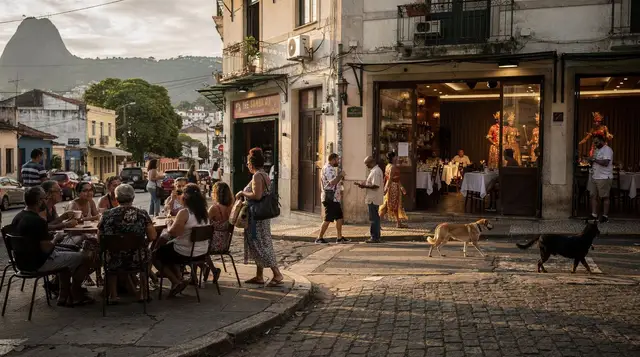
Hop-ON Hop-OFF Sightseeing Bus in Rio de Janeiro – Rio Samba Bus
Photos show the destination, not the operator's own pictures.