
Rio bar crawl guide — a route that actually makes geographic sense
Should I bar-hop across Lapa, Botafogo, and Baixo Leblon in one night?
No — pick one. The three districts sit 20-40 minutes apart by car, and a night spent moving between them loses more time to traffic and rideshare waits than it gains in variety. Choose Lapa for live samba and a street party, Botafogo for a mixed local crowd and rooftop bars, or Baixo Leblon for an upscale, later-starting scene, and stay within walking distance for the night.
The mistake most bar crawl plans make
A bar crawl in a compact European city works because everything sits within a fifteen-minute walk. Rio doesn’t work that way. The city’s nightlife splits across several genuinely distinct districts — Lapa, Botafogo, and the Baixo Leblon strip around Rua Dias Ferreira in Leblon — each 20 to 40 minutes from the others by car depending on traffic, with no useful late-night public transport connecting them directly. Trying to “see all three” in one night means spending more of the evening in an Uber than in a bar. The better plan, and the one this guide lays out, is picking the district that matches the night you actually want and staying inside it.
| Districts | Lapa, Botafogo, Baixo Leblon (plus Ipanema/Copacabana strips) |
| Rule of thumb | Pick one district per night, don’t hop between them |
| Cost range | R$80-150 (Botafogo) to R$180-300+ (Baixo Leblon) per person |
| Getting home | Book a rideshare from a well-lit main street, before the crowd thins |
| Best nights | Fri/Sat for Lapa; Wed-Sat equally good for Botafogo/Baixo Leblon |
Lapa: live samba, street crowd, latest finish
Covered in full at Lapa nightlife guide and samba clubs in Rio, Lapa is the loudest, most concentrated, most tourist-visible option — a genuine street party under the Arcos combined with a dense cluster of live samba houses on Rua do Lavradio and Rua Joaquim Silva. It’s the pick for anyone who wants live music as the centre of the night rather than a backdrop, and it runs latest, with the street crowd peaking between midnight and 1:30am. It’s also the option requiring the most transport discipline — book a ride before you start, and see nightlife safety in Rio for the specific behaviour around getting home.
Botafogo: the mixed local crowd, rooftops, and a calmer pace
Botafogo, tucked between the bay and the hills below Corcovado, has quietly become one of Rio’s best neighbourhood bar scenes — a mix of casual botecos, craft beer bars, and a handful of genuine rooftop spots with a view toward Sugarloaf and Christ the Redeemer.
The crowd skews heavily local rather than visitor, prices run noticeably lower than Leblon, and the pace is calmer: this is a sit-down-with-a-beer-and-talk district rather than a dance-till-3am one. Rua Voluntários da Pátria and the streets immediately around Botafogo’s metro station carry the highest concentration of bars, all within comfortable walking distance of each other, which makes Botafogo the easiest of the three districts to actually crawl on foot.
a night on the rooftops and in the nightclubs of Copacabana covers the neighbouring beachfront district’s own rooftop and club scene, worth considering if your trip is based in Copacabana rather than further south — a genuinely different, more tourist-facing crowd than Botafogo’s, but geographically the most convenient option if that’s your base.
Baixo Leblon: upscale, later-starting, and the most expensive of the three
The stretch of Rua Dias Ferreira in Leblon, known locally as Baixo Leblon, is Rio’s most upscale bar and restaurant strip — sushi counters, craft cocktail bars, and a crowd that dresses up more than Lapa or Botafogo expect. Nights here start later (most places don’t fill until 10:30-11pm) and prices run highest of the three districts — a cocktail that costs R$18-25 in Botafogo can run R$35-50 here. It’s the pick for a polished night out rather than a loud one, and it’s the most walkable of the three once you’re there, with a dense strip of options on one street.
Solo vs group crawls
A bar crawl is more forgiving for a solo traveller in Botafogo or Baixo Leblon than in Lapa, simply because both are residential neighbourhoods where sitting alone at a bar counter reads as completely normal rather than conspicuous. A group of three or four gets the most out of any of the three districts by being able to split a wider range of petiscos or bar snacks along the way and by having built-in company for the walk between stops — see solo travel in Rio for the wider picture on doing Rio’s nightlife alone.
A route within each district — don’t hop between them
The working plan for any of the three: pick a starting bar, walk to two or three more within the same few blocks, and treat the whole night as contained to that neighbourhood. In Lapa, that means starting near the Arcos and working along Rua do Lavradio. In Botafogo, start on Rua Voluntários da Pátria and work outward. In Baixo Leblon, work the length of Rua Dias Ferreira. None of these routes require a car mid-crawl — only to arrive and to leave.
a Copacabana local bars food tour and a bar and food tour with a local guide are both useful if the idea of picking your own route feels like more research than you want to do on a trip — a guide handles the sequencing and, often, skips any queue.
Comparing the three at a glance
| District | Vibe | Crowd | Peak time | Rough cost per person |
|---|---|---|---|---|
| Lapa | Loud, live music, street party | Mixed local + visitor | Midnight-1:30am | R$150-250 |
| Botafogo | Casual, mixed local | Mostly local | 8-11pm | R$80-150 |
| Baixo Leblon | Upscale, cocktail-forward | Mostly local, dressier | 10:30pm-1am | R$180-300 |
Where to base yourself for each
If your accommodation sits in Copacabana or Ipanema, Botafogo is a short, cheap car ride and the most convenient pick for a spontaneous night without much transport planning. If you’re staying in Leblon or Ipanema, Baixo Leblon may be walkable outright. Lapa, being furthest from the beach neighbourhoods, is worth planning as a dedicated night out rather than a casual add-on — see where to stay in Rio for how neighbourhood choice shapes this.
Getting between districts, and the case for not doing it
If you do want to see two districts in one night despite the advice above, Botafogo to Baixo Leblon is the more forgiving pairing — 15-20 minutes by car with lighter traffic than a route through central Rio — while Lapa to either beach-side district runs closer to 30-40 minutes each way in weekend traffic. Budget the transfer time honestly: a “quick stop” in a second district that costs 40 minutes each way in an Uber is, in practice, an hour and twenty minutes of your night spent not in a bar. Full transport picture at getting around Rio and Uber and taxis in Rio.
A fourth option: Ipanema and Copacabana’s beachfront strips
Beyond the three core districts, Ipanema and Copacabana both carry their own bar scenes running along and just behind the beachfront avenues — more tourist-facing than Botafogo, more casual than Baixo Leblon, and the most convenient option by far if your accommodation sits in either neighbourhood.
Copacabana’s scene in particular has a distinct rooftop and late-night club element covered specifically in nightlife safety in Rio and touched on above — worth treating as its own fourth category rather than folding into Botafogo, since the crowd, prices, and closing times differ meaningfully. A short walk along Ipanema’s Rua Vinícius de Moraes turns up a cluster of well-regarded bars a few blocks from the sand, a useful low-effort option on a night when a longer crawl elsewhere isn’t the plan.
Matching the district to the kind of night you want
If the goal is live music as the centrepiece, Lapa wins outright — no other district in this comparison offers the same density of samba houses within walking distance of each other. If the goal is meeting and talking with locals over a beer at a reasonable price, Botafogo is the clear pick, and its boteco scene (see boteco culture in Rio) extends the same logic to food.
If the goal is a polished, dress-up night with well-made cocktails, Baixo Leblon delivers that reliably, at the highest price point of the four options covered here. And if convenience matters more than any of the above — staying within a five-minute walk of your hotel — Ipanema or Copacabana’s own strip is usually the practical answer regardless of which of the other three might otherwise appeal more.
What a realistic night actually costs, itemized
A three-stop Botafogo night — two beers and a shared petisco at each of three bars — runs roughly R$120-180 per person including a starting and ending rideshare. The same structure in Baixo Leblon, with cocktails replacing chopp, runs closer to R$250-350. A Lapa night with one club cover added to the street drinking covered in Lapa nightlife guide lands in between, at R$150-250. None of these figures include dinner beforehand — see what to eat in Rio for how a meal fits around any of these routes, and Rio on a budget for how a night out fits a wider trip budget.
Getting home from any of the three
The same core rule applies regardless of district: book a rideshare from a well-lit main street, not a side alley, and do it before the crowd thins rather than after. Botafogo and Baixo Leblon are generally lower-risk for a late walk of a block or two than Lapa, simply because they’re residential neighbourhoods with steady foot traffic rather than a concentrated nightlife zone that empties unevenly — but “lower-risk” isn’t “no-risk,” and the same behavioural rules from nightlife safety in Rio apply everywhere after dark.
Building a route by night of the week
Rio’s bar districts don’t all peak on the same night. Botafogo and Baixo Leblon run steadily from Wednesday through Saturday, with a genuine local crowd on a Wednesday that’s barely different from a Friday. Lapa is more weekend-weighted — Friday and Saturday carry the fullest street scene, and a Wednesday visit, while pleasant and quieter, misses much of what makes Lapa distinctive. If your trip includes a weekday evening with no fixed plan, Botafogo or Baixo Leblon is the safer bet for a satisfying night regardless of which day it falls on; save Lapa specifically for a Friday or Saturday if the schedule allows it.
What a first-time visitor gets wrong about planning this
The most common mistake isn’t picking the wrong district — it’s assuming, from looking at a map, that neighbourhoods which look close together are a short hop apart at night. Rio’s geography is deceptive on a phone screen: the city is long and narrow, hemmed in by mountains and the bay, and traffic between neighbourhoods that appear adjacent can still run 20-30 minutes depending on the route and the hour. Building a route around one district and genuinely staying in it, rather than planning an ambitious multi-neighbourhood evening, consistently produces a better night than the alternative — this is the single piece of advice this guide most wants a first-time visitor to take seriously.
Tipping and paying across the three districts
Tipping conventions are consistent across all three: a 10% service charge is often already included on the bill (look for “10% incluso” or similar printed near the total), and adding more is appreciated but not expected the way it might be in the US. Cash is still useful for street vendors near Lapa’s Arcos and for splitting a bill informally among a group, but every bar in all three districts takes cards, and Botafogo and Baixo Leblon in particular are entirely comfortable running a full night on card alone. Splitting a tab is normal practice in a group; asking a server to divide it by the number of people at the table rather than by item is usually the faster, less awkward route.
A two-night version, for a longer stay
For visitors with more than a couple of nights in Rio, the better use of this guide isn’t picking one district and sticking with it forever — it’s doing two of the three (or four, counting the beachfront strips) across separate nights, which gives a genuinely fuller picture of Rio’s nightlife without the single-night compromise of trying to see everything at once.
A common, well-balanced pairing: Lapa for a Friday or Saturday night centred on live samba, and Botafogo or Baixo Leblon for a calmer weeknight in between. See Rio de Janeiro in three days, Rio de Janeiro in five days, or Rio de Janeiro in seven days for how this fits into a wider trip itinerary alongside beaches, viewpoints, and day trips.
What locals mean when they say “let’s go out”
Ask a carioca where they’re going for a casual night and the answer is rarely “Lapa” — that’s the visitor-facing answer. It’s more often a specific bar in whatever neighbourhood they live in, chosen for proximity and familiarity rather than reputation. This guide leans on Lapa, Botafogo, and Baixo Leblon because they’re the three districts with enough concentrated options to build a route for a visitor without local knowledge, but it’s worth knowing that the “authentic” version of a Rio night out is often simply whichever bar happens to be closest to home, which is a useful frame for choosing between the districts above: pick the one that would be closest to home if you lived here, not the one with the most name recognition.
The one-paragraph version, if you read nothing else
Pick a single district based on the kind of night you want — live samba in Lapa, cheap and local in Botafogo, upscale in Baixo Leblon, or convenient in Ipanema or Copacabana — walk between a handful of bars within that district on foot, and book a car to arrive and to leave rather than trying to string neighbourhoods together mid-evening. Everything else in this guide is detail supporting that one decision.
What to eat along the way
Pairing a district’s bar route with its food is worth planning rather than leaving to chance. In Botafogo, petiscos — small plates like bolinho de bacalhau, pastel, or grilled provolone — are cheap enough to order at every stop without breaking a budget, and the boteco scene there treats food as central to the night rather than an afterthought; see boteco culture in Rio for the fuller picture.
Lapa’s food options are more scattered and geared toward a quick bite between bars than a proper meal, so eating beforehand in Centro Histórico or Santa Teresa is the better plan. Baixo Leblon flips the pattern entirely — several of its bars are effectively restaurants with a strong drinks list, so a “bar crawl” there can double as dinner if you order more than a snack at your first or second stop.
Reading the room: how each district actually feels once you’re there
Numbers on a comparison table only go so far — what surprises most first-time visitors is the texture of each district once they’re standing in it. Lapa hits you immediately with noise, density, and a street-party energy that can feel overwhelming for the first ten minutes before it clicks into being genuinely fun. Botafogo feels almost suburban by comparison — quieter streets, a steady hum of conversation rather than music blaring, and a crowd that’s there to talk as much as drink.
Baixo Leblon sits somewhere between the two but leans polished: better lighting, better-dressed staff, and a noticeably slower pace to the night, with people lingering over one well-made cocktail rather than moving quickly between rounds. None of these textures is better than the others — they’re simply different nights, and matching your expectations to the district before you arrive avoids the mismatch of showing up to Botafogo expecting Lapa’s volume, or the reverse.
Frequently asked questions about a Rio bar crawl
Which district is best for a first-time visitor?
Lapa, if live music and a genuine Rio institution matter most; Botafogo, if a calmer, cheaper, more local night matters more. Most first-timers end up doing Lapa once and Botafogo or Baixo Leblon on a second night.
Is it safe to walk between bars within one district?
Within Botafogo’s main strip or Baixo Leblon, yes, on the main streets during normal bar hours. Within Lapa, yes on the crowded main streets, but avoid the quieter connecting side streets — see Lapa nightlife guide.
How much should I budget for a full night out?
R$80-150 for a casual Botafogo night, R$150-250 for Lapa with a club cover, R$180-300+ for Baixo Leblon’s cocktail prices — all rough per-person figures including drinks and transport.
Can I do a bar crawl solo?
Yes, in any of the three — Botafogo and Baixo Leblon in particular are comfortable for solo drinkers at a bar counter. See solo travel in Rio for the wider picture.
What’s the dress code across the three?
Casual in Lapa, casual-to-smart-casual in Botafogo, and noticeably dressier in Baixo Leblon — jeans and a t-shirt read as underdressed at some of the pricier Leblon spots.
Is there a metro option for any of these?
Botafogo has its own metro station and is well served until the metro’s closing hours (roughly midnight weeknights, later on Friday and Saturday); Lapa and Baixo Leblon are better reached by car regardless of the hour. See Rio metro guide.
Which district has the best food alongside the bars?
Botafogo, by a wide margin — its boteco and casual restaurant scene rivals its bar scene, covered in full at boteco culture in Rio.
Is it worth booking a guided bar crawl instead of planning my own?
For a first night with no local knowledge, yes — a guided crawl removes the sequencing and queueing decisions this guide otherwise walks through manually, and generally moves a group between venues more efficiently than working it out on the spot.
How does this compare to going out in Copacabana specifically?
Copacabana runs its own distinct rooftop and nightclub scene, more tourist-facing than Botafogo and closer to the beachfront hotels many first-time visitors stay in — worth treating as a convenient fifth option alongside the three core districts covered above.
Do prices vary much by season?
Modestly — expect a small premium during Carnival and the peak December-February summer season across all four districts, driven by higher demand rather than a formal seasonal price list. See best time to visit Rio for the wider seasonal picture.
tours.samba-nightlife
Verified deep-linked GetYourGuide tours. Book through these links and we earn a small commission at no cost to you.

Rio Samba Bus: Hop-on Hop-off City Tour in Rio de Janeiro

samba class in Ipanema
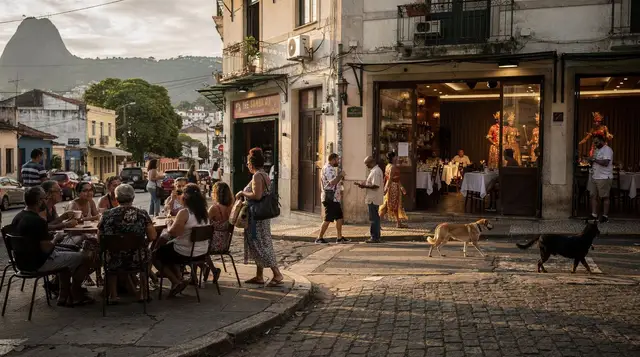
Hop-ON Hop-OFF Sightseeing Bus in Rio de Janeiro – Rio Samba Bus
Photos show the destination, not the operator's own pictures.