The view everyone has seen, from a neighbourhood most tourists skip
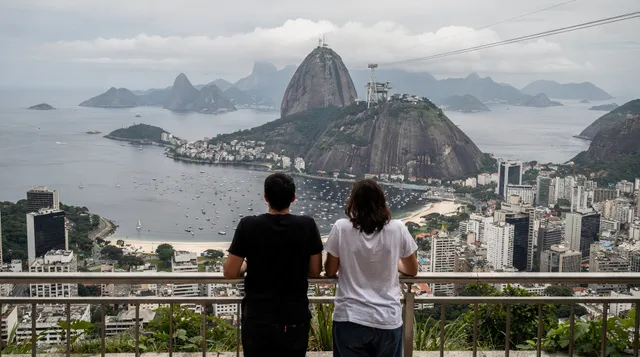
Botafogo’s curved bay, the Enseada de Botafogo, produces the single most reproduced image of Rio — Sugarloaf Mountain rising directly across the water, boats moored in the foreground, the city wrapping around the shoreline between them. It’s the shot on postcards, the opening frame of half the documentaries ever made about the city, and it’s free and available at almost any hour from the waterfront promenade along Praia de Botafogo. Late afternoon, when the sun moves behind the mountain and the water turns gold, is the best time to actually see it; sunrise works too, with far fewer people around, and clear winter mornings (June to August) often produce the sharpest, haze-free view of the two peaks.
| Where | Zona Sul bay, between Flamengo and Urca |
| Cost | Free view; restaurant mains around R$50–90 |
| Time needed | Half a day for the viewpoint and a walk; an evening for dinner |
| Getting there | Metro Linha 1/2, Botafogo station |
| Best time | Late afternoon for the view; Thu–Sat evening for the food scene |
What most tourists skip is everything else — Botafogo doesn’t have a “sight” in the way Urca and Sugarloaf or Copacabana’s beach do, and visitors who only pass through en route to the cable car often miss that this is one of the most genuinely interesting neighbourhoods in Zona Sul on its own terms: an older, denser, more architecturally mixed area than the beachfront strips, with a real day-to-day commercial life that doesn’t stop when the tourists leave.
Where the name comes from
The neighbourhood takes its name from João Pereira de Sousa Botafogo, a Portuguese settler who owned land along the bay in the colonial period — one of a handful of Rio neighbourhoods named directly after an early landowner rather than a geographic feature or a saint. It became a fashionable beachside district in the 19th century, before the bay’s water quality declined and the beach’s role shifted from a place to swim to a place to look at.
Don’t swim here
This needs saying plainly because the postcard view suggests otherwise: Botafogo’s bay water is contaminated, a legacy of decades of untreated sewage and industrial runoff into Guanabara Bay that pre-dates and postdates the 2016 Olympic clean-up promises, most of which were not fully delivered. The beach is used for walking, jogging, and photography, not swimming — locals don’t swim here, and neither should visitors.
For actual ocean swimming, Urca’s Praia Vermelha a short distance away, or the open-ocean beaches of Copacabana and Ipanema, are the real options. For the fuller picture on which of Rio’s beaches are and aren’t swimmable, see rio beach etiquette and beach safety in Rio.
Rua Voluntários da Pátria and Rio’s current best restaurant strip
Ask a Carioca right now where to eat well in Rio and a meaningful share will say Botafogo, specifically the stretch of Rua Voluntários da Pátria and the surrounding blocks, which over the past several years has become the city’s most talked-about concentration of good, mid-priced restaurants and bars — a shift away from the older assumption that Leblon automatically had the best food in the city. The draw is variety and value: contemporary Brazilian kitchens, natural wine bars, genuinely good pizza, and a run of bars that don’t charge Ipanema prices for a comparable drink.
A main course at a good Voluntários da Pátria restaurant typically runs R$50–90 (roughly US$9–16), noticeably below Baixo Leblon’s equivalent, and the crowd is a real mix of ages and backgrounds rather than a single demographic. For where this fits into the wider city food conversation, see what to eat in Rio and boteco culture in Rio.
Cobal do Humaitá
A few blocks from the main Voluntários da Pátria strip, in the adjoining neighbourhood of Humaitá, Cobal do Humaitá is a former municipal food-distribution market (a Cobal — Companhia de Abastecimento) converted into an open-air complex of restaurants, bars, and produce stalls that runs late into the night, especially Thursday through Saturday.
It has a genuinely different feel from a purpose-built entertainment district — market stalls selling fruit and vegetables by day give way to bar tables and live music by night, all under the same converted roof structure. It’s one of the better places in Rio to end up on a night that started somewhere else, since it stays lively well past midnight and doesn’t require reservations for most of what’s on offer.
Mirante do Pasmado and the Museu do Índio
For a higher, quieter version of the Sugarloaf view, Mirante do Pasmado sits atop a short hill accessible by road from Botafogo, with a wide panorama that takes in the bay, Sugarloaf, and the city skyline in one sweep — genuinely worth the short detour if you have a car or ride-hail available, and far less crowded than any of the neighbourhood’s beachfront vantage points.
The Museu do Índio, Brazil’s national museum of Indigenous culture, occupies a colonial-era building a short walk from the metro and is a serious, well-curated collection covering Brazil’s Indigenous peoples — an unusually substantive museum stop for a neighbourhood most visitors treat as a pass-through, and a useful counterweight to how little Indigenous Brazil otherwise appears on a typical Rio itinerary. For the wider museum landscape across the city, most of it concentrated in the historic centre, see Museu do Amanhã.
Football, properly
Botafogo de Futebol e Regatas, one of Rio’s four major football clubs, was founded in this neighbourhood in 1904 and still carries its name, even though matches are now played at the Estádio Nilton Santos (the Engenhão) across town in Engenho de Dentro rather than in Botafogo itself. The club’s identity and much of its fanbase remain rooted here, and a matchday experience with a knowledgeable guide is a genuinely good way to see a different, less touristy side of Rio’s sporting culture:
Rio football match: ticket, guide and transport (Botafogo)For the broader football picture, including which of Rio’s four big clubs plays where and how to catch a match safely, see how to see a football match in Rio and Botafogo and Vasco.
Botafogo’s fans (Alvinegros, after the club’s black-and-white colours) are known even among Rio’s notoriously passionate football culture for a particular strain of dark humour about their own club’s history of dramatic, sometimes catastrophic late-season collapses — a running joke that’s as much a part of the club’s identity as any trophy. A local guide on a matchday adds real value here beyond logistics: understanding the chants, the rivalries, and the gallows humour is most of what makes a Rio football match memorable rather than just loud.
A newer identity: coworking and the creative economy
Alongside its restaurant boom, Botafogo has quietly become one of Rio’s centres for coworking spaces, small design studios, and independent media and tech companies over the past decade — a shift driven partly by lower commercial rents than the beachfront neighbourhoods and partly by the metro connection making it easy to reach from across the city. It’s not a visible “sight” the way a museum or a beach is, but it changes the neighbourhood’s daytime character: cafés doing brisk laptop-and-coffee trade through the afternoon, a younger daytime population than the more residential feel after dark might suggest, and a general sense of a neighbourhood that’s still actively changing rather than a fixed postcard image.
What a first-time visit actually needs
For visitors with a single evening to give Botafogo, the practical version of everything above is simple: arrive by metro around 5:30–6pm, walk the bayfront promenade for twenty minutes while the light softens toward the postcard shot, then head up to Rua Voluntários da Pátria or Cobal do Humaitá for dinner as the evening picks up around 8pm. That’s a complete, low-effort Botafogo evening that doesn’t require booking anything in advance beyond, optionally, a table at a specific restaurant if you have one in mind.
For visitors adding a museum stop, the Museu do Índio opens earlier in the day and is worth building into a half-day plan rather than an evening one — its hours don’t overlap well with the dinner-focused evening most visitors come here for, so treat it as a separate, earlier stop on the same day if you want both.
Getting between Botafogo, the bay, and the lagoon
Botafogo connects directly into the Aterro do Flamengo park along the bayfront, one of Rio’s largest continuous green spaces, and the flat, mostly car-free path running through it makes for an easy walk or ride on to Flamengo and Catete without needing transport at all. A popular bike route covers this same stretch and continues further, from Botafogo through Flamengo’s beachfront park and on toward the Lagoa — a genuinely pleasant way to cover the distance between three very different Zona Sul neighbourhoods in a single loop, mostly on dedicated or low-traffic bike paths:
Rio bike tour — discover the beaches and lagoonFor everyday transport, Botafogo has its own metro station on Line 1 and 2, one of the busier interchange points in the system, which makes it an easy, well-connected base or stopover point. See getting around Rio for the full picture.
Where it fits in a longer trip
Botafogo pairs naturally with Urca and Sugarloaf just around the headland — many visitors walk or take a short ride between the two, combining the cable car with an evening in Botafogo’s restaurant scene. It also sits directly between Flamengo and Catete and the beach neighbourhoods further along the coast, making it a natural midpoint stop on a day that covers several of Zona Sul’s distinct characters rather than just the beachfront. See Rio in three days for how this fits into a short, well-paced first visit.
A neighbourhood that predates the beach resorts
Botafogo was one of Rio’s fashionable addresses well before Copacabana was fully developed — a 19th and early-20th-century residential district for the city’s elite, and the older, denser building stock along its side streets still reflects that history in a way the beach neighbourhoods’ more uniform 1960s–70s towers don’t. Rio Sul, a large enclosed shopping mall at the base of the neighbourhood, dates from the 1980s and remains a genuinely useful practical stop — banks, pharmacies, a supermarket, and a reliable air-conditioned break from the heat, alongside a wide range of shops that skew toward everyday necessities rather than tourist souvenirs.
The neighbourhood’s population is a real cross-section of Rio — students (several university buildings and a large student population cluster here, drawn by relatively affordable rents relative to the beachfront), young professionals, and long-time residents in family apartments that have been passed down for generations. It doesn’t have the manufactured, resort-adjacent feel of Copacabana or the visible wealth of Leblon; it reads, more than most Zona Sul neighbourhoods, like an ordinary, functioning piece of the city that happens to have one of the best views in South America built into its geography — which is, in its own way, a more honest introduction to how most Cariocas actually live than any single beach can offer.
Praia de Botafogo as a public space
Even without swimming, Praia de Botafogo functions as one of the more heavily used public spaces in the neighbourhood — a strip of sand and grass along the bay where locals walk dogs, kids play football, and joggers use the waterfront path early in the morning and again after work. On weekends, informal food stalls and the occasional small event set up along the promenade, and it’s a genuinely pleasant place to sit with a drink from a nearby kiosk and watch the light change over the water, even knowing you won’t be getting in.
The bay itself carries real ecological and historical weight beyond the pollution problem: Guanabara Bay was where Portuguese colonisers first landed in the 1500s, and its edges — Botafogo included — have been continuously built up and reshaped ever since, including significant land reclamation in the 20th century that created much of the flat ground the neighbourhood now sits on. It’s a useful reminder, standing on reclaimed land looking at a mountain that’s stood for millions of years, of how much of central and southern Rio’s geography is more recent and more engineered than it first appears.
Botafogo compared with its Zona Sul neighbours
| Botafogo | Copacabana | Urca | |
|---|---|---|---|
| Headline draw | Restaurant scene, Sugarloaf view across the bay | Beach, promenade, posto culture | Sugarloaf cable car, Praia Vermelha |
| Swimmable beach | No — bay is contaminated | Yes | Yes, at Praia Vermelha |
| Character | Local, day-to-day, metro-connected | Dense, touristy, lived-in | Quiet, residential, view-focused |
| Best time to visit | Evening for dinner, late afternoon for the view | Any time; avoid empty sand after dark | Morning for the cable car queue |
Most short-trip visitors treat Botafogo as an evening add-on rather than a full day, which is the right instinct — its strengths (dinner, the view, a walk through Aterro do Flamengo) are naturally evening- and half-day-sized rather than requiring a dedicated full day the way a beach neighbourhood might.
A day built around Botafogo
Because Botafogo doesn’t have a single headline sight, it works best as either a half-day add-on to a Sugarloaf visit or as a dedicated evening out. A reasonable half-day: arrive in the late afternoon, walk the bayfront promenade for the view as the light softens, detour up to Mirante do Pasmado if you have transport arranged, then head to Rua Voluntários da Pátria or Cobal do Humaitá for dinner as the restaurant scene picks up around 8pm. For visitors with more time, the Museu do Índio is worth a focused hour earlier in the day, before the afternoon heat and before the restaurant scene becomes the priority.
Weekday evenings here are noticeably calmer than the weekend rush; if the goal is a relaxed dinner without a wait, Tuesday or Wednesday is a better bet than Friday or Saturday, when several of the more popular spots on Voluntários da Pátria fill up without taking reservations.
Frequently asked questions about Botafogo
Is Botafogo worth visiting if I only have a few days in Rio?
Yes, at least for an evening — the restaurant and bar scene alone justifies a stop, and the Sugarloaf view across the bay costs nothing and takes twenty minutes. It’s less essential as a full day’s plan unless food is a priority for the trip.
Can I swim at Botafogo beach?
No — the water in Botafogo’s bay is contaminated and locals don’t swim there. Use the beach for the view and a walk, and go to Urca, Copacabana, or Ipanema for actual swimming.
Is Botafogo safe at night?
Yes, generally — Rua Voluntários da Pátria and Cobal do Humaitá are both busy, well-lit, and heavily trafficked by locals late into the evening, and the metro station keeps the area active well past dinner. As elsewhere in Zona Sul, stick to the busier streets and use a ride-hail rather than walking through quieter residential side streets alone late at night.
How do I get from Botafogo to Sugarloaf?
It’s a short ride or a roughly 25-minute walk around the headland to Urca, where the cable car departs; most visitors take a taxi or ride-hail given the walk isn’t especially scenic along that stretch and involves crossing a busy road with limited shade. See the Sugarloaf Mountain guide for full logistics.
Why does the Botafogo football club play its matches elsewhere?
Like most of Rio’s major clubs, Botafogo doesn’t own a large enough stadium in its home neighbourhood and instead plays at the Engenhão, a municipally owned stadium across town, while retaining its historic name and neighbourhood identity from its 1904 founding.
Is Cobal do Humaitá the same as Botafogo?
Not quite — it’s technically in the adjoining neighbourhood of Humaitá, a short walk from central Botafogo, but the two are close enough and similar enough in character that most visitors treat them as a single evening out.
Does Botafogo have Carnival street parties?
Yes, though fewer and smaller than the well-known blocos in Ipanema, the historic centre, or Santa Teresa — Botafogo’s Carnival presence is more neighbourhood-scale, worth catching if you’re staying nearby but not a specific reason to base yourself here during Carnival season.
Is there anywhere good to stay in Botafogo itself?
A reasonable number of mid-range hotels and serviced apartments have opened here in recent years, priced below the beachfront neighbourhoods for a broadly comparable standard, and the trade-off — no beach on the doorstep, but a two-minute metro ride from Copacabana and Flamengo’s park, plus arguably the best food scene in the city right outside the door — works well for visitors who prioritise dinner and value over waking up steps from the sand, and who don’t mind a short ride to actually swim.