
Botafogo and Vasco da Gama — Rio's other two clubs
Are Botafogo and Vasco matches worth seeing instead of Flamengo or the derby?
For a genuinely different, more intimate football afternoon, yes — both clubs play most home matches at their own, much smaller stadiums rather than the Maracana, with easier tickets, lower prices, and a closer, louder relationship between crowd and pitch that a 78,000-seat stadium can't replicate. It's a trade-off, not an upgrade: smaller crowds mean less spectacle than a Flamengo fixture, but a more textured sense of local football culture.
Rio has four big clubs, not two
Most visitors arrive knowing Flamengo and Fluminense by reputation and nothing about the other two members of Rio’s traditional “big four” — Botafogo and Vasco da Gama. Both have serious institutional history, passionate fan bases, and — unlike Flamengo and Fluminense — their own dedicated stadiums rather than a shared reliance on the Maracanã. That distinction matters for a visitor: a Botafogo or Vasco match happens on a smaller stage, with an easier ticket and a noticeably different atmosphere, closer in scale to a European lower-tier league match than the vast bowl of a Maracanã derby.
| Where | Engenhão (Zona Norte) for Botafogo, São Januário (São Cristóvão) for Vasco |
| Cost | Cheaper than a Flamengo or Fla-Flu ticket |
| Getting there | Rideshare/taxi from the nearest metro or train station, ~15-25 min |
| Best for | Closer, louder atmosphere over sheer spectacle |
| Booking | Verified ticket + transport package recommended for first-timers |
Botafogo, and the Nilton Santos stadium
Botafogo — nicknamed Fogão — plays most home matches at the Estádio Nilton Santos, universally known by its old name, Engenhão, in the Engenho de Dentro area of Zona Norte. Built for the 2007 Pan American Games and later renovated, it holds around 46,000, roughly half the Maracanã’s capacity, and its bowl shape puts the crowd closer to the pitch than the Maracanã’s wider tiers — the noise, when the ground is close to full, feels more concentrated as a result. Botafogo has one of Rio’s most historically storied club cultures, having produced some of Brazilian football’s most famous names, and its support tends toward the passionately loyal rather than the sheer scale of Flamengo’s following.
a Botafogo match experience with ticket, guide, and transport and
a football match package at Engenhão stadium both bundle a verified ticket with local guidance — genuinely useful here, since Engenhão is less signposted for tourists than the Maracanã and a guide who knows the ground removes most of the friction.
Vasco da Gama, and the historic São Januário
Vasco da Gama plays at Estádio São Januário in the São Cristóvão neighbourhood — Rio’s oldest major football ground still in regular use, opened in 1927, holding around 21,000 and carrying a genuinely different character from the city’s more modern stadiums: exposed concrete stands, an older, more compact footprint, and a sense of history that a renovated venue like the Maracanã, however grand, doesn’t quite replicate. Vasco has a proud, historically significant club identity — it was the first major Rio club to field Black and working-class players at a time other clubs excluded them, a piece of football history that predates and shaped much of Brazilian football’s broader social story.
a Vasco da Gama matchday experience at São Januário with a local guide bundles the ticket with context on both the ground’s history and the club’s, which adds real value at a stadium whose significance isn’t obvious just from walking in.
Value comparison: smaller ground, easier ticket, lower price
Both Botafogo and Vasco tickets are, as a rule, meaningfully cheaper and easier to secure than a Flamengo fixture or the Fla-Flu derby — smaller stadiums with smaller, if still passionate, fan bases mean less competition for seats and lower baseline pricing.
For a visitor mainly after an authentic football afternoon rather than the specific spectacle of Rio’s biggest crowd, this is often the better-value choice: a fuller-feeling, closer, louder stadium at a fraction of Flamengo demand and price, without the crowd-management complexity of a 60,000-plus derby crowd. See how to see a football match in Rio for the general ticket-buying process, which applies equally here.
Getting to Engenhão and São Januário
Both grounds sit outside the tourist-heavy Zona Sul, and neither is as straightforward to reach as the Maracanã’s direct Line 2 metro stop. Engenhão is reachable via a short taxi or rideshare connection from the nearest metro/train stations in Zona Norte; São Januário similarly requires a short connecting ride from the nearest station rather than a direct walk-up. This is exactly why a bundled package with transport included is worth the modest premium here specifically — see getting around Rio for the general transport picture and Uber and taxis in Rio for what a rideshare connection to either ground should cost from a Zona Sul hotel.
Safety notes specific to the smaller grounds
The core matchday safety principles — arrive with time to spare, use licensed transport, avoid wearing rival colours into a home-heavy sector, don’t linger after the final whistle — apply exactly as they do at the Maracanã, covered fully in matchday safety. The smaller crowds at Engenhão and São Januário are, if anything, easier to navigate than a Maracanã derby simply by virtue of lower density, but the surrounding neighbourhoods are less geared toward tourist foot traffic, so sticking to the direct route in and out — rather than wandering — is the sensible default.
Club colours, nicknames, and identity
Botafogo plays in black and white and answers to two nicknames that tell different parts of the same story: Fogão, a nod to the club’s fiery, combative reputation on the pitch, and Estrela Solitária — Lone Star — a reference to the black star on the club crest, said to originate from a supporter who compared a comet crossing the sky during a match to the team’s brilliance that night.
Botafogo’s greatest claim to football history runs through Garrincha, one of Brazil’s most celebrated players and a World Cup winner who spent his best years at the club, and the black-and-white shirt still carries that association for older fans more than any trophy count does. Vasco da Gama’s identity is built around a black diagonal sash on a white shirt, a design tied to the club’s founding among Rio’s Portuguese immigrant community in 1898 — the nickname Cruzmaltino refers to the Maltese cross on the crest, inherited from the Portuguese navigator the club is named after, and supporters are still commonly called Vascaínos.
That immigrant, working-class founding is inseparable from Vasco’s football history: the 1923 squad that fielded Black and mixed-race players at a time when rival clubs’ amateur eligibility rules effectively excluded them forced a reckoning across Rio football that helped push the sport toward professionalisation later that decade. Vasco’s support is also known for large tifo displays and giant flags passed hand over hand across the crowd at São Januário before kickoff, a tradition that predates the choreographed displays now common at bigger stadiums elsewhere in Brazil.
Both clubs have weathered real financial and sporting hardship in the past two decades — Botafogo went through a well-documented debt crisis in the 2010s, and Vasco was relegated from Brazil’s top flight more than once — which is part of why away-from-home visitors sometimes find ticket prices and match-going costs noticeably lower than club history alone would suggest; the football is taken exactly as seriously by the fan base regardless of the league table position in a given season.
Where Botafogo and Vasco sit in Rio’s football rivalries
Neither club’s fiercest rivalry is with each other, which surprises visitors who expect a natural head-to-head between Rio’s “other two” clubs. Botafogo’s most heated fixture is the Clássico Vovô against Fluminense, the oldest rivalry among Rio’s big four, dating back to the early years of organised football in the city. Vasco’s sharpest historical rivalry is with Flamengo, the Clássico dos Milhões, rooted in decades of championship disputes through the twentieth century and still capable of producing a genuinely hostile atmosphere when the two meet.
A Botafogo–Vasco fixture does happen and is contested seriously by both sides, but it carries less of the historical grievance that defines Fla-Flu or the Clássico Vovô — expect a good, competitive match rather than the city-stopping tension of the bigger derbies. Roughly ranked by the intensity a visitor is likely to notice:
| Fixture | Common name | Notes for visitors |
|---|---|---|
| Flamengo v Fluminense | Fla-Flu | Highest intensity, biggest crowds |
| Flamengo v Vasco | Clássico dos Milhões | High intensity, large crowds |
| Botafogo v Fluminense | Clássico Vovô | Historic rivalry, moderate crowds |
| Botafogo v Vasco | Clássico da Amizade | Competitive but lower tension |
That last name, Clássico da Amizade — “friendship derby” — is telling in itself: the two clubs share enough overlapping history and mutual respect from their shared position outside Rio’s biggest rivalry that the fixture rarely carries the edge visitors associate with Brazilian football rivalries. Visitors chasing rivalry intensity specifically should prioritise Fla-Flu or the Clássico dos Milhões over a Botafogo–Vasco fixture; visitors chasing a calmer, more purely football-focused afternoon will find the lower stakes an advantage rather than a drawback.
What matchday actually looks like at Engenhão and São Januário
Kickoffs typically fall in the late afternoon or evening on weekends, with occasional weeknight fixtures for cup competitions — check the specific time printed on the ticket rather than assuming a standard slot, since Brazilian league scheduling shifts fixture times week to week for broadcast reasons. Gates generally open around ninety minutes before kickoff, and arriving with less than an hour to spare at either ground means queuing through a single bag-check line rather than the multiple entry points a Maracanã crowd spreads across.
Inside, food and drink are basic and cash-friendly — grilled meat skewers, coxinha, and canned drinks from vendor stalls rather than anything resembling a concourse food court — and card payment is inconsistent enough that carrying small-denomination cash is the safer plan for both grounds. Ticket categories split broadly into arquibancada, an unassigned general-admission sector, and cadeira, a numbered seat, and the category printed on the ticket determines which gate and stand to use — mismatching them is one of the most common sources of matchday confusion for first-time visitors.
Both clubs have well-known organised supporter groups whose sections generate the loudest, most sustained noise in the ground — Fogão Livre for Botafogo, Guerreiros do Vasco and Força Jovem for Vasco — and a ticket in or near one of these sectors delivers a noticeably more intense atmosphere than a seat in a quieter family sector, worth asking about specifically if atmosphere matters more than comfort.
Neither ground is fully covered, so an afternoon match under Rio’s sun calls for the same sun protection as a beach day, and an evening fixture in the rainy season is worth checking the forecast for, since covered seating is limited and concentrated in the more expensive cadeira sections rather than spread evenly across the ground. Alcohol sales are restricted or absent at both stadiums, consistent with wider Brazilian stadium policy, so this isn’t a matchday-drinking culture in the way some European leagues have — the noise and atmosphere come from the football and the organised sections, not from a beer-fuelled crowd.
Common mistakes visitors make at these two grounds
Assuming Botafogo and Vasco always play at their own stadium is the first mistake — both occasionally shift a fixture to the Maracanã for high-demand matches, so confirm the venue printed on the ticket rather than defaulting to Engenhão or São Januário out of habit. Underestimating transport time is the second: neither ground has the Maracanã’s direct metro access, and a rideshare that looks like fifteen minutes on the map can run considerably longer once matchday traffic restrictions close streets around the stadium.
Buying from unofficial resellers outside the ground is a third, more serious mistake — counterfeit and invalid tickets circulate around both stadiums on matchdays, and unlike at the Maracanã there’s less staff presence on hand to help resolve a bad ticket at the gate. Finally, treating either ground as a smaller, lesser version of the Maracanã misses the point: Engenhão and São Januário offer a genuinely different, in some ways more immersive, football experience rather than a downgrade, and visitors who arrive expecting a scaled-down spectacle often leave more impressed than they expected.
Fitting a match into the rest of your Rio days
A Botafogo or Vasco fixture works best as one fixed point in an otherwise flexible plan. Because kickoff times shift and the grounds sit away from the beaches, it helps to keep the matchday itself light: a slow morning, an early lunch, and a direct ride to the stadium rather than a full sightseeing day squeezed in before the gates. If you are still deciding how many days the city deserves, the guide on how many days in Rio and the first-time itinerary show where an evening match slots in without crowding out the big sights.
The football club that shares its name with the neighbourhood is a useful reminder that the area itself is worth a visit on a different day. The Botafogo neighbourhood sits in the Zona Sul, close to the bay, and is a very different place from the Zona Norte streets around Engenhão — many visitors stay there precisely because it is well connected, which makes the where to stay in Rio guide a good companion read if you are choosing a base with a match in mind.
If your trip has room for more than one stadium, the Maracanã neighbourhood rounds out the picture, and the Rio metro guide explains the one line that reaches it directly. On a non-match day, a calmer outing such as the Sugarloaf Mountain guide balances a football-heavy itinerary, while the Christ the Redeemer guide covers the other landmark most visitors want to tick off. Together they turn a single match into one chapter of a wider Rio trip rather than the whole plan.
Frequently asked questions about Botafogo and Vasco
Are Botafogo and Vasco tickets easier to get than Flamengo’s?
Generally yes — smaller stadiums and smaller (though still passionate) fan bases mean less competition for seats, and walk-up availability is more realistic than it is for a Flamengo fixture.
Do Botafogo or Vasco ever play at the Maracanã?
Occasionally, for specific high-demand fixtures where their own ground’s capacity can’t meet ticket demand — check the venue listed on your ticket rather than assuming it’s automatically their home ground.
Which is more historically significant, Botafogo or Vasco?
Both carry deep history in different ways — Botafogo for its role in producing some of Brazilian football’s most celebrated players, Vasco for breaking Rio football’s colour and class barriers in the early twentieth century at São Januário. Neither is more “important” than the other; they represent different threads of the same broader story.
Is the atmosphere as good as a Flamengo match?
Different rather than lesser — smaller crowds produce a more concentrated, closer-to-the-pitch atmosphere rather than Flamengo’s sheer scale. Many visitors who’ve done both describe the smaller grounds as more atmospheric per person, even if the total noise volume is lower.
Can I combine a Botafogo or Vasco match with a Maracanã stadium tour?
Yes, if your schedule allows — the tour runs daily independent of any match, so pairing a Maracanã tour with a Botafogo or Vasco match on a different day covers both the biggest stadium and a smaller, more historic ground in the same trip.
Do these grounds have official club stores?
Yes, both clubs run merchandise stores at or near their stadiums, generally more reliable for club-specific gear than the general sports retailers found in Zona Sul.
Is São Januário’s older stadium safe and comfortable for visitors?
Yes — it’s an older structure but well maintained and regularly used for top-flight fixtures; the experience is more compact and less polished than a modern stadium, which for many visitors is part of its appeal rather than a drawback.
How do I know which club is playing at home during my dates?
Check each club’s official fixture list a few weeks ahead of travel, since match dates and competitions shift season to season and aren’t fixed on a predictable calendar.
tours.football-culture
Verified deep-linked GetYourGuide tours. Book through these links and we earn a small commission at no cost to you.
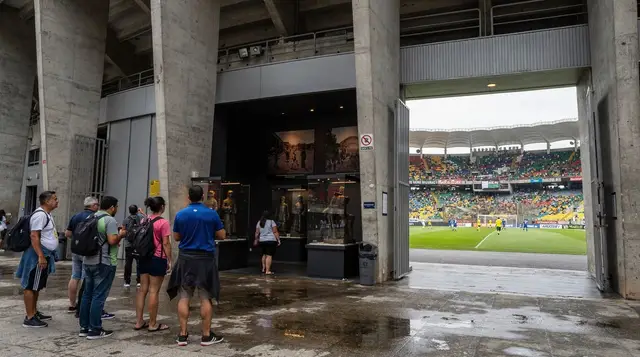
Maracana Stadium - Behind the Scenes Tour

Private tour: Christ the Redeemer, Maracanã,Sugarloaf, Old Downtown and Selaron
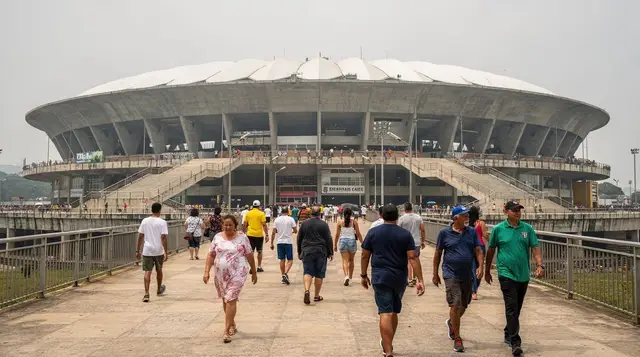
Rio de Janeiro: Maracanã Stadium Tour and Beach Soccer
Photos show the destination, not the operator's own pictures.