
Matchday safety in Rio — the honest version
Is it safe to go to a football match in Rio?
Yes — hundreds of thousands of fans, including families and solo visitors, attend Rio matches without incident every season. The real risks are practical and manageable: pickpocketing in dense pre- and post-match crowds, and the social friction of wearing rival colours into the wrong sector. Buy a legitimate ticket, choose a standard sector for a first match, travel by metro, and give the exit crowd time to thin before leaving.
A Rio matchday is loud, crowded, and — with a handful of specific, learnable habits — genuinely low-risk for a visitor, whether at Maracanã or one of the city’s smaller grounds. This page breaks that down into the practical decisions that actually matter: which sector to sit in, what not to wear, when to arrive and leave, and how to buy a ticket that gets you through the gate without an argument.
| Where the risk concentrates | Dense crowds at entry/exit, not the match itself |
| Sector for first-timers | Standard arquibancada or cadeira, not torcida organizada |
| Arrive | 60-90 minutes before kickoff, via metro |
| Leave | Wait 5-10 minutes after the final whistle |
| Biggest single risk | Pickpocketing in the post-match crush |
The risk is crowd density, not violence
Rio football has a reputation, in some corners of the internet, for danger that doesn’t match the lived experience of the hundreds of thousands of people — families, solo travellers, season-ticket holders — who go to matches every season without a single bad moment. The honest risk profile at a Rio stadium looks a lot like the risk profile anywhere a huge, excited crowd gathers in a compressed space: petty theft in dense crowds, and the ordinary friction of rival fan bases in close proximity.
Genuine violence directed at ordinary spectators, let alone visitors, is rare enough that it’s not the thing to plan a matchday around. This page covers the specific, practical version of matchday safety — the same honest, no-scare-stories approach as Rio’s general safety guide, applied to a stadium day.
Which sector to sit in
Standard seating — arquibancada (general terrace) or cadeira/cadeira coberta (individual seats) — is the right default for a first Rio match, visitors travelling with children, or anyone who wants the atmosphere without the specific intensity of an organised supporter block. The torcida organizada sections, where a club’s most dedicated, coordinated fan groups sit with drums and flags for the full match, are genuinely thrilling but carry a different social contract: you’re expected to sing along, stand for long stretches, and generally participate rather than passively watch, and any friction between rival groups — rare, but not impossible — concentrates in and near these blocks far more than in the standard sectors.
None of this makes the torcida sections unsafe in any dramatic sense; it just means a first-time visitor unfamiliar with the songs and rhythms will have a more comfortable time in a standard sector, and can graduate to a torcida block on a later trip if the atmosphere calls them back. Buying detail and legitimate ticket sources are in how to see a football match in Rio.
What not to wear
Don’t wear the away club’s colours, or a rival club’s shirt, into a sector dominated by the home crowd. This is the single most common avoidable friction point at a Rio match — not because it invites violence in any serious sense, but because it reads as a deliberate provocation in a way that’s simply not worth the awkwardness, especially at a Fla-Flu derby where sectors are strictly segregated by club anyway.
Neutral clothing, or the colours of whichever club’s sector you’re actually sitting in, is the comfortable default. Leave valuables — a watch, jewellery, an expensive camera worn around the neck — at the hotel; the same “beach kit” logic from Rio’s safety guide (minimal cash, one card, phone in a zipped pocket) applies directly to a packed stadium crowd.
When to arrive, and by what
Arrive 60-90 minutes before kickoff, via the metro rather than a car or rideshare dropped directly at the gates — the Rio metro guide covers the specific line for each ground, and road access around any Rio stadium on matchday genuinely does clog to a standstill, making a car the slower option, not the convenient one. Security checks at the gates take real time on a full-capacity fixture, and arriving with less than 45 minutes to spare on a high-demand match risks missing kickoff.
During the match
Keep bags in front of you rather than slung over one shoulder in the dense concourse and stairwell crowds, particularly during the rush toward seats before kickoff and toward exits at half-time concession stands. Stay aware of your section and row number — stadiums this size are genuinely easy to get briefly turned around in on the way back from a bathroom or food stand, especially once the lights and noise are in full swing.
Leaving: the part most guides skip
The ten to fifteen minutes immediately after the final whistle produce the single densest, slowest-moving crowd of a Rio matchday — everyone leaving at once through a limited number of exits and stairwells. The simple, standard local practice is to not rush: stay in your seat, or in the concourse, for five to ten minutes after the whistle and let the initial crush clear before joining the flow toward the exits and the metro. This single habit removes most of the practical risk of a matchday — pickpocketing concentrates specifically in that dense initial surge, and a slightly later, calmer exit avoids the worst of it entirely.
On a derby night or after a result either side feels strongly about, give the exit crowd extra room and avoid lingering near groups celebrating or commiserating loudly — not because it’s genuinely dangerous, but because a large, emotionally charged crowd is simply not the place to be a passive bystander drawing attention. Head directly for the metro or your pre-arranged transport rather than wandering the surrounding streets looking for food or a bar; save that for before the match, in an area you already know.
If you would rather have someone who knows the routine alongside you for a first match, a guided Maracanã and Flamengo football outing takes care of the sector choice, the approach and the exit for you, which suits solo visitors in particular.
Travelling with children
Rio football is a genuine family event in the standard sectors — children attend regularly, and the core precautions (stay together, agree a meeting point in case anyone gets separated in a dense concourse, hold hands or keep a child on a shoulder during the post-match exit crush) are the same ones that apply to any large family outing in a crowd. Avoid the torcida organizada blocks with young children specifically; the standing, singing, and sustained noise level there is built for committed adult fans, not a first football experience for a child. See Rio with kids for the broader picture of family travel logistics in the city.
Buying a ticket that actually gets you through the gate
The ticket itself is the first safety decision of the day, before you’ve even left the hotel. com is the one used across Flamengo, Fluminense, Vasco, and Botafogo fixtures — and the ticket that platform issues is tied to a specific name, which matters because turnstile staff at the bigger fixtures do check that the name on your ticket matches a photo ID, passport included for visitors. Buy under the name of whoever is actually walking through the gate, not a group organiser’s name for the whole party, or you risk an argument at the turnstile with a queue building behind you.
Street sellers working the approach roads to the stadium — cambistas — are a fixture of matchday and not automatically a scam, but they’re also the one part of the day with no recourse if the ticket turns out to be a duplicate already scanned by someone else, which does happen on sold-out derbies. A ticket bought from the club’s own platform or a verified resale marketplace costs more for a high-demand fixture but comes with an actual guarantee of entry.
| Source | Reliability | Typical price vs face value |
|---|---|---|
| Club’s official platform (e.g. Ingresso.com) | High — ticket linked to your name, verified at the turnstile | Face value |
| Verified resale marketplace | Moderate — legitimate but marked up for high-demand fixtures | 1.5-3x face value |
| Street sellers outside the stadium (cambistas) | Low — no recourse if the ticket is a duplicate or fails to scan | Variable, often underpriced for a reason |
Sócio-torcedor sections — season-membership seating tied to a club loyalty programme — are sometimes sold to visitors through resale channels but can require the member’s own ID at the gate rather than the buyer’s, so confirm exactly what a resale ticket entitles you to before matchday rather than at the turnstile.
Mobile signal inside a packed stadium bowl degrades badly once tens of thousands of phones are competing for the same towers, and a digital ticket that needs to load a QR code from a live app is exactly the wrong thing to discover doesn’t work while you’re holding up the turnstile line. Take a screenshot of the ticket QR code the night before, or download the PDF version if the platform offers one, so entry doesn’t depend on a data connection at the one moment it’s least reliable. The same logic applies to a rideshare pickup point after the match — agree it and share it with your group before kickoff, because coordinating a live pin with a stalled connection in a departing crowd of 60,000 people rarely goes smoothly.
What actually happens at the gate security check
Expect two separate checkpoints in sequence: a bag check and a pat-down (revista), followed by the ticket and ID scan at the turnstile itself. Bags are generally fine if they’re roughly daypack-sized or smaller; large backpacks and any hard-sided case get a longer look and occasionally a refusal, so a match day is not the day to carry the bag you packed for the flight. Glass containers, metal water bottles, and anything that reads as a weapon by any stretch — including a compact umbrella with a metal point, at some grounds — get turned away at this stage, and there’s no baggage storage at most gates, so the item simply doesn’t come in with you.
Pat-down lines are separated by gender and move independently of each other, which means a mixed group should expect to be briefly split up and should agree a meeting point just past the turnstiles rather than assuming everyone clears security at the same moment. Flags and banners are a normal, welcomed part of the crowd and go through without issue; large poles or rigid frames attached to them sometimes don’t, since they can be used to strike someone in a packed section.
A professional camera with a detachable lens draws more scrutiny than a phone camera and can occasionally require a media credential to bring in at all — if photography is the point of your visit, check the club’s current policy before you travel rather than finding out at the gate.
Heat, sun, and what you can (and can’t) bring to eat or drink
Rio kickoffs run year-round, and a summer afternoon fixture (roughly December through March) at an open, largely uncovered ground like the Maracanã puts direct sun and real humidity on a crowd for two-plus hours with essentially no shade in the upper tiers — this is a bigger practical factor for a visitor than anything to do with crowd safety, and it’s the one first-timers most consistently underestimate. Outside food, drink, and water bottles are not permitted through the gate at any Rio ground, full stop, so hydration has to come from inside: concession stands sell water and soft drinks, generally for cash or card, at prices well above a street kiosk but not unreasonable by stadium standards anywhere.
Queues at concession stands spike hard in the ten minutes before kickoff and again at half-time, so buying water on the way to your seat rather than waiting for the queue to peak is the simple fix. Alcohol availability varies genuinely by venue and by the club renting it for the day — some grounds sell beer at concessions, others don’t, and it’s not something to plan around either way, but it’s worth knowing you may arrive expecting a beer and find none for sale.
A hat, sunscreen applied before you leave the hotel, and light clothing matter more for an afternoon match at Maracanã than almost any of the standard travel-safety advice, simply because there’s no practical way to reapply sunscreen or step into shade once you’re in your seat for a two-hour block.
Beyond Maracanã — other grounds, same principles
Flamengo, Fluminense, Vasco, and Botafogo all play some fixtures away from Maracanã itself — Vasco’s own São Januário and Botafogo’s Nilton Santos (Engenhão) are the two most common alternates a visitor might end up at depending on the fixture list.
The safety principles above apply identically regardless of which ground hosts the match: standard sector for a first visit, metro over a car, arrive with margin, and let the exit crowd thin before moving. Engenhão in particular sits further from the classic Zona Sul hotels than Maracanã, so budget more transit time both ways if a fixture lands there — see getting around Rio for the wider transport picture beyond the matchday-specific metro advice above.
If a fixture does land at Engenhão and you would rather not work out the logistics alone, a football match at the Engenhão stadium booked in advance keeps the ticket question settled before you arrive. For a first match, the Botafogo and Vasco guide and the Maracanã neighbourhood page help you decide which ground suits you.
If something does go wrong
Genuine incidents at Rio matches are uncommon enough that most visitors never need this section, but worth knowing anyway: stadium staff and a routine police presence are positioned throughout the concourse and immediately outside the gates, and moving toward either — rather than continuing alone into a thinning crowd — is the right first move if you feel unsafe or realise something’s been taken. For a lost phone or wallet, the same after-the-fact steps as anywhere in the city apply: a police report (boletim de ocorrência) for any travel-insurance claim, and freezing cards through your bank’s app. Rio’s safety guide covers the fuller aftermath process if a matchday incident is part of a wider trip concern.
an official Maracanã entrance ticket is one straightforward way to remove the ticket-sourcing question covered above entirely, buying directly through a verified channel rather than navigating the club platform or a resale marketplace yourself.
Frequently asked questions about matchday safety in Rio
Is it safe to go to a Rio football match alone?
Yes — solo attendance is common and unremarkable in the standard sectors. The main practical consideration is simply having someone expect you afterward and sticking to the metro-and-direct-route plan rather than lingering solo in an unfamiliar area post-match.
What’s the biggest real risk at a Rio match?
Pickpocketing in dense pre-match and especially post-match crowds — not violence. Minimising valuables and giving the exit crush time to thin addresses most of it directly.
Should I avoid the torcida organizada sections entirely?
Not necessarily — they’re a genuine, celebrated part of Rio football culture, just one that suits a returning visitor who knows the songs and social norms better than a complete first-timer. A standard sector is the more comfortable choice for a first match.
Is it okay to wear my home country’s football shirt?
Generally yes — a neutral national team shirt doesn’t read as a provocation the way a rival Rio club’s colours would. If in doubt, plain clothing is the simplest choice.
How do I avoid getting separated from my group in the exit crowd?
Agree a specific meeting point outside the stadium before the match, keep your group physically close during the exit rather than trying to move at different paces, and consider giving the initial crush five to ten minutes to clear before moving as a group.
Is alcohol a factor in matchday safety?
Policies on stadium alcohol sales vary by venue, and Rio matchday crowds are generally no more alcohol-driven than any major sporting event elsewhere — ordinary common sense around a lively, excited crowd applies.
What should I do if I feel unsafe during the match or the exit?
Move toward stadium staff, a police presence (routinely stationed at Rio matches), or simply a more open, better-lit area of the concourse — the same general principle as anywhere crowded in the city, covered in Rio’s safety guide.
Are away fans ever present at Rio matches?
For fixtures against clubs from outside Rio, yes, generally in a designated, separated section. For an intra-Rio derby, “away” is really “the other Rio club’s sector,” strictly segregated as covered above.
Is it safe to bring a professional camera to a match?
It’s allowed, but expect more scrutiny at the gate than a phone camera, and occasionally a requirement for a media credential depending on the ground and the fixture. If photography is the actual point of your visit rather than a bonus, check the club’s current policy before you travel — see what actually happens at the gate security check above for the fuller bag-and-camera rules.
Do I need travel insurance specifically for a matchday?
Standard travel insurance that covers theft is sufficient — there’s nothing matchday-specific to add, beyond keeping a copy of your ticket and having your bank’s app ready to freeze a card quickly if needed. See money and payments in Rio for the wider card-safety picture that applies on any Rio day, stadium or not.
tours.football-culture
Verified deep-linked GetYourGuide tours. Book through these links and we earn a small commission at no cost to you.
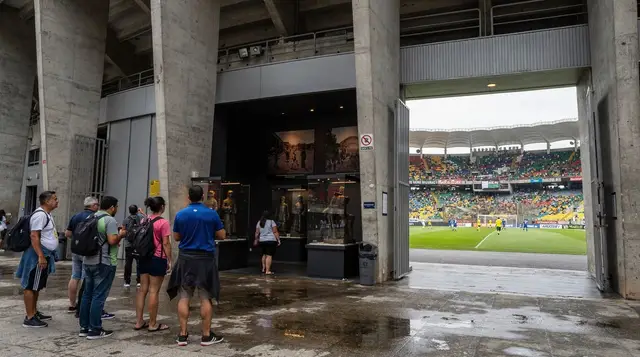
Maracana Stadium - Behind the Scenes Tour

Private tour: Christ the Redeemer, Maracanã,Sugarloaf, Old Downtown and Selaron
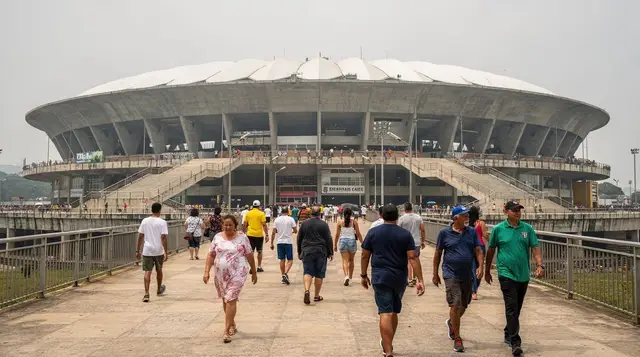
Rio de Janeiro: Maracanã Stadium Tour and Beach Soccer
Photos show the destination, not the operator's own pictures.