
How to see a football match in Rio — tickets, sectors, and getting home safely
How do I buy a legitimate ticket to a Rio football match?
Buy through the home club's official app or website, or through a licensed match-experience tour that bundles a verified ticket with a guide — never from a street tout outside the stadium, whose tickets are frequently counterfeit or for the wrong sector. Choose a neutral or home-side sector (arquibancada or cadeira, not the torcida organizada section) unless you specifically want the full chanting-crowd experience, and use the metro both ways.
| Where to buy | Club’s official app/site, or a verified match-experience tour |
| Never | A street seller outside the gate |
| Sector for first-timers | Arquibancada or cadeira, not torcida organizada |
| Arrival | 60–90 minutes before kickoff |
| Getting there | Metro (Line 2 to Maracanã), not a rideshare drop-off at the gate |
The single biggest mistake is buying at the gate
A Rio matchday looks, from a distance, like an easy walk-up event — a crowd, a stadium, ticket windows. It isn’t. Tickets for popular fixtures, especially anything involving Flamengo or the Fla-Flu derby, sell out through official channels days ahead, which means the people selling outside the gate on matchday are, overwhelmingly, touts — and a meaningful share of what they’re holding is counterfeit, for the wrong sector, or simply won’t scan. The single most important piece of advice on this whole page is to have your ticket sorted before you arrive at the Maracanã or whichever ground is hosting, not to plan on buying there.
Buying a legitimate ticket
Through the club directly. Each of Rio’s big four clubs — Flamengo, Fluminense, Botafogo, and Vasco da Gama (full profile of the latter two in Botafogo and Vasco) — sells tickets through its own official app or website, usually opening seven to ten days before a fixture. This is the cheapest route and, language barrier aside, the most straightforward if you’re comfortable navigating a Portuguese-language checkout and have a way to receive a digital or print-at-home ticket.
Through a match-experience package. For visitors who’d rather not navigate a club’s ticketing system in Portuguese, or who want a local guide alongside the ticket, a bundled match-experience tour is the practical alternative — verified tickets, usually a specific seating block, and someone alongside you who can explain what’s happening on the pitch and in the stands.
a Flamengo matchday experience at the Maracanã with a local guide is the highest-demand version, given Flamengo’s size as South America’s most-followed club, and
the equivalent Fluminense matchday package covers Fla’s Maracanã co-tenant. If your dates line up with a Vasco or Botafogo fixture instead,
a Vasco da Gama matchday experience at their historic São Januário ground and
a Botafogo match experience both bundle a verified ticket, transport logistics, and a guide, which is particularly useful at São Januário and Nilton Santos — smaller, less signposted grounds than the Maracanã.
Never buy from a street seller outside the gate. No exceptions worth taking. If a match is sold out through every legitimate channel, it’s sold out — treat it as a scheduling problem to route around on a future trip, not a price to negotiate on the sidewalk.
Choosing a sector
Rio stadiums divide seating into sectors that matter more than most first-time visitors expect.
Arquibancada (general terrace seating) and cadeira or cadeira coberta (individual, often covered seats) are the standard, family-friendly options and the right default for most visitors — full atmosphere, no ambiguity about where you’re sitting, and a straightforward buying process.
The torcida organizada sections — the blocks given over to a club’s organised supporter groups, with drums, flags, and coordinated songs for the full ninety minutes — are the loudest, most intense way to watch a match, and genuinely thrilling if that’s what you came for, but they are also where any crowd friction, should it happen, concentrates, and where a first-time visitor unfamiliar with the songs and rhythms can feel more like an outsider than a participant.
For a first Rio match, a standard sector gives you the noise and the colour without the specific intensity of an organised bloc; save the torcida sections for a return trip once you know what you’re walking into. Full detail on which sectors carry which risk profile is in matchday safety.
Home vs away, and derby days. For any match involving two Rio clubs — the Fla-Flu derby chief among them — sectors are strictly segregated between the two clubs’ supporters, and mixing is not permitted. Buy clearly on the side of the club whose atmosphere you want to experience; there’s no neutral option inside a derby stadium the way there might be for other cities’ fixtures.
Arriving: how early, and by what
Arrive 60-90 minutes before kickoff. This isn’t padding — stadium entry involves a security check, and the walk from the metro station to the gates on a busy matchday takes noticeably longer than the same walk on a quiet tour day, simply because of crowd volume. Arriving with less than 45 minutes to spare on a high-demand fixture risks missing kickoff entirely.
Take the metro. Line 2 to Maracanã station is the standard route for Maracanã fixtures and runs extra frequency around kickoff and full-time specifically to handle matchday volume — full detail in the Rio metro guide. For matches at smaller grounds, check the specific club’s recommended access point; São Januário and the Nilton Santos stadium (Engenhão) have their own nearest stations, covered in Botafogo and Vasco. Driving or a rideshare drop-off directly at the stadium on matchday is genuinely worse than the metro — road closures and crowd density around the gates make a car the slow option, not the convenient one, on any fixture with real attendance.
Inside: what the torcida actually is
Torcida simply means “supporters” — every club’s fanbase is its torcida — but the word carries a specific charge in Rio because the culture around it is unusually intense even by South American standards: pre-match drumming that starts well before kickoff, flags large enough to need several people to hold, and songs that run continuously through long stretches of play, not just after goals.
None of this requires you to participate to enjoy — most visitors find simply watching the choreography around them, especially in the minutes before kickoff, as memorable as the match itself. If you want the deepest version of this experience specifically at the Rio derby, see Flamengo vs Fluminense for what makes that particular fixture different from an ordinary league match.
Leaving safely afterward
The crowd leaving a Rio stadium after a big match is dense, slow-moving, and — for the ten to fifteen minutes immediately after the final whistle — the single highest-density crowd you’re likely to be part of on a Rio trip. Stay with whoever you came with, keep bags in front of you rather than slung over one shoulder, and don’t rush to be first out; letting the initial crush thin out for five or ten minutes inside the stadium before heading for the exits is standard local practice, not overcaution. Full matchday-specific safety detail, including what not to wear and which exits to avoid on derby nights, is in matchday safety — read it before, not after, a big fixture.
Choosing which match to see
Not every fixture on the calendar is worth building a day around. Rio’s football year runs in two distinct blocks: the Campeonato Carioca, the state championship played from January to April, which includes plenty of one-sided group-stage matches against small clubs and draws a thin, quiet crowd outside of clássicos; and the Brasileirão, the national league running roughly April through December, where every match matters for relegation or a continental spot and the atmosphere reflects it.
If your trip lands during Carioca season, check the fixture specifically rather than assuming any Flamengo or Fluminense match will deliver a big-match feel — a midweek group match against a lower-division opponent draws a fraction of the crowd and none of the noise of a Brasileirão fixture against a rival.
Kickoff time matters as much as the opponent. Day matches, common on Sunday afternoons, mean sitting in direct sun for two-plus hours in Rio’s heat and humidity — bring water, a hat, and sunscreen, and expect the covered cadeira sectors to sell out faster on these dates for exactly that reason. Night matches, typically starting at 9 or 9:30pm on weeknights, are cooler and often louder, since a weeknight crowd skews toward committed fans who planned around the match rather than tourists filling a Sunday afternoon, but they also mean a later metro ride home.
| Kickoff | Atmosphere | Trade-off |
|---|---|---|
| Sunday afternoon (day) | Family-heavy, tourist-friendly | Direct sun, higher heat exposure |
| Weeknight (evening) | Louder, more committed local crowd | Later finish, later metro home |
Weekend evening fixtures split the difference and are, for most first-time visitors, the easiest recommendation: cooler than a day match, earlier than a weeknight one.
What actually happens once you’re inside
Bring photo ID that matches the ticket. Brazilian match tickets are typically nominative — tied to the name of the person who bought them — and stadium staff do check ID against the ticket at the turnstile, particularly for high-demand fixtures. A passport, or a clear photo of one on your phone, is usually accepted; don’t assume the ticket alone gets you through.
Bag policy is stricter than a typical tourist attraction. Expect a security pat-down and a bag check at the gate, with backpacks and large bags either barred outright or restricted to a small clear format depending on the venue and the fixture’s risk classification — a small crossbody bag or nothing at all is the safest plan, and definitely leave anything that could be read as a weapon, including umbrellas with a sharp tip, at your accommodation.
Finding your seat. Arquibancada tickets are general admission within a block — arrive early for a better sightline, not a legally assigned spot. Cadeira and cadeira coberta tickets are numbered seats, printed on the ticket the same way as a cinema seat; stewards in the concourse can point you the right direction if the numbering isn’t obvious.
Food and drink. Concourse stands sell the Brazilian stadium standards — pastel, choripan, popcorn, soft drinks, and, where the venue permits it, beer — at prices noticeably higher than a street vendor outside, which is normal stadium pricing rather than a tourist markup. Card payment is widely accepted at official concession stands now, but carrying some cash in reais avoids friction if a card reader goes down, which does happen.
Signal gets weak. A packed stadium overloads local cell towers, so texting or calling to coordinate a meeting point mid-match or right after the final whistle is unreliable — agree on a specific, physical meeting spot with anyone you might get separated from before kickoff, not “I’ll text you.”
Mistakes first-time visitors make
Assuming a resale website is “official.” Third-party ticket resale sites that rank well in search results are not the same as the club’s own app or site, even when they look professional — some are legitimate secondary markets, others simply resell inflated or invalid tickets. If the URL isn’t the club’s own domain or a match-experience operator you’ve vetted, verify before paying.
Buying a torcida organizada ticket without knowing what it commits you to. These sections stand and sing for the full match — there’s no sitting quietly to watch — and a first-timer who buys in expecting a normal seat can end up uncomfortable in a section built around participation, not spectating.
Underestimating how long the exit takes. Visitors who plan a tight connection — a dinner reservation, a flight, a last metro — right after full time routinely misjudge how long a dense stadium crowd takes to clear. Build in at least 45 minutes of slack after the final whistle before you need to be anywhere else.
Wearing the wrong shirt into the wrong sector, even unintentionally — a rival club’s colours, or even an unrelated football shirt with an unfamiliar crest, can draw unwanted attention in a home-heavy block. Neutral clothing is the low-effort way to avoid the question entirely.
Not checking whether it’s a derby before choosing a sector. A regular league match and a Fla-Flu derby have different crowd dynamics and different segregation rules; the sector that felt relaxed for an ordinary Wednesday fixture is not automatically the same experience on derby day.
Carrying the physical passport “just in case” instead of a photo of it. If your accommodation has secure storage, a clear photo on your phone is usually enough for the ID check at the gate — one fewer valuable to protect during the season’s most crowded few hours.
Frequently asked questions about seeing a football match in Rio
How far ahead should I buy tickets?
For a high-demand fixture (anything involving Flamengo, or the Fla-Flu derby), buy as soon as the fixture and your travel dates are both confirmed — good sectors sell out days ahead. For lower-demand league matches, a few days’ notice is usually enough.
Can I just walk up on matchday if I don’t mind any seat?
For smaller, lower-demand fixtures, sometimes. For anything involving Flamengo or a derby, no — treat walk-up availability as unreliable and buy ahead.
What should I wear?
Comfortable clothes in neutral colours are the safe default; avoid wearing the colours of the away club, or any rival’s colours, into a home-heavy sector — it reads as a provocation it isn’t worth inviting. Full detail in matchday safety.
Is it safe to bring a camera or phone?
Yes, with the same precautions as anywhere crowded in Rio — keep it in a zipped pocket or crossbody bag between uses rather than holding it out for long stretches, especially in the dense post-match exit crowd.
Do children attend Rio football matches?
Yes, regularly, in the standard cadeira and arquibancada sectors — Rio football is a genuine family event outside the organised torcida blocks, which are a more adult, more intense environment by convention rather than rule.
What language do I need for the ticketing process?
Club apps and websites are primarily in Portuguese, which is the main reason many first-time visitors opt for a bundled match-experience package instead — it removes the language step entirely and adds a guide who can explain what’s happening.
Which is the better first match to see — Flamengo, or one of the smaller clubs?
Flamengo delivers the biggest, loudest atmosphere by a wide margin given their size as a club, but a Botafogo or Vasco match at their own, smaller grounds gives a more intimate, arguably more textured sense of Rio football culture away from the tourist-heavy Maracanã crowd. Neither is wrong; they’re different experiences.
Is alcohol sold inside Rio stadiums?
Rules vary by venue and have changed over the years; check current policy with your ticket provider rather than assuming — some grounds sell beer freely, others restrict it to specific concourse areas or don’t sell it at all.
tours.football-culture
Verified deep-linked GetYourGuide tours. Book through these links and we earn a small commission at no cost to you.
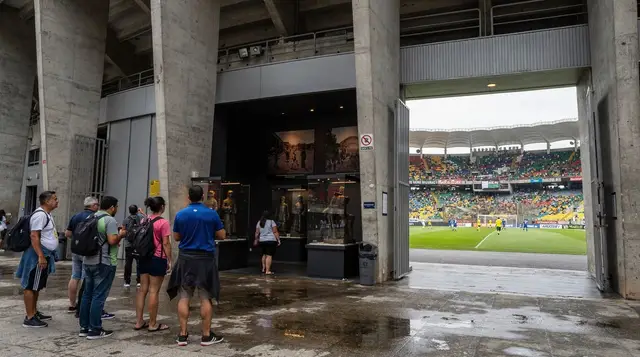
Maracana Stadium - Behind the Scenes Tour

Private tour: Christ the Redeemer, Maracanã,Sugarloaf, Old Downtown and Selaron
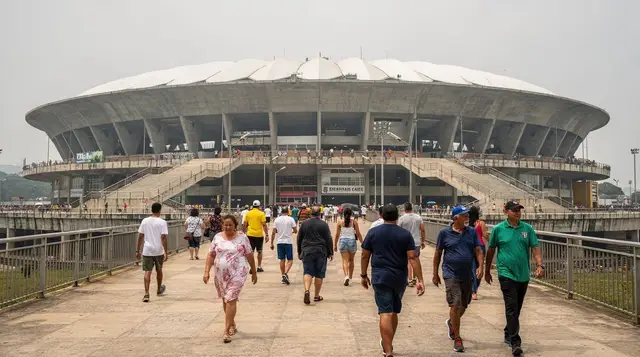
Rio de Janeiro: Maracanã Stadium Tour and Beach Soccer
Photos show the destination, not the operator's own pictures.