| Where | Zona Sul, west of Ipanema across the Jardim de Alah canal |
| Cost | Beach is free; a chair and umbrella run around R$20–30/day |
| Time needed | Half a day, or longer if using it as a base |
| Getting there | Jardim de Alah metro (Line 1), or ride-hail from central Zona Sul |
| Best time | Any day for the beach; Thursday-Saturday evenings for Baixo Leblon |
The quiet end of the same beach
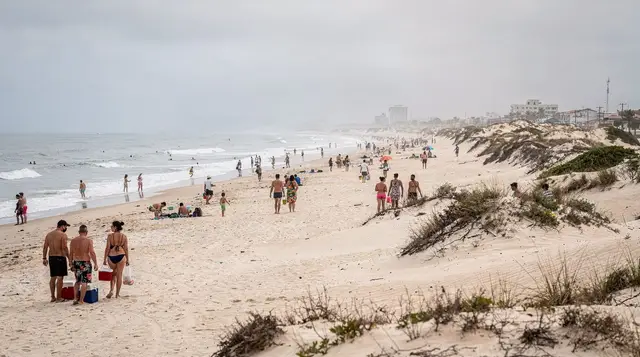
Leblon and Ipanema share a single unbroken stretch of sand, split only by the narrow Jardim de Alah canal, and to a first-time visitor walking the promenade the two can feel like one continuous beach. The difference shows up in the details: Leblon’s sand is noticeably less crowded on an average weekday, the beachfront apartment towers are a shade newer and glassier, and the crowd on the sand skews toward families with small children rather than Ipanema’s younger, more performative Posto 9 scene. There’s no posto-numbering culture here in the way Copacabana and Ipanema have — Leblon is short enough, and homogeneous enough, that Cariocas don’t subdivide it the same way.
The stretch closest to the Ipanema border, near Posto 11, draws a slightly younger crowd bleeding over from next door; the far western end, toward the Dois Irmãos hillside and the Vidigal favela that climbs up behind it, is the quietest and most residential part of the beach. A dedicated children’s play area with sand toys and shade is set up daily near the Baixo Leblon end, and lifeguard coverage and swimming conditions are broadly the same as neighbouring Ipanema — check the flag colour before swimming past waist depth.
Architecturally, Leblon reads as newer and glossier than either of its neighbours, a product of later development and consistently high land values that kept construction quality high even as buildings were replaced over the decades. There’s less of Copacabana’s mid-century Art Deco character and less of Ipanema’s bohemian mid-1960s texture; Leblon feels, more than either, like contemporary upper-middle-class Rio — doormen, security cameras, dogs on leads, joggers in expensive kit. It’s a useful counterpoint if the rest of a Rio trip has been spent in louder, more mixed neighbourhoods, and a slightly artificial one if it’s the only side of the city a visitor sees.
Baixo Leblon: where the neighbourhood actually goes out
Rua Dias Ferreira, running a few blocks inland, is the physical heart of what Cariocas call Baixo Leblon (“Lower Leblon”) — a tightly packed run of bars, sushi counters, and mid-to-high-end restaurants that fills up from around 9pm on weeknights and stays busy well past midnight on weekends. It’s one of the more reliable places in the city to find a genuinely good meal without the tourist mark-up that shows up closer to the beachfront in Copacabana, precisely because the customer base is overwhelmingly local — Leblon residents eating in their own neighbourhood, not visitors working from a guidebook.
The format is mostly standing-room bars with a plate of bar snacks (petiscos) rather than sit-down dinners, though there are excellent sit-down options too if you book ahead — Leblon’s restaurant scene is consistently ranked among Rio’s best, and a few of the city’s most talked-about kitchens sit within a five-minute walk of each other here. Expect to pay Rio’s higher end for it: a main course at a good Baixo Leblon restaurant runs R$70–140 (roughly US$13–26), noticeably more than a comparable meal in Copacabana or even most of Ipanema. For a broader sense of what a night out costs and where the better value sits citywide, see how much does Rio cost.
Jobi, on Avenida Ataulfo de Paiva, is the neighbourhood’s most enduring institution — a plain, brightly lit, 24-hour boteco that’s been serving cold Original beer and fried snacks like bolinho de bacalhau (salt-cod fritters) since the 1950s, and is as popular with Leblon’s wealthiest residents as with anyone else, since a boteco doesn’t really do class distinction. It’s a useful reference point for the difference between Baixo Leblon’s more polished bars and the older, plainer boteco tradition that still runs underneath the neighbourhood’s newer restaurant scene — for more on that tradition citywide, see boteco culture in Rio.
A wealthy neighbourhood, and what that changes
Leblon has been Rio’s most expensive square metre of real estate for years, and it shows in small, specific ways: fewer street vendors on the beach relative to Ipanema or Copacabana, a noticeably lower density of tourist-facing businesses, and a general sense of a neighbourhood built for the people who live in it rather than for visitors passing through. That’s a genuine trade-off — Leblon has less to actually do than Ipanema or Botafogo if you’re spending a full day here, but it’s also one of the calmer, lower-hassle places to walk around at almost any hour.
It sits in interesting proximity to real economic contrast: the Vidigal favela rises directly above Leblon’s western end, its lower slopes now home to a handful of well-regarded guesthouses and viewpoint bars that draw visitors up for the view back down over the beach. That contrast — one of the wealthiest postcodes in South America against one of Rio’s more famous informal communities, sharing a single hillside — is about as concentrated an illustration of the city’s inequality as exists anywhere in Rio, and it’s worth sitting with rather than glossing over on a walk through the area.
Vidigal itself has become one of the more visited favelas in Rio precisely because of that proximity and its view, and it’s worth doing thoughtfully if at all — going up with a community-based guide or operator, spending money in Vidigal-owned businesses rather than treating the community as a photo backdrop, and being conscious that people live there, work there, and raise families there.
See favela tours done right for how to think about this properly before booking anything, and the truth about favela tours for a franker look at the industry around it. The Dois Irmãos hiking trail, one of Rio’s best short hikes for the payoff-to-effort ratio, starts from within Vidigal and climbs to a genuinely spectacular viewpoint over both Leblon and Ipanema — covered in full in the Dois Irmãos hike guide.
Praça Nossa Senhora da Paz and the walk to Ipanema
The square that marks the unofficial border between Leblon and Ipanema, Praça Nossa Senhora da Paz, is a genuinely pleasant spot — mature trees, a playground, and a ring of casual restaurants that locals actually use, not a manufactured “plaza” experience. It’s a natural pivot point for a walk that starts at Leblon’s quieter western end and finishes at Ipanema’s Posto 9, taking in both neighbourhoods’ distinct characters in under an hour on foot.
A day at the beach, realistically
Leblon’s daily rhythm tracks the rest of Zona Sul’s beaches — early swimmers and runners from around 6:30am, a build-up through the morning, and a genuine midday lull as the sun peaks and the sand becomes uncomfortably hot underfoot. What’s different here is how much smaller the peak crowd is: even on a busy Saturday, Leblon rarely reaches the shoulder-to-shoulder density Copacabana sees at Posto 4 or 5, and on an ordinary weekday it can feel close to empty by comparison.
Chair and umbrella rental works the same way as everywhere else in Zona Sul — flag down a vendor carrying a stack, expect to pay R$20–30 (roughly US$4–5.50) for the day. The food and drink offering on the sand is a notch more polished than Copacabana’s — better açaí, more juice options, fewer hard-sell vendors — a small reflection of the neighbourhood’s wealth playing out even in beach-vendor economics. Swimming conditions and lifeguard flag colours follow the same green–yellow–red system used across Rio’s beaches; check before swimming past waist depth, particularly near the rockier western end below Vidigal.
If the beach itself starts to feel like too little for a full day, the water is the natural way to widen it. Leblon has no dedicated activity of its own to book, but a morning on a board is an easy upgrade for confident swimmers: a sunrise stand-up paddle session off the neighbouring Copacabana beach pairs well with a quiet, late breakfast back in Leblon afterwards. For more options on the water, see kayaking and SUP in Rio and boat trips on Guanabara Bay.
Leblon with young children, in practice
Leblon’s calmer beach and dedicated children’s play area near Baixo Leblon make it one of the easier Zona Sul neighbourhoods for a family with small kids, but a few practicalities help: the chair and umbrella vendors carry the same stock as elsewhere in Zona Sul, so nothing extra needs to be pre-arranged for shade, and lifeguard coverage follows the standard flag system, worth checking before letting kids swim past waist depth.
Baixo Leblon’s restaurants skew adult in atmosphere after around 8-9pm, so an early dinner works better with young children than trying to fit into the later, more grown-up sitting most locals prefer. Shopping Leblon’s food court is a reliable, low-key fallback for a meal that doesn’t require managing a toddler through a sit-down restaurant.
Shopping and everyday life
Rua General Urquiza and Avenida Ataulfo de Paiva, both a block or two off the beach, carry Leblon’s everyday commercial life — supermarkets, pharmacies, and a cluster of boutiques and homeware shops that lean upscale but stop short of Ipanema’s fashion-flagship level. Shopping Leblon, an enclosed mall on Ataulfo de Paiva, is a reliable air-conditioned option on a hot or rainy afternoon, with a cinema and a food court that’s genuinely decent by mall standards. It’s a useful fallback alongside the broader options in what to do in Rio when it rains.
The neighbourhood’s produce and street market (feira) sets up on Thursdays on Rua General Urquiza, a good, low-key window into how residents actually shop day to day — fruit, vegetables, cheese, and flowers at prices well below what a beachfront kiosk charges for the same coconut water and snacks. It’s a genuinely pleasant, unhurried hour if you’re staying nearby and want a slice of ordinary Leblon life rather than another beach morning, and it’s over by early afternoon, so a mid-morning visit is the practical window.
Getting there and around
Leblon has its own metro stop, Jardim de Alah, on Line 1’s westward extension, though service here runs less frequently than the more central Copacabana and Ipanema stations — for most visitors, a ride-hailing app is the more practical way to reach Leblon, especially at night. See getting around Rio for the full transport picture. There’s no dedicated airport transfer product specifically branded for Leblon, since most visitors arrive here via Copacabana or Ipanema first and continue on by taxi or ride-hail; the transfer options covering those two neighbourhoods drop within a short ride of Leblon’s border regardless.
Leblon as a base, honestly
A handful of visitors choose to stay in Leblon rather than treat it as a day trip from Copacabana or Ipanema, and the case for it is straightforward: it’s the calmest of the three main Zona Sul beach neighbourhoods, has some of the city’s best restaurants on the doorstep, and puts you within easy reach of Ipanema and the Lagoa loop for a run or a bike ride. The case against it is just as straightforward — fewer hotels overall, a higher average price point across the ones that do exist, and less within immediate walking distance if you don’t have a car or aren’t relying on ride-hailing for everything.
In practice, Leblon suits a specific kind of visitor: someone on a second or third trip to Rio who already knows the city and wants a quieter home base, a family prioritising a calm beach over nightlife, or anyone whose trip revolves substantially around Leblon’s restaurant scene. First-timers are usually better served by Copacabana’s wider hotel range and metro access, or Ipanema’s balance of energy and calm — see where to stay in Rio for the full comparison across all of Zona Sul’s options.
Pairing Leblon with something more active
Because Leblon is calm by design, it works best as the restful half of a day that also includes something more energetic elsewhere. A hike with a view over the bay and then a slow evening in Baixo Leblon is a rhythm that suits many visitors; a guided hike up Urca hill with a cable car and a beach stop is one way to build the first half, and the Morro da Urca hike guide explains the route in detail. If you would rather stay on the water, a speedboat beach tour gives a different view of the coastline you have been walking along, and it leaves the evening free for dinner.
When to visit
Leblon’s beach is pleasant year-round and doesn’t see the extreme New Year’s Eve crowding that overwhelms Copacabana, making it a reasonable quieter alternative if you’re in Rio over the holidays and want beach access without the crush. For the bar and restaurant scene, Thursday through Saturday evenings are when Baixo Leblon is at its most active; Sunday and Monday nights are noticeably subdued, with several of the smaller bars closed. See best time to visit Rio for the broader seasonal picture.
Rio’s Carnival street parties (blocos) do pass through and around Leblon in the weeks leading up to Carnival proper, though the neighbourhood hosts fewer and smaller ones than Ipanema or Botafogo — a reasonable factor if the goal is experiencing a bloco without Copacabana’s Sambadrome-adjacent crowd density, or a reason to base elsewhere if blocos are the whole point of the trip.
Leblon vs Ipanema, the short version
For a visitor deciding between the two rather than doing both, the practical differences come down to a handful of things:
| Ipanema | Leblon | |
|---|---|---|
| Crowd on the sand | Busier, more social | Calmer, family-first |
| Restaurant scene | Very good | Rio’s best, priciest |
| Hotel range | Wide | Narrow, higher average price |
| Headline sight | Posto 9, hippie fair, sunset | None — it’s a residential/dining neighbourhood |
| Best for | First-timers wanting energy and calm both | Repeat visitors, families, food-focused trips |
Neither is a wrong choice; the decision mostly comes down to whether a headline beach scene or a quieter, food-driven stay matters more to your trip. See Copacabana vs Ipanema for how both compare against the third major Zona Sul option too.
Rainy-day options in Leblon
Leblon is a beach-and-dinner neighbourhood, so a wet day shifts the plan toward its indoor options: Shopping Leblon on Avenida Ataulfo de Paiva has a cinema and a decent food court, and several of Baixo Leblon’s restaurants and bars work perfectly well for an extended lunch that runs into the afternoon while the weather clears. It’s not a neighbourhood with much in the way of museums or covered attractions beyond the mall, so a rainy day here is better spent either at the mall or moving on to one of Ipanema’s indoor options like Livraria da Travessa, a short walk away.
Where it fits in a longer trip
Most visitors don’t dedicate a full day to Leblon on its own — it works better folded into a longer Zona Sul beach day that also takes in Ipanema and Arpoador, or as a dinner destination on an evening when the day’s plans were elsewhere. If you’re building a trip around family travel specifically, Leblon’s calmer beach and playground infrastructure make it worth prioritising over the louder stretches of Copacabana; see the dedicated family itinerary for how that plays out over several days, including which neighbourhoods pair well with Leblon’s slower pace and which are better saved for a day without small children in tow.
Frequently asked questions about Leblon
Is Leblon worth visiting if I’m short on time?
If you have limited days, Leblon is more skippable as a standalone stop than Ipanema or Copacabana — it doesn’t have a headline sight of its own. It’s worth including if you’re already walking the coast between neighbourhoods, want a calm beach for young kids, or are booking dinner at one of its well-regarded restaurants.
Is Leblon safe at night?
Yes, broadly — Baixo Leblon is busy, well-lit, and heavily used by locals late into the evening, which in practice makes it one of the safer areas of the city after dark. The same general rule as elsewhere in Zona Sul applies: stay on the lit streets, don’t walk onto the empty beach itself at night, and keep valuables reasonably discreet.
What’s the best beach for families — Leblon or Ipanema?
Leblon, on balance — lower crowds, a dedicated kids’ play area, and a calmer overall atmosphere than Ipanema’s busier Posto 9 stretch. Ipanema still has the edge for older kids and teenagers who’d rather be near more activity.
Do I need a reservation for Baixo Leblon restaurants?
For the better-known sit-down kitchens, yes, particularly Thursday to Saturday — some of Leblon’s most talked-about restaurants book out days in advance. The standing-bar and petisco format is far more casual and rarely needs one; walking in and finding a spot at the counter is the norm.
How does Leblon compare price-wise to Ipanema?
More expensive on average, both for property and for dining — Leblon has consistently topped Rio’s real estate price rankings, and its restaurant scene sits a notch above even Ipanema’s on price. A visitor is more likely to feel the difference at dinner than on the beach itself, since beach access is free everywhere in Rio regardless of the neighbourhood’s wealth, and a beach chair costs the same R$20–30 whether it’s set up in front of a modest apartment block or a penthouse.
Is there anything to see in Leblon besides the beach and restaurants?
Not much in the way of formal sights — Leblon is a residential and dining neighbourhood rather than a landmark-driven one. Its real appeal is the calmer beach, the food, and the walk along Praça Nossa Senhora da Paz toward Ipanema, which together make for a pleasant half-day rather than a must-see stop. If the goal is monuments and viewpoints, spend the time in Urca and Sugarloaf or up at Corcovado instead, and treat Leblon as the calm, well-fed bookend to a busier day elsewhere.
Should I visit Vidigal from Leblon?
If you’re interested, do it with a community-based operator or a guide who lives in or has strong ties to the community, rather than wandering in independently — it’s a residential neighbourhood, not a tourist attraction, and treating it that way matters. See favela tours done right before deciding.
Is Leblon walkable at night without a car?
Yes, within the neighbourhood and along the well-lit stretch to Ipanema — Baixo Leblon and the beachfront promenade are both busy and safe to walk after dark, and it’s one of the more comfortable places in Rio for a solo evening walk precisely because it’s so quiet and residential. Heading up toward Vidigal’s edge after dark without a specific reason and a guide is a different matter and best avoided.
What should I do in Leblon if it rains?
Shopping Leblon on Avenida Ataulfo de Paiva has a cinema and food court, and several Baixo Leblon restaurants work well for an extended lunch while the weather clears. Beyond the mall, there isn’t much indoor sightseeing specific to the neighbourhood.
Is Leblon or Ipanema better for restaurants?
Leblon, on balance — its Baixo Leblon strip is consistently ranked among Rio’s best dining, a notch above even Ipanema’s already strong scene, though it comes at a higher price point.