
Dois Irmãos hike — the twin peaks above Ipanema
How do you get to the Dois Irmãos trailhead?
The trail to Dois Irmãos (Two Brothers) starts inside Vidigal, a community above Leblon and São Conrado, and most hikers take a short moto-taxi (around R$15-20, a few dollars) up Vidigal's steep streets to the upper trailhead rather than walking the climb through the neighbourhood. From there it's a 30-50 minute forest trail to the twin summit at 533 metres, with a sweeping view over Ipanema, Leblon, and the coast.
The view most people know Rio by, from the other side
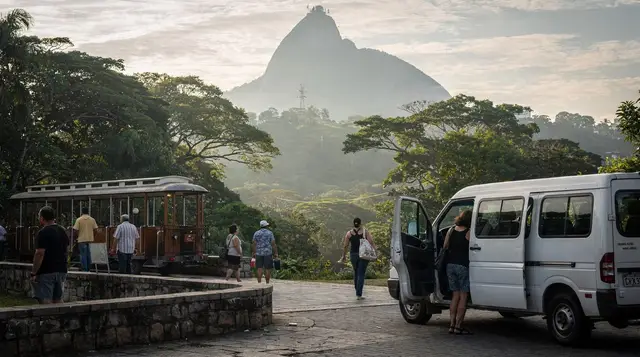
Dois Irmãos (“Two Brothers”) is the pair of twin granite peaks that close off the view at the end of Leblon beach — the silhouette in the background of half the photos taken from Ipanema and Leblon’s sand.
At 533 metres, it’s a shorter climb than Pedra da Gávea and less exposed than its final scramble, which makes it one of the more approachable hikes in this cluster — but getting an honest, practical account of how you actually reach the trailhead matters here more than for almost any other hike in Rio, because the access route runs directly through Vidigal, a community where people live, work, and raise families. This page covers that plainly and factually, the way it should be covered, rather than glossing over it or treating it as part of the thrill.
| Trailhead access | Moto-taxi from Vidigal, around R$15-20 |
| Trail time | 30-50 minutes each way |
| Summit | 533 metres |
| Total time | 1.5-2 hours round trip, plus time at the top |
| Best time | Weekday morning, or sunrise with a guide |
Vidigal: a neighbourhood, not an attraction
Vidigal is a favela built up the steep hillside between São Conrado and Leblon, and it is the only way to reach the Dois Irmãos trailhead on this side of the mountain. It’s worth being direct about what that means and what it doesn’t. It means driving or riding through streets that are home to a real, established community — narrow lanes, small shops, people going about an ordinary day — and it means the moto-taxi drivers who take hikers up the hill are Vidigal residents running a small, legitimate local business that has grown up specifically around this hike’s popularity.
It does not mean the hike is an adventure into danger, and it does not mean Vidigal exists as scenery for visitors to pass through quickly with eyes down. Walk or ride through the same way you would any residential street anywhere — without photographing people’s homes or doorways, without lingering to gawk, and with the same ordinary courtesy you’d extend in any neighbourhood you don’t live in.
For the fuller picture on how to think about visiting favelas in Rio generally — including the real distinction between a community-based tour and wandering in casually — see favela tours done right and the truth about favela tours.
The short version as it applies specifically to this hike: passing through Vidigal to reach a public trail that has run through it for years, using the same moto-taxi service the community itself relies on, is a different thing from an unstructured “favela tour,” and it’s treated that way by residents — this is a well-worn, accepted route, not an intrusion, as long as visitors behave like they’re passing through someone’s neighbourhood, because they are.
The moto-taxi, practically
Vidigal’s streets climb steeply from the access road near São Conrado and Leblon, and walking the full climb through the community adds a genuinely tiring 30-45 minutes before you even reach the forest trail. Almost every hiker instead takes a moto-taxi — a motorbike taxi, a normal and heavily used form of local transport in hillside communities across Rio, not a tourist novelty — from the base of Vidigal up to a point near the top of the community, where the actual hiking trail into the forest begins.
The ride costs somewhere around R$15-20 (a few dollars) per person, takes five to ten minutes, and drivers wait in an obvious spot near the entrance to Vidigal; agree the price before getting on, though it’s standardised enough that overcharging isn’t a common complaint. Wear closed shoes for the ride as much as the hike itself — it’s a steep, sometimes bumpy road.
The trail itself
From the moto-taxi drop-off, the trail runs through forest for roughly 30-50 minutes to the twin summit, gaining the last stretch of elevation on a mix of dirt path and some rock scrambling near the top — nothing like the exposure of Pedra da Gávea’s Carrasqueira, but real footing and occasional hand use are involved in the final approach.
The trail is well-used and reasonably easy to follow given how popular this hike is, though it’s still forest, not a paved path, and decent shoes matter. Total time from the moto-taxi drop-off to the summit and back runs about 1.5-2 hours for most hikers at a comfortable pace, plus whatever time you spend at the top, which for most people is longer than planned — the view is worth lingering over.
What you’ll see at the top
The summit delivers one of the best panoramic views in Rio: the full sweep of Ipanema and Leblon beaches directly below, Rodrigo de Freitas lagoon inland, Christ the Redeemer visible on Corcovado in the distance, and Vidigal itself spread across the hillside beneath you — a genuinely different, more intimate angle on the city than the more famous viewpoints.
Sunrise here has become popular enough that guided sunrise hikes exist specifically for it, trading a very early start (moto-taxis do run before dawn, arranged in advance through a guide) for a quieter summit and dramatically better light than the midday version most casual visitors experience. Comparisons with Rio’s other lookout points, including which ones handle crowds and light best at which time of day, are in best viewpoints in Rio and sunset spots in Rio — Dois Irmãos works for both ends of the day, unusually for a hike this accessible.
a guided hike combining Vidigal and the Dois Irmãos summit is the easiest way to do this the first time — it bundles the moto-taxi, a guide who knows the trail and the community, and the context on Vidigal itself that a solo visit won’t give you.
a Dois Irmãos hike timed to sunrise, midday, or sunset is the option to book specifically if the light at the summit matters more to you than a flexible daytime schedule.
Doing it independently vs with a guide
Unlike Pedra da Gávea, Dois Irmãos doesn’t require a guide for safety in the way that hike’s exposed scramble does — the trail itself is short, well-used, and not technically demanding.
The case for a guide here is different: it removes the small friction of finding and negotiating the moto-taxi on your first visit, it adds real context on Vidigal and its history that you’d otherwise miss entirely, and — as with any of Rio’s isolated trailheads — going with someone else rather than completely alone is generally the more sensible choice, covered in general terms in hiking safety in Rio. Plenty of visitors do this hike independently and have a completely uneventful, excellent morning; a guide simply removes friction and adds context rather than removing risk that would otherwise be significant.
Sunrise versus sunset versus midday
Each timing option delivers a genuinely different experience, and it’s worth choosing deliberately rather than defaulting to whenever it’s convenient. Sunrise requires the most planning — moto-taxis run before dawn but need arranging in advance, either directly or through a guide, since the informal queue of waiting drivers is thinner at 4:30am than at 9am — and rewards hikers with an empty summit, dramatic light over the ocean, and noticeably cooler temperatures for the short climb. It’s the option serious photographers and repeat visitors gravitate toward.
Midday is the default for most first-time visitors: moto-taxis are easy to find, the trail is busiest but never crowded in an unpleasant way, and the view is simply bright and clear rather than dramatically lit. The trade-off is heat — by 11am on a summer day the exposed final stretch gets genuinely hot, so an earlier midday slot beats a later one. Sunset splits the difference: good light, a manageable crowd, but a descent through Vidigal and back down in fading or full dark, which means having a moto-taxi and onward transport already arranged rather than hoping to find one at the bottom after dark — not a safety problem in itself, but a logistics one worth planning around rather than discovering on the trail.
What makes this hike different from a “viewpoint tour”
It’s worth naming directly why this page treats Dois Irmãos differently from how a typical travel write-up might frame it. A lot of content about this hike leans on words like “authentic” or “off the beaten path” to describe passing through Vidigal, which quietly turns a residential community into a marketing adjective for the hike’s edginess. That framing is worth resisting.
Vidigal is not a stage set for a more interesting hiking photo — it’s a functioning neighbourhood with its own economy, culture, and history, including a wave of gentrification and rising rents in the past decade driven in part by exactly this kind of tourist attention, which is a genuine source of tension for some long-term residents even as the moto-taxi business and other tourism-adjacent income has also benefited others.
None of this needs to stop you from doing the hike — it’s a long-established, community-accepted route — but it’s worth carrying that fuller picture rather than a flattened one, and it’s worth spending money inside Vidigal itself if you have time before or after the hike: a coffee, a meal, a purchase from a local shop, rather than treating the community purely as a transit corridor between your Uber and the trailhead.
What locals will tell you about the hike
Ask a moto-taxi driver or a Vidigal-based guide what changes seasonally and you’ll typically hear the same few points repeated: the trail gets genuinely slippery for a day or two after heavy rain, particularly the rockier stretch near the summit, and it’s worth waiting rather than pushing through on a visibly wet morning.
Weekday mornings before 9am are meaningfully quieter than weekend late-mornings, when the hike has become popular enough with both tourists and Rio residents that the summit can feel crowded by 11am on a clear Saturday. And the wind at the top, funnelled between the two peaks, is stronger and cooler than it looks from below — worth having a light layer even on a hot day, especially if you’re staying up top for a while to watch the light change.
Weather and rescheduling
Like every forest trail in this cluster, Dois Irmãos responds quickly to rain — the rockier stretch near the summit gets genuinely slippery within an hour of a downpour, and moto-taxi drivers themselves will often advise waiting rather than pushing through on a visibly wet morning. Because the hike itself is short and the moto-taxi is informal rather than pre-booked in most cases, rescheduling a rained-out attempt to later the same day or the next morning is usually straightforward if you’re staying in Rio for more than a day or two — a genuine advantage over longer, more logistically fixed hikes like Corcovado on foot, where a guided booking makes same-day flexibility harder.
Getting to Vidigal
Vidigal sits between Leblon and São Conrado, a short Uber or taxi ride — typically 15-20 minutes and roughly R$20-35 (about US$4-7) — from most Zona Sul hotels. Ask to be dropped at the entrance to Vidigal on Avenida Niemeyer or the community’s main access road, where the moto-taxis wait; see Uber and taxis in Rio for what a fair fare looks like and how to book one reliably.
What to bring
Water — there’s nowhere to buy more once you’re on the trail — closed shoes with grip for both the moto-taxi ride and the forest scramble near the summit, sun protection for the exposed final stretch, and cash in small bills for the moto-taxi, since drivers won’t have change for large notes. A light rain layer is worth carrying regardless of forecast, as with any forest hike in Rio.
Combining the hike with a wider visit to Vidigal
Beyond the trail itself, Vidigal has developed a genuine, worthwhile visitor-facing side over the past decade — rooftop bars and small restaurants with some of the best panoramic views in the city, several run by residents specifically as community businesses rather than outside investment. If you have time before or after the hike, spending an hour at one of these rather than heading straight back to the beach is a good way to put money directly into the neighbourhood and see it as more than a hiking access route. Ask your moto-taxi driver or guide for a current recommendation, since the scene here changes faster than a static guide page can track reliably — what’s the best-regarded spot this month may not be the same one a year from now.
Frequently asked questions about hiking Dois Irmãos
Do I have to go through Vidigal to hike Dois Irmãos?
Yes — the standard, most direct trailhead is accessed through Vidigal, and there isn’t a practical alternative route that avoids the community entirely. This is a normal, long-established access route, not an unusual detour, and it’s worth approaching with the same ordinary respect you’d bring to walking through any residential neighbourhood.
Is the moto-taxi safe?
Yes — it’s a widely used, normal form of local transport in Vidigal and other hillside communities, not a tourist-specific arrangement, and thousands of hikers use it without incident. Wear closed shoes, hold on, and agree the fare before departing.
How difficult is the Dois Irmãos hike?
Moderate — roughly 30-50 minutes of forest trail each way from the moto-taxi drop-off point, with some rock scrambling and real elevation gain near the summit, but nothing close to the sustained exposure of Pedra da Gávea’s Carrasqueira. A reasonably fit hiker in decent shoes will manage it without technical difficulty.
Can I hike Dois Irmãos without a guide?
Yes, plenty of visitors do it independently — find the moto-taxis at the entrance to Vidigal, agree a fare, and follow the well-used trail from the drop-off. A guide adds context on the community and removes minor friction rather than removing significant risk.
Is it disrespectful to hike through Vidigal as a tourist?
Not when done as this hike has always been done — passing through on the established route, using the local moto-taxi service, and behaving with ordinary courtesy toward a neighbourhood where people live. It becomes a different, worse thing if visitors treat the community itself as a photo backdrop or wander off the route out of curiosity. See favela tours done right for the wider context.
What time should I start the hike?
Early morning avoids both the day’s heat and the crowds that build by mid-morning on weekends, and sunrise specifically has become a popular, worthwhile option if you can arrange transport and a moto-taxi that early. Late afternoon works well for sunset but means descending in fading light, so bring a headlamp or phone light if you’re doing the sunset version.
How does Dois Irmãos compare to Pedra Bonita or Morro da Urca?
It’s a step up in effort from both — Pedra Bonita is shorter and starts already partway up the hill by road, and Morro da Urca is the gentlest option in this cluster — but Dois Irmãos stays well short of Pedra da Gávea’s difficulty and exposure, making it a solid middle option for a moderately fit hiker who wants a real summit view without the hardest hike in the city.
Hiking & nature tours on GetYourGuide
Verified deep-linked GetYourGuide tours. Book through these links and we earn a small commission at no cost to you.
Rio de Janeiro: Christ the Redeemer Guided Hike

Swim Under Tijuca Waterfalls — Hike, Caves, Wildlife & Rio Views

Wonders of Rio: Christ, Selaron Steps, and Tijuca Forest
Photos show the destination, not the operator's own pictures.