
Sunset spots in Rio — where and when
Where is the best place to watch sunset in Rio?
Arpoador for the ritual — a rock outcrop where a crowd gathers nightly and applauds when the sun drops below the horizon. Mureta da Urca for a quieter version of the same west-facing water view. Parque das Ruínas and Pedra do Sal for a city-and-bay backdrop instead of open ocean, the second with live samba starting as the light fades.
Rio does sunset as a communal event, not a private moment
In most cities, watching the sun go down is something you do alone or with whoever you’re with. In Rio, at the right spots, it’s closer to a nightly public ritual — strangers applauding together, musicians setting up as the light changes, a genuine gathering rather than a quiet moment. This page covers the four spots worth building an evening around, what makes each one distinct, and the timing that determines whether you catch it right or miss it entirely.
What unites all four is that Rio’s geography makes west-facing sunset views genuinely scarce along much of the coast — the city’s beaches largely face east and south, so the ocean-horizon sunset most visitors picture from a beach holiday elsewhere in the world isn’t actually the default experience here. Arpoador is the one significant exception where the coastline curves enough to put the sun directly over open water, which is a large part of why it became the ritual it is today rather than just one option among many.
| Ritual/crowd | Arpoador, applause when the sun drops |
| Quiet/local | Mureta da Urca, low seawall, no crowd |
| Skyline view | Parque das Ruínas, Santa Teresa |
| Sunset into music | Pedra do Sal, samba starts as light fades |
| Cost | All four land-based spots free; boat options are paid |
The geography behind the ritual
Rio’s coastline bends sharply at the point where Ipanema meets Copacabana, and it’s specifically that bend — plus the offshore silhouette of the Cagarras Islands sitting roughly where the sun drops on many evenings — that gives Arpoador its unusually clean, uncluttered sunset sightline compared with beaches further along the same coast. It’s worth understanding this isn’t an arbitrary gathering point: the rock formation and the coastline’s angle genuinely align in a way that few other spots along this stretch of shore can match, which is exactly why the ritual grew up here rather than at any of a dozen other plausible beachfront locations.
Arpoador — the applause
At the rocky point separating Ipanema from Copacabana, a crowd gathers on the rocks every clear evening and, when the sun finally drops below the horizon, applauds. It’s become a genuine local custom, not a tourist performance — cariocas do this as much as visitors do, and it’s one of the more unexpectedly moving small rituals in the city. Get there 30-45 minutes before sunset to claim a spot on the rocks; the best positions fill up and late arrivals end up standing rather than sitting. Full neighbourhood detail at arpoador.
What to bring: a canga or towel to sit on the rocks, since there’s no seating provided, and small change for the drink vendors who work the crowd — coconut water and beer are the standard choices. The rocks are uneven and can be slippery if recent rain has left them damp, so footwear with grip beats flip-flops if you’re picking your way to a good spot in the last light.
Mureta da Urca — the quiet version
A low seawall (mureta) in Urca, facing west across the bay with Sugarloaf rising directly behind you rather than in frame. This is the local, low-key alternative to Arpoador’s crowd — residents bring beer and snacks, sit on the wall, and watch the sun go down over the water with none of the applause tradition, just a quiet evening ritual repeated nightly. It pairs naturally with a Sugarloaf cable car visit earlier in the day, since you’re already in the neighbourhood.
A handful of simple bars and food stalls line the street just behind the mureta, making it easy to turn a sunset stop into a full evening without moving far — this is, after all, the same neighbourhood as Sugarloaf, so a day that starts with the cable car and ends at the mureta makes for a genuinely efficient use of one Urca visit.
Parque das Ruínas — the skyline version
Set inside the ruins of a former mansion in Santa Teresa, this park gives a west-facing view over the city itself — rooftops, the bay, and the hills beyond — rather than open ocean. It’s free, open-air, and closes at a fixed evening hour, so check current hours before planning a visit timed tightly to sunset. The ruined-mansion setting, with iron walkways threaded through the old walls, makes for a genuinely different photograph than any of the coastal spots, and it’s markedly less crowded than Arpoador.
The park sits next to the Chácara do Céu museum and a scatter of Santa Teresa’s own bars and small restaurants, making it an easy final stop on a day spent walking the neighbourhood’s cobblestone streets and, further downhill, the Selarón Steps — a natural way to end an afternoon that started elsewhere in the hillside district.
Pedra do Sal — sunset into samba
A low rock outcrop in the historic port district near Centro Histórico and Porto Maravilha, Pedra do Sal gives a view over the bay that’s good but not exceptional on its own — what makes it worth building an evening around is what happens next. As the light fades, a samba roda (informal jam session, rooted in the neighbourhood’s history as a centre of Afro-Brazilian culture) starts up directly on the stones, and the sunset crowd folds naturally into the music crowd. Full detail on the samba side of this at Pedra do Sal samba.
The name — Rock of Salt — comes from the site’s history as an unloading point for salt cargo, worked historically by enslaved and freed Afro-Brazilian dockworkers whose community and culture took root in the surrounding streets; the samba tradition that plays out there today is a direct continuation of that history, not a recent addition for visitors. Understanding that context changes what the evening feels like — this is one of the birthplaces of Rio’s samba culture, still active on the same stones, not a recreated performance. See Afro-Brazilian heritage in Rio for the fuller history.
A fifth option: from a summit
Sunset from Sugarloaf’s cable car summit deserves a direct mention alongside the four spots above, even though it’s paid and requires booking — it’s the highest and widest of any sunset vantage in this cluster, and worth the premium specifically for that reason if budget allows. The trade-off against the free, street-level spots is real: you’re paying a ticket price and competing for railing space in the 60-90 minutes before sunset rather than settling onto open rock or a low wall. Full timing detail is covered in the sunset-specific section of Sugarloaf Mountain guide.
From the water — a different kind of sunset entirely
All four spots above are watched from land. The alternative is watching from a boat on Guanabara Bay, which gives a clean, unobstructed horizon and puts Sugarloaf and the city skyline into the same frame from offshore — a genuinely different composition than any shoreline spot on this list.
a sunset sailing tour on Guanabara Bay and
a sunset sailboat tour with open bar are the two standard formats — the second adds drinks included in the price, useful if you’d otherwise be paying kiosk prices for the same beer on land.
a sunset tour with caipirinha included and hotel pickup is the land-based equivalent if a boat isn’t your thing but you still want the drink-in-hand version of the ritual.
Combining sunset with a full evening plan
Building a sunset stop into a bigger evening rather than treating it as a standalone stop tends to produce the best nights out. Arpoador flows naturally into an Ipanema dinner a short walk inland, since restaurant streets pick up right as the beachfront empties out. Pedra do Sal effectively is the evening plan, given the samba roda that follows.
Mureta da Urca pairs well with an earlier Sugarloaf visit on the same day, turning a single Urca trip into a full afternoon-to-evening outing rather than two separate visits. Parque das Ruínas suits a Santa Teresa day that’s already wound down by late afternoon — see Santa Teresa walking guide for how the two fit together without feeling rushed.
Bringing a drink versus buying one
At Arpoador and Mureta da Urca, bringing your own canned drink is common and accepted, though vendors circulate selling beer and coconut water at reasonable, non-tourist prices if you’d rather not carry anything. Glass bottles are best avoided on the rocks at Arpoador specifically, both for safety underfoot and because some vendors and fellow beachgoers will ask you to switch to a can. At Pedra do Sal, buying from the stalls that set up alongside the samba roda is the norm and part of supporting the event directly, more so than at the purely scenic spots.
Turning sunset into dinner
Several of these spots sit close enough to genuinely good restaurants that a sunset stop can flow directly into dinner without a taxi in between. Arpoador feeds naturally into Ipanema’s restaurant streets a few minutes’ walk inland; Pedra do Sal sits within easy reach of Centro Histórico’s dinner options, several of which get genuinely lively once the samba roda is underway nearby.
Mureta da Urca and Parque das Ruínas are both quieter neighbourhoods with fewer options directly on hand, so plan a short taxi to Botafogo or back toward Lapa if dinner is part of the evening. See What to eat in Rio de Janeiro for the wider food picture.
Safety after dark, specifically
All four land-based spots are genuinely fine to reach and enjoy in the last daylight and the first few minutes after sunset, when they’re at their most crowded. The real judgement call comes after — once the crowd thins and full darkness sets in, don’t linger on the rocks at Arpoador or the mureta at Urca; head toward the lit main streets and arrange onward transport rather than walking a dark coastal path.
Pedra do Sal is something of an exception, since the samba roda keeps the area busy and lit well into the evening, but the surrounding Centro Histórico streets thin out later at night in a way the port district’s daytime crowds don’t suggest. See Rio de Janeiro safety guide and Nightlife safety in Rio for the fuller picture.
Timing — the part that actually matters
Sunset time in Rio shifts meaningfully across the year — as early as 5:15pm in June and as late as 7:15pm in December — so check the actual time for your date rather than assuming a fixed hour. Arrive 30-45 minutes ahead at any of the land-based spots to claim a position; boats typically depart 60-90 minutes before sunset to give time to reach open water. Cloud on the horizon, common enough in the wetter months, can flatten the whole event regardless of which spot you pick — there’s no trick around genuine weather, only better odds in the dry season (roughly May-September).
What the locals actually do differently
Watch a weeknight at any of these four spots closely and the local pattern becomes obvious: cariocas tend to arrive with a specific small ritual already in mind — a particular beer, a regular spot on the rocks, a friend group they meet there weekly — rather than treating it as a one-off event the way a first-time visitor understandably does. That’s worth knowing because it explains why the crowd at, say, Mureta da Urca on an ordinary Tuesday looks so settled and unhurried compared with the more photograph-driven energy at Arpoador on a weekend. Neither is more “authentic” than the other, but understanding the difference helps calibrate expectations for what kind of evening you’re walking into at each one.
Which one to pick for your evening
Want the ritual and don’t mind a crowd: Arpoador, without question — it’s the one spot on this list that’s become a genuine shared experience rather than just a good view.
Want quiet, with a Sugarloaf visit already on the day’s plan: Mureta da Urca.
Want a different photograph than everyone else’s beach shot: Parque das Ruínas, for the ruined-mansion-and-skyline composition.
Want the evening to turn into something more than a sunset: Pedra do Sal, for the samba that follows.
Want to be on the water rather than the shore: either sailing option above.
Getting between them
None of these four sit close enough to combine in one evening on foot — Arpoador and Mureta da Urca are on opposite sides of the peninsula, roughly 20-25 minutes apart by car, and both Parque das Ruínas and Pedra do Sal sit well north, closer to the city centre. Pick one per evening rather than trying to chase two; see Getting around Rio de Janeiro for the transport picture between neighbourhoods.
Photography settings and angles worth knowing
Each of the four land-based spots rewards a slightly different approach if photos matter to you. At Arpoador, arrive early enough to claim a rock with an unobstructed sightline toward the Cagarras Islands rather than shooting over other visitors’ heads — the crowd builds fast in the final 20 minutes. Mureta da Urca’s low wall gives a clean, close-to-the-water horizon shot with Sugarloaf visible if you turn around, worth a second frame after the main sunset shot.
Parque das Ruínas rewards a wider lens or a few steps back from the railing to fit both the ruined walls and the skyline beyond in one frame — a tighter shot loses the context that makes the location distinctive. At Pedra do Sal, the light show is secondary to the samba roda that follows, so budget your best photo effort for the hour after sunset rather than the moment itself.
What each spot is genuinely like on a cloudy evening
Worth knowing before committing an evening to any one spot: cloud on the western horizon, common enough in Rio’s wetter months, flattens the classic sunset moment at all four locations more or less equally — there’s no trick spot that reliably beats cloud cover. What changes is what’s left to enjoy afterward. Arpoador and Mureta da Urca lose most of their appeal on a fully overcast evening, since the view itself is the entire point. Pedra do Sal holds up best regardless of sky conditions, since the samba roda that follows sunset doesn’t depend on a clear horizon. Parque das Ruínas splits the difference — the ruined-mansion setting and city view remain interesting even without a dramatic sky, more so than a purely coastal spot would.
Frequently asked questions about sunset spots in Rio
What time should I arrive for sunset at Arpoador?
30-45 minutes before the actual sunset time for your date, to claim a spot on the rocks before the best positions fill in.
Is Pedra do Sal only good at sunset, or is the samba the main draw?
Both — the sunset itself is pleasant but not exceptional; most people who go specifically for the view stay for the samba roda that follows as the light fades. See Pedra do Sal samba for the music side.
Which sunset spot is best for photography?
Parque das Ruínas for a genuinely different composition than the coastal spots, or a sunset sailing tour for a clean horizon shot with the skyline in frame.
Is Arpoador’s applause tradition real, or staged for tourists?
Real — it’s a longstanding local custom that predates significant tourist attention, and locals participate as much as visitors do.
Does the sunset time change much through the year?
Yes, by around two hours between June and December — check the specific time for your date rather than assuming a fixed evening hour.
Are any of these spots free?
All four land-based spots — Arpoador, Mureta da Urca, Parque das Ruínas, and Pedra do Sal — are free and open-air. Only the boat-based sunset options carry a cost.
Is it safe to watch sunset at these spots?
Yes, generally, given the crowds present at each — Arpoador and Pedra do Sal in particular are busy enough to feel comfortable. As with any evening activity, plan your route home before dark falls fully rather than figuring it out afterward; see Rio de Janeiro safety guide for the wider picture.
Which spot is best if I’m travelling with kids?
Mureta da Urca or Parque das Ruínas — both are calmer and less densely packed than Arpoador, with easier footing than the rocky Arpoador viewpoint. See Rio de Janeiro with kids for the wider family-travel picture.
Can I combine two sunset spots in one evening?
Not really — sunset happens once, and the four land-based spots sit far enough apart that you can only be at one when the sun actually goes down. Pick one per evening and save the others for different nights of your trip.
Is Pedra do Sal only interesting in the evening, or is it worth a daytime visit too?
It’s a quieter, more ordinary spot by day — the atmosphere that makes it worth visiting is specifically tied to the late-afternoon-into-evening samba roda, so an evening visit is the one to prioritise if you can only go once.
Do I need to book anything for the land-based sunset spots?
No — all four are free, open-air public spaces with no booking system. Only the boat-based sunset tours require advance reservation.
Which sunset spot holds up best if the sky is cloudy?
Pedra do Sal — the samba roda that follows sunset doesn’t depend on a clear horizon, so a cloudy evening there still delivers a genuinely good night out even if the sunset itself is unremarkable.
Can I see the sunset from Sugarloaf and still make it to Pedra do Sal the same evening?
Not comfortably — the two sit far enough apart, and Sugarloaf’s post-sunset descent takes time, that combining them the same night is a rush rather than a relaxed evening. Pick one per night.
tours.icons-viewpoints
Verified deep-linked GetYourGuide tours. Book through these links and we earn a small commission at no cost to you.
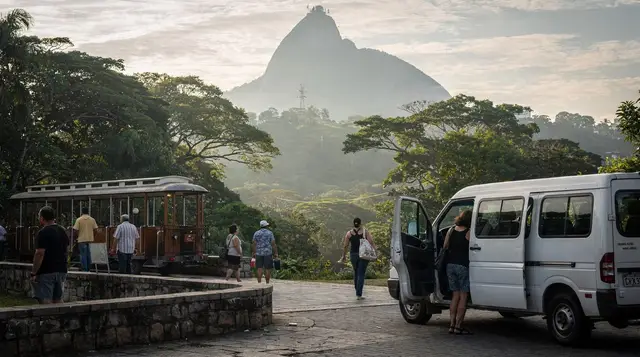
Rio de Janeiro: Christ the Redeemer Guided Hike

Best of Rio in One Day: Christ Redeemer, Sugarloaf & Local Lunch
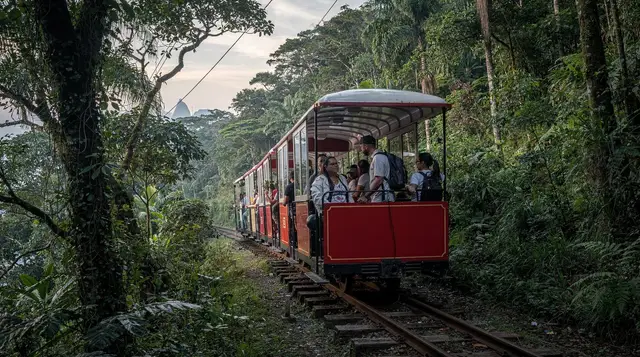
Christ the Redeemer Entry Ticket by Corcovado Train
Photos show the destination, not the operator's own pictures.