
Afro-Brazilian heritage in Rio — Little Africa and the Valongo Wharf
What is the Valongo Wharf, and why does it matter?
The Valongo Wharf (Cais do Valongo) is the excavated stone landing point where historians estimate somewhere between 500,000 and 1 million enslaved Africans were brought ashore between 1811 and 1831 — the largest number of enslaved people known to have arrived at a single point anywhere in the Americas. UNESCO listed it as a World Heritage Site of memory in 2017. It sits in the open air on a Porto Maravilha square, free to visit, and it is not a casual photo stop.
| Where | Saúde/Gamboa, Porto Maravilha district |
| Cost | Wharf free; IPN around R$20, free on Tuesdays |
| Time needed | At least 2 hours, unhurried |
| Getting there | VLT light rail (Praça Mauá/Gamboa stops) |
| Best time | Daytime; Pedra do Sal roda de samba on Monday nights |
The largest slave port in the Americas stood here
Between roughly 1811 and 1831 — after Brazil’s ports officially opened to direct trade in 1808, and before an 1831 law nominally ended the trans-Atlantic slave trade to Brazil, a law widely and openly ignored for decades after — historians estimate that somewhere between 500,000 and one million enslaved Africans were landed at a single stone wharf in what’s now central Rio de Janeiro. No other single point of arrival in the Americas received more people. This is not a qualified regional claim; it is very likely the largest slave port in human history, and for most of the 20th century, Rio built directly over it and mostly stopped talking about it.
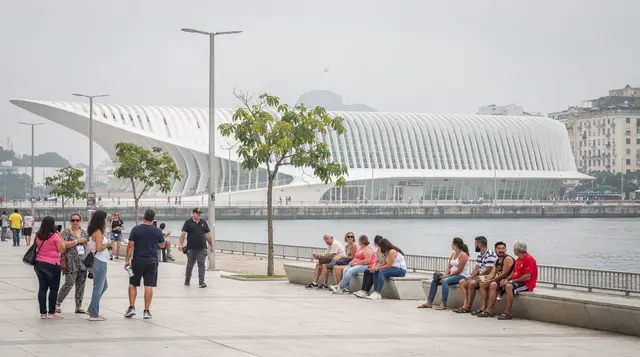
The wharf — the Cais do Valongo — was covered by later landfill and construction and only rediscovered in 2011, during archaeological work ahead of the Porto Maravilha redevelopment that also brought the Museu do Amanhã and VLT light rail to the same district. UNESCO inscribed it as a World Heritage Site in 2017, specifically recognizing it as a site of memory — the most significant physical remains anywhere of an enslaved-persons arrival point in the Americas. It sits today as an open archaeological site on a plaza a few streets inland from Praça Mauá, its original stone paving visible at ground level, unenclosed and free to visit at any hour.
Go there with the seriousness the site demands. This is not a hidden gem, not an off-the- beaten-path curiosity, and not a five-minute stop to check off a list. It is comparable in historical weight to a site like Auschwitz or Robben Island, if considerably less developed for visitors and less widely known outside Brazil. Read the interpretive panels on site. Don’t treat it as a backdrop for photos unrelated to why it exists. If you’re visiting with children, use the moment to talk about what happened here rather than rushing past.
It’s also worth being honest about the gap between the site’s global historical significance and its physical presentation: unlike a major national memorial with a dedicated visitor center, the Valongo Wharf remains, deliberately, an open archaeological square with interpretive panels rather than an enclosed museum experience.
That modesty is partly a matter of ongoing debate in Rio itself about how much formal infrastructure the site should eventually receive, and partly a reflection of how recently — barely over a decade ago — it was rediscovered at all. Visiting now means seeing a site of memory still very much in the process of being fully reckoned with by the city around it, which is its own kind of honest experience, rather than a polished, finished monument.
Why it took a century to find
The wharf’s disappearance wasn’t accidental in the way an ordinary archaeological site gets buried by time. After the trans-Atlantic trade was formally suppressed, the wharf was covered over in 1843 by a new landing point — the Cais da Imperatriz, the Empress’s Wharf — built directly on top of it for the arrival of Princess Teresa Cristina, and later landfill through the 20th century buried the area more completely still as the port zone expanded. For most of the 20th century, there was no marker, no public acknowledgment, and little popular awareness in Rio itself that the single largest point of arrival for enslaved Africans anywhere in the Americas sat directly beneath the streets locals walked every day.
That erasure — not just physical, but civic — is part of why the 2011 rediscovery during Porto Maravilha’s construction work landed as more than an ordinary archaeological find: it forced a public reckoning that the city’s own infrastructure had, for generations, literally paved over. Walking the site today means walking on stone that layers several distinct historical moments — the original Valongo paving, the later Cais da Imperatriz built directly over it, and the modern excavation that exposed both.
The wider district: Pequena África
The neighbourhoods immediately around the wharf — Saúde, Gamboa, and Santo Cristo, collectively known as Pequena África, Little Africa — absorbed a large share of Rio’s Black population, enslaved and free, through the 19th and early 20th centuries, and the culture that grew here shaped modern Brazil more directly than almost any other few square kilometres in the country.
Samba, as a formal musical genre, traces its roots substantially to this district — to the informal gatherings and religious practice of Afro-Brazilian migrants, many originally from Bahia, who settled here after abolition. The city has since marked a formal walking route through the district — the Circuito Histórico e Arqueológico da Celebração da Herança Africana — connecting the wharf to several of the other sites below with signage and short historical texts along the way, a useful spine to build a visit around rather than trying to locate each site independently.
Cemitério dos Pretos Novos
A few streets from the wharf, at Rua Pedro Ernesto in Gamboa, sits one of the district’s most affecting and least visited sites: the Cemitério dos Pretos Novos, the “New Blacks’ Cemetery,” where the bodies of enslaved Africans who died shortly after the brutal Atlantic crossing — before ever being sold — were dumped and often burned, rather than buried with any ceremony.
The site was found by accident in 1996, when a couple renovating their home discovered human bone fragments beneath the floor; archaeological work that followed uncovered what’s estimated to be the remains of thousands of people. Rather than developing the site commercially, the family who found it founded the Instituto de Pesquisa e Memória Pretos Novos (IPN) — a small, independent memorial and research institute, still run largely as a family and community project rather than a state museum, which is part of what gives a visit here its particular, unpolished weight.
Visiting the IPN. Rua Pedro Ernesto 32-34, Gamboa. Open Tuesday to Friday, 10am to 4pm, and Saturday, 10am to 1pm. Full admission is around R$20, half-price around R$10, and free on Tuesdays — small numbers, deliberately kept low, for an institution that survives substantially on visitor support rather than large public funding. Confirm current hours before a special trip, since a small institute like this can vary its schedule more than a major museum would. This is, alongside the wharf itself, the site on this page most worth building real time around rather than treating as a stop on a longer list.
Pedra do Sal
A short walk away, the Pedra do Sal — the “Salt Stone” — is a rock outcrop at the base of Conceição Hill that takes its name from its original function: enslaved and later freed Africans worked here as porters, carrying salt off ships for the leather and meat trades, one of the few economic footholds available to Rio’s Black population in the 19th century. The community that grew up around this work is widely credited as the cradle of samba as a distinct musical form, and Pedra do Sal remains a living cultural site rather than a historical marker alone: a roda de samba still gathers here most Monday nights after around 8pm, with a smaller, less established Friday gathering as well, both free and open to the public, weather permitting.
Treat this as the living half of Little Africa’s story — the wharf and the cemetery are about grief and memory; Pedra do Sal is about what the same community built afterward, and both halves matter. See Pedra do Sal samba for the full guide to visiting the roda de samba itself, and Samba clubs in Rio for how this history connects to Rio’s wider samba scene today.
If you would rather not arrive cold, a guided evening adds context that a street corner alone does not give you: a live samba night at Pedra do Sal with a local guide explains who worked here and why the music took root on this spot. Visitors who prefer a looser, more social format can look at a bar crawl built around Pedra do Sal, though the roda itself is the point and the history deserves a moment before the drinks.
Religious and cultural continuity
Little Africa’s legacy isn’t confined to monuments and museums — it’s visible in living religious and cultural practice across Rio today. Candomblé and Umbanda, Afro-Brazilian religious traditions that blend West and Central African spiritual practices with Catholic and Indigenous elements, trace meaningful roots to the communities that formed in this district after abolition, alongside other Brazilian port cities like Salvador.
Terreiros — houses of worship for these traditions — operate across greater Rio today, generally not open to casual tourist visits without an introduction or invitation, which is worth knowing rather than treating a terreiro the way you might a public church. The connection between this district’s history and Rio’s wider religious and musical landscape is a useful frame for understanding why Little Africa matters beyond its own few blocks: it’s not an isolated historical curiosity but the traceable origin point of practices and traditions that remain genuinely alive across the city today.
Visiting respectfully
A few practical notes worth stating plainly, given the subject matter. ”** Framing it that way — a common instinct in travel writing, applied to an underused attraction — trivializes what the site actually represents; use language that reflects its weight. ** The wharf’s stone paving and the IPN’s small memorial space are not backdrops for unrelated content.
Budget real time, not a rushed ten minutes between two other Porto Maravilha stops — the Museu do Amanhã and Museu de Arte do Rio are a short walk north and genuinely worth combining with this district, but do the wharf and the IPN as their own unhurried stop, ideally first, rather than an afterthought once you’re already tired from two museums. If you have limited time in Rio and have to choose, this district is at least as important to understanding the city as any beach or viewpoint — it is the place where a large part of what makes Rio’s culture distinct, from samba to carnival to the city’s demographics themselves, actually originates.
Getting there
Both the wharf and the IPN sit in Gamboa and Saúde, a 10-15 minute walk from the Museu do Amanhã on Praça Mauá, or reachable directly via the VLT light rail’s Praça Mauá or Gamboa stops. The area is walkable and connects naturally to a wider Porto Maravilha day; see Centro Histórico walking guide for how to combine it with a Centro Histórico morning immediately to the south.
Connecting it to the rest of the city
This district’s history underpins far more of Rio’s visible culture than most visitors realize when they first arrive. The samba schools covered in Rio Carnival guide trace direct lineage to the communities that formed around here after abolition. The samba clubs of Lapa and the murals covered in Street art in Rio sit a short walk south.
And the honest conversation about who benefits from tourism in historically Black and low-income parts of Rio, raised directly by Favela tours done right, applies here too, even though this district isn’t a favela — the same questions about whose history is being told, and by whom, are worth carrying from one to the other.
Combining with Centro Histórico and Lapa
A natural full-day version of this district pairs the wharf and IPN with a morning in Centro Histórico — colonial-era streets, the Theatro Municipal, and the wider downtown core — before heading north into Saúde and Gamboa in the afternoon once the heat has eased. Alternatively, since Pedra do Sal’s Monday-night roda de samba runs into the evening, some visitors flip the order: Little Africa’s historical sites by day, looping south afterward into Lapa for its own live-music scene once dark, a natural throughline given how directly Lapa’s nightlife descends from the same musical roots documented at Pedra do Sal.
For a seated evening after a heavy day, a dinner with Brazilian live music at a Lapa house is a gentler way to hear the same musical lineage, with the day’s reading still fresh. Pair it with Live music in Rio and Gafieira dance halls if you want to keep following the thread from the wharf to the dance floor, and see Carnival blocos guide for how that tradition spills onto the streets.
Frequently asked questions about Afro-Brazilian heritage in Rio
Is the Valongo Wharf free to visit?
Yes — it’s an open, unenclosed archaeological site on a public square, accessible at any hour, no ticket required.
How much time should I budget for this area?
At least two hours for the wharf and the IPN together, unhurried; longer if you want to walk the full Circuito Histórico signage route through Saúde and Gamboa or combine it with Pedra do Sal.
Is this a good area to visit with children?
Yes, with preparation — treat it as an opportunity for an honest conversation about the history rather than a stop to rush through, and be ready to answer questions the site’s subject matter will naturally raise.
Is the neighbourhood safe to walk during the day?
Generally yes, as part of the wider revitalized Porto Maravilha district; normal city awareness applies, and daytime visits along the main walking route are routine. See Rio de Janeiro safety guide for the broader picture.
How does this connect to Rio’s carnival and samba culture?
Directly — the Afro-Brazilian communities that formed in this district after abolition are widely credited as the origin point of samba as a musical and cultural form, which later grew into the samba schools and carnival parade tradition covered in Rio Carnival guide.
Is there a formal museum dedicated to this history?
The Instituto de Pesquisa e Memória Pretos Novos is the closest thing — a small, independent institute rather than a large state museum, which is part of why it rewards a deliberate visit rather than a passive one.
Can I combine this with the Museu do Amanhã and MAR in one day?
Yes, and it’s a good combination — but visit the wharf and the IPN with unhurried attention first, rather than squeezing them in as an afterthought once you’re tired from two other museums. See Museu do Amanhã guide and Museu de Arte do Rio (MAR) guide for those two separately.
What does UNESCO’s World Heritage listing actually protect?
The 2017 inscription covers the excavated Valongo Wharf archaeological remains specifically, as a recognized “site of memory” — a category distinct from a natural or architectural wonder, meant to protect and formally acknowledge places tied to significant, often painful, human history rather than aesthetic value alone.
Is there an official guided tour of the Valongo Wharf and Little Africa?
Independent visits with the interpretive signage along the Circuito Histórico are the standard approach; guided options exist and can add historical depth, though the site itself requires no ticket or booking to visit at your own pace.
Why is this called “Little Africa”?
The name reflects the historical concentration of Rio’s Black population — enslaved and free — in Saúde, Gamboa, and Santo Cristo through the 19th and early 20th centuries, and the enduring cultural institutions, from Pedra do Sal’s samba to local religious practice, that grew directly out of that history.
What should I bring to visit respectfully?
Nothing special beyond ordinary sun protection and water — the point is attentiveness rather than equipment. Reading a little about the site’s history before arriving, rather than only on site, can make the interpretive panels land with more weight than trying to absorb everything cold.
Is there a suggested donation for visiting the IPN beyond the standard admission?
The listed admission covers the standard visit; given the institute’s small scale and independent funding model, an additional voluntary contribution is welcomed but not expected — ask on site if you’d like to support the institute’s ongoing research work directly.
tours.culture-museums
Verified deep-linked GetYourGuide tours. Book through these links and we earn a small commission at no cost to you.
Rio: Boulevard Olímpico, Museu do Amanhã e Tour Histórico

Rio’s Best_Corcovado, Sugar Loaf, Selaron, Cathedral and more
Rio de Janeiro: Marine Aquarium Entry Tickets
Photos show the destination, not the operator's own pictures.