
Kayaking and SUP in Rio — the lagoon, Urca, and where the water is actually clean
Where can you kayak or paddleboard in Rio de Janeiro?
The Rodrigo de Freitas lagoon in Zona Sul is the most reliable spot — calm, scenic, with rental kiosks right on the water. Urca's small cove near Sugarloaf is a genuinely clean, sheltered option for sea kayaking. Most of inner Guanabara Bay, by contrast, is polluted enough that paddling isn't advisable outside a handful of cleaner pockets near Urca and the outer bay islands.
| Best for beginners | Rodrigo de Freitas lagoon — flat, enclosed, no swell |
| Best for scenery | Urca’s cove, sheltered views straight up at Sugarloaf |
| Avoid | Unguided paddling near Guanabara Bay’s inner sections |
| Cost, lagoon rental | Roughly R$40-70/hour (US$7-13), walk-up |
| Cost, guided sea kayak | Roughly R$150-250 (US$28-46) |
Flat water, real choices, and one honest exclusion
Kayaking and stand-up paddleboarding in Rio aren’t ocean-swell sports the way surfing is — they’re flat-water activities, which means the question isn’t really “is the swell good” but “is the water clean and calm enough to be worth getting on.” That question has different answers in different parts of the city, and this guide is built around that distinction: the lagoon and Urca’s cove are genuinely good; large stretches of inner Guanabara Bay are not, and pretending otherwise does readers no favours.
The lagoon — Rio’s default paddling spot
Lagoa Rodrigo de Freitas, the freshwater-fed lagoon ringed by Ipanema, Leblon, and Botafogo, is where most visitors end up paddling, and for good reason.
It’s fully enclosed and essentially swell-free regardless of ocean conditions outside, rimmed by a paved path used by joggers and cyclists, and framed by Christ the Redeemer on Corcovado rising directly behind it — a genuinely striking backdrop for a first SUP session that doesn’t require any ocean experience at all. Rental kiosks around the lagoon’s edge, particularly near the Parque dos Patins area, rent kayaks and paddleboards by the hour, with no booking needed for a walk-up session most days outside peak weekend afternoons.
The lagoon’s water quality has improved over recent years with cleanup efforts, though it’s still freshwater fed by surrounding drainage rather than open ocean, so it’s a paddle-and-look destination rather than a swim stop — most kiosks don’t expect or encourage getting in the water itself, just paddling on it. That’s a fair trade for the calm, scenic conditions and the fact that it’s the only paddling spot in the city reachable on foot from most Zona Sul hotels.
Urca — the clean, sheltered sea-kayaking option
Urca, the small peninsula at the base of Sugarloaf, has a genuinely clean, calm cove that’s one of the better-kept secrets on this list — sheltered from the open ocean swell by the bay’s geography, with clear water and a view straight up at Sugarloaf’s granite face that’s hard to get from anywhere else. Sea kayaking or outrigger canoe trips launching from Urca typically paddle a loop around the base of the mountain and along the shoreline toward Botafogo, staying inside the sheltered water the whole way rather than venturing into open bay.
a sea kayak or Hawaiian outrigger canoe experience launching from this stretch is the best-value guided option on this list if you want open water rather than the enclosed lagoon, with a guide who knows exactly which pockets of the bay are worth paddling and which to avoid.
Guanabara Bay — where not to paddle, and why
This needs saying plainly, because most tour listings won’t say it: Guanabara Bay is polluted in large sections, particularly the inner reaches near the city’s ports, industrial areas, and river mouths, where decades of inadequate sewage treatment and industrial runoff have left the water genuinely unfit for close contact in many spots. This is well documented and is part of why Rio’s 2016 Olympic sailing events drew international scrutiny over water quality — it isn’t a minor or outdated concern.
That doesn’t mean the whole bay is off-limits. Boat tours that stay on open water, keep a reasonable distance from the shoreline and river mouths, and don’t put paddlers in direct water contact are a genuinely fine way to see the bay — see Boat trips on Guanabara Bay for that option specifically.
What’s a bad idea is an unguided kayak or SUP session that puts you paddling close to shore in the bay’s inner sections, or worse, capsizing and ending up in the water there. If a bay-based kayak tour is offered, ask specifically where it launches from and paddles — a route confined to the cleaner outer stretches near Urca or the islands is a different proposition from one that ventures toward the port or river mouths.
SUP on the ocean — Copacabana sunrise sessions
A different category from the lagoon or bay: sunrise stand-up paddleboarding directly off Copacabana beach, timed for the calm water and light wind that typically hold in the early morning before the sea breeze picks up later in the day. This is an ocean session, not a flat-water one, so it depends on the day’s swell being small — most operators check conditions the night before and reschedule if the ocean isn’t cooperating, similar to the weather-dependence covered in Hang gliding in Rio.
a Copacabana sunrise stand-up paddle session and this equivalent Copacabana beach sunrise SUP tour both run the same basic format — compare the exact start time and group size, since a smaller group means more individual coaching if you’re new to the board.
What the lagoon actually looks like from the water
Paddling the lagoon puts you at a genuinely different vantage point than walking or cycling its perimeter path — Christ the Redeemer sits directly north across the water from most launch points, and on a clear afternoon the statue, the forested slopes of Corcovado, and the apartment towers of Ipanema and Leblon are all visible at once without a single building blocking the view, which isn’t true from most points on land around the lagoon’s edge. The lagoon also hosts a resident population of herons, egrets, and the occasional capybara along its banks — genuinely wild, if habituated, and worth watching for near the reedier southern edge away from the main kiosk area.
Safety basics
Neither the lagoon nor Urca’s cove has serious current, but both are open water rather than a pool, and a capsized kayak or a fall off a paddleboard is a real if minor possibility worth being prepared for. Rental kiosks provide a life vest as standard — wear it rather than stowing it, even on a calm-looking day, since a fall you don’t expect is exactly when you’d want it on already rather than reaching for it in the water.
Sun exposure is the more common actual issue: a paddling session runs long enough, with no shade anywhere on open water, that sunscreen, a hat, and sunglasses matter more here than on a short beach walk — reapply before setting out rather than assuming the initial application will hold for a two-hour session. Afternoon thunderstorms build quickly in Rio’s warmer months; if you see dark cloud building over the mountains inland, head back to the kiosk rather than waiting to see if it passes over.
Gear — what to bring, what’s provided
Rental includes the kayak or board, paddle, and a life vest as standard at every kiosk and tour operator on this list — you don’t need to bring any equipment of your own. Worth bringing independently: a dry bag or a sealed pouch for a phone (several kiosks sell or rent these cheaply if you don’t have one), reef-safe sunscreen applied before you’re on the water rather than after, and a hat with a chin strap rather than a loose one that will end up in the lagoon within the first ten minutes. Closed-toe water shoes or sandals with a back strap are worth it for the sea kayak launches from Urca, where the entry point is rockier than the lagoon’s paved, purpose-built kiosk ramps.
Cost and what’s included
A lagoon kayak or SUP rental runs roughly R$40-70 per hour (about US$7-13) at the walk-up kiosks, no booking required. A guided sea kayak or outrigger session from Urca, or a sunrise SUP session off Copacabana, runs higher — typically R$150-250 (about US$28-46) — since it includes a guide, equipment, and often a photo package, and covers open-water conditions that a casual lagoon paddle doesn’t. Both are inexpensive relative to Rio’s other adventure activities, making this a reasonable add-on to a beach day rather than a dedicated half-day plan, with the exception of a full sea-kayak tour, which does run closer to two to three hours door to door.
Who this suits
The lagoon option suits genuinely anyone — flat water, no current, no swimming ability required beyond basic comfort near water, and a route you can shorten or extend as you like since there’s no guide dictating pace. The sea kayak and sunrise SUP options are a step up in physical demand and suit visitors reasonably comfortable in open water, though neither requires prior kayaking or paddleboarding experience; guides brief beginners on balance and paddling technique before setting out.
Best time of day
Early morning wins on every metric that matters for paddling: the lagoon and Urca’s cove are both calmer before the wind picks up mid-morning, the light is softer and better for photos looking toward Corcovado or Sugarloaf, and the kiosks and launch points are noticeably less busy than the late-afternoon rush when the lagoon path fills with joggers and cyclists finishing their day.
Late afternoon, closer to sunset, is the second-best window — busier, but with a warmer light that suits photos of the lagoon’s western shore. Midday sessions aren’t ruled out, but expect stronger sun with no shade anywhere on the water and, in summer specifically, a real risk of an afternoon thunderstorm building over the hills that ring the lagoon on three sides.
Getting there
The lagoon is walkable from Ipanema and Leblon, and a short rideshare from Copacabana or Botafogo. Urca is a 15-20 minute rideshare or taxi from Zona Sul’s main hotel strip — no metro service reaches the peninsula directly, so budget for a car either way. See Getting around Rio de Janeiro for the wider transport picture.
Combining with the rest of the neighbourhood
A lagoon paddle pairs naturally with cycling the loop around it — see Cycling in Rio for the same route on two wheels rather than on the water, and with more time, a walk or short bike ride from the lagoon reaches Best viewpoints in Rio worthy spots without much extra effort. Urca’s cove sits directly at the base of the Sugarloaf cable car station, so a morning kayak followed by the cable car up is a genuinely efficient combination for a single Urca half-day.
Pairing a paddle with a boat trip instead
For visitors who’d rather see the bay from a larger vessel than paddle it directly, the honest alternative is a proper boat tour rather than a kayak — see Boat trips on Guanabara Bay for schooners and sailing options that cover the bay’s islands and open water without putting anyone in direct contact with the less clean inner sections. It’s a reasonable substitute for anyone drawn to the bay’s scenery who’d rather not weigh water-quality trade-offs at all, and it reaches parts of the bay — the outer islands, the view back at Sugarloaf and the bridge to Niterói — that a kayak session realistically wouldn’t cover in the same timeframe.
Solo paddling vs a guided session
The lagoon is genuinely suited to a solo, unguided session — rent, paddle at your own pace, return whenever, no group to coordinate with. Urca’s sea kayak trips and the Copacabana sunrise SUP sessions work differently: they run on a fixed group departure with a guide, which suits a solo traveller just as well logistically but means committing to a specific start time rather than a flexible walk-up window. Neither setting requires previous paddling experience, and guides on the open-water options brief beginners on balance and basic technique before setting out, so a first-timer isn’t at a disadvantage choosing the more scenic Urca or Copacabana option over the easier lagoon.
Frequently asked questions about kayaking and SUP in Rio
Is the Rodrigo de Freitas lagoon clean enough to swim in?
Paddling is the norm rather than swimming — most rental kiosks don’t encourage getting in the water, and it’s better thought of as a scenic paddle destination than a swim spot.
Is it safe to kayak in Guanabara Bay?
Depends entirely on where. Guided trips confined to Urca’s cove or the outer bay near the islands are fine; unguided paddling near the inner bay, the port, or river mouths should be avoided given documented pollution levels there.
Do I need to book in advance for the lagoon?
Usually not — the kiosks around the lagoon rent by the hour on a walk-up basis most days. Weekend afternoons can queue up, so arriving earlier in the day is the more reliable option.
Is sunrise SUP off Copacabana worth the early start?
Yes for most who try it — the water is calmer, the light is better for photos, and it avoids the afternoon sea breeze that can make the ocean choppier later in the day. It does depend on the swell being cooperative that morning, so confirm the night before.
Do I need swimming ability to try these?
Basic water comfort is expected, but strong swimming ability isn’t required for the lagoon; the ocean-based sea kayak and SUP options warrant somewhat stronger comfort in open water given the setting, though guides brief and supervise closely.
Can I combine a lagoon paddle with cycling the same loop?
Yes — the lagoon’s paved perimeter path is shared by both, and it’s a natural pairing on the same visit; see Cycling in Rio for the cycling version of the same loop.
Is there a season where paddling isn’t advisable?
Heavy rain raises runoff and debris in both the lagoon and the bay temporarily, similar to the ocean water-quality issue covered in Surfing in Rio — give it a day or two to settle after a significant storm before paddling anywhere in the city.
Are there dedicated SUP or kayak tours that include Sugarloaf views?
Yes — the sea kayak and outrigger sessions launching from Urca run directly beneath Sugarloaf’s granite face and are the best option on this list specifically for that view from the water.
What’s the difference between the lagoon kiosks and a booked tour?
The lagoon kiosks are unguided, pay-by-the-hour rentals with no set route — you paddle at your own pace within the lagoon. A booked sea kayak or SUP tour includes a guide, a set route, and usually runs on open water rather than the enclosed lagoon, which is why it costs more and suits a slightly more adventurous visitor.
Is paddling in Rio suitable for children?
The lagoon is genuinely suitable for families with older children able to sit still and follow basic instruction; the open-water sea kayak and sunrise SUP sessions are better suited to teenagers and adults given the setting. See Rio de Janeiro with kids for the wider picture on family-friendly activities in the city.
tours.outdoor-adventure
Verified deep-linked GetYourGuide tours. Book through these links and we earn a small commission at no cost to you.

Rio: Jeep Tour 4 Wonders with Lunch

Hang gliding Hang gliding Experience Rotorfly
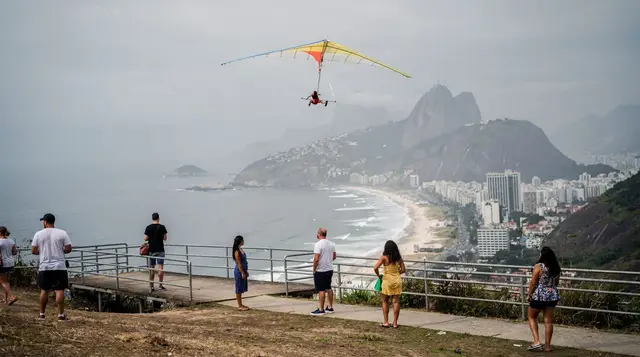
Rio de Janeiro: Pedra Bonita Hike and Hang Gliding Flight Watching
Photos show the destination, not the operator's own pictures.