
Hang gliding in Rio — the Pedra Bonita to São Conrado flight, honestly
How much does hang gliding in Rio cost and is it safe?
A tandem hang gliding flight from Pedra Bonita to São Conrado beach runs roughly R$550-750 (about US$100-140) including hotel transfer, and takes 10-15 minutes in the air after a short run off a concrete ramp at 510 metres. It is genuinely safe with a CBVL-registered pilot — check the pilot's federation registration and insurance before you pay, not after.
| Where | Launch at Pedra Bonita, land at São Conrado beach |
| Cost | Around R$550–750/person, incl. hotel transfer |
| Time in the air | 10–15 minutes |
| Best window | Roughly 9am–1pm for the most reliable wind |
| Booking | Confirm the night before or morning of — weather-dependent |
The ramp, the run, and the ten minutes in between
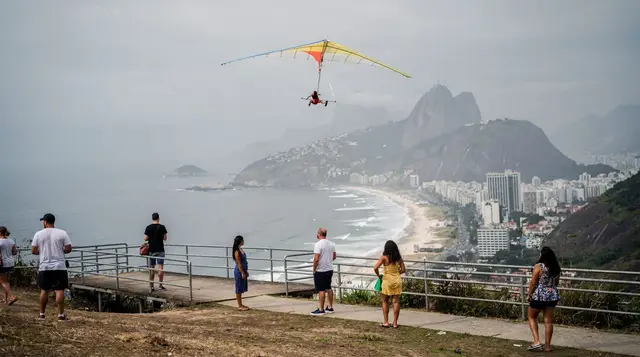
Rio’s hang gliding flight is short — most tandem flights spend 10 to 15 minutes actually in the air — and that’s the honest way to set expectations before you pay for it. What you’re buying isn’t a long adventure sport session; it’s one of the more dramatic short flights available anywhere, launching off a concrete ramp cut into the side of Pedra Bonita at 510 metres and landing on the sand at São Conrado beach, with Rio’s skyline, the ocean, and (on a clear day) Christ the Redeemer visible from the air the whole way down.
This guide covers what the flight actually involves, what it costs, why it gets cancelled more often than most tour descriptions admit, and — the part that matters most — how to check that the operator putting you on a glider is actually licensed to do it.
Pedra Bonita sits inside Tijuca National Park, the same forested massif that shelters Christ the Redeemer’s mountain and much of the city’s protected tropical forest. The launch ramp is a short, rough dirt-road drive from the park’s lower gates, not a walk-up spot, which is one reason nearly every flight is sold as an all-inclusive package with hotel pickup rather than as a stand-alone ticket you buy at the site.
How the flight actually works
You don’t fly solo. A tandem hang gliding flight pairs you with a certified pilot who does the actual flying — steering, weight-shifting, judging the thermals — while you’re strapped into a harness beside or slightly in front of them. The process on the day: transfer from your hotel to the base office, a short briefing on body position and the landing procedure, a drive up to the ramp, a harness fitting, and then the run itself — eight to ten strides down a short concrete launch ramp before the wing catches air and you’re flying.
There’s no freefall sensation and no jump; the transition from running to flying is smooth enough that most first-timers say the takeoff was less dramatic than they expected, and the landing — a controlled run-out onto the sand at São Conrado, timed to avoid the tide line and any beach volleyball games in progress — is the part that actually requires the pilot’s skill.
a tandem hang gliding flight from Pedra Bonita is the standard version most first-time flyers book, with hotel transfer both ways built into the price.
Photos and video are usually a separate add-on, shot by the pilot on a helmet or hand-held camera during the flight — worth confirming before you book if it matters to you, since some packages include it and others charge an extra R$100-150 for the footage afterward.
What it costs
A tandem flight runs roughly R$550-750 (about US$100-140) depending on the operator, the season, and whether photos or video are bundled in. That price typically includes round-trip hotel transfer, the flight itself, and a certificate — genuinely the full package rather than a base price with mandatory add-ons stacked on top, though it’s worth confirming what’s included before paying a deposit.
Booking through a marketplace with reviews and a fixed price is the safer route price-wise too: the pilots who solicit tourists directly on São Conrado beach or at the Pedra Bonita car park sometimes quote a lower cash price, and that’s exactly the situation where “lower price, no paper trail, no verifiable license” should make you slow down rather than speed up.
this hang gliding adventure package and this hang gliding or paragliding option are both worth price-checking against each other — same launch site, similar duration, and comparing the exact inclusions (transfer, photos, insurance documentation) is the useful comparison, not just the headline number.
Weather cancellations — the part most guides skip
This needs to be said plainly: hang gliding in Rio gets cancelled or postponed regularly, and that’s a feature of doing the sport responsibly, not a sign of a badly run operation. Pilots fly by wind direction and strength, not by a fixed schedule — the launch works with a southeast to south wind of a specific range, and on days when the wind is wrong (too strong, too light, blowing from the wrong direction, or gusting unpredictably ahead of a frontal system), a responsible pilot simply won’t fly, full stop, regardless of how disappointed a paying tourist is standing at the ramp.
Rio’s weather in practice: mornings are more reliable than afternoons for stable wind, and the window between roughly 9am and 1pm sees the highest completion rate for scheduled flights. Rain and low cloud over the mountain cancel flights outright — cloud sitting on Pedra Bonita means zero visibility off the ramp, which is a hard no regardless of wind. See Best time to visit Rio de Janeiro for the seasonal pattern, and Rio in winter specifically — Rio’s cooler, wetter months bring more frontal systems and a higher cancellation rate than the drier stretch of the year.
What happens if your flight is cancelled. Reputable operators reschedule for free, usually to the next available slot within your trip dates, or refund in full if you can’t come back. This is exactly the kind of policy worth confirming in writing before you pay — a marketplace booking with a stated cancellation and weather policy protects you far better than a cash deal arranged on the beach with no paper trail if the wind doesn’t cooperate.
How to check a pilot is actually licensed
Hang gliding and paragliding pilots operating commercially in Brazil are meant to be registered with CBVL (Confederação Brasileira de Voo Livre), the national free-flight federation, which issues pilot certifications by flight hours and skill level. A genuinely qualified tandem pilot should be able to show — or at minimum state clearly, without hesitation — their federation registration, and any operator worth booking will happily confirm their pilots are certified and insured when asked directly, before you’ve paid anything.
The practical version of this for a tourist who can’t independently verify a federation database: book through a platform with reviews tied to real trips, not a cash arrangement made on the spot at the ramp or the beach. A long, consistent review history naming specific pilots, a fixed advertised price, and a clear cancellation policy are the three signals that correlate with a properly run operation — informal touts undercutting the going rate at São Conrado beach are the ones worth walking away from, not the ones charging a normal, published price.
a Pedra Bonita hike combined with watching the hang gliders launch is the honest alternative if you want the spectacle without flying yourself — the ramp is a genuinely good viewpoint on its own, and watching a dozen wings launch off the cliff into open air over the forest is worth the trip up even grounded.
Paragliding vs hang gliding — what’s the difference here
Rio’s launch sites run both sports side by side, and the practical difference for a first-timer is mostly about the shape of the flight rather than the risk profile. Hang gliding uses a rigid, kite-like wing and a prone or semi-reclined harness position; paragliding uses a soft fabric canopy and an upright, seated harness, closer to sitting in a swing. Paragliding flights tend to be a touch gentler on launch and landing; hang gliding tends to feel faster and more direct. Neither is meaningfully safer or riskier than the other with a properly certified tandem pilot — the choice comes down to which sensation you’d rather have, not a safety trade-off.
Getting to the launch and what to bring
Nearly every tour includes hotel pickup, which is the practical default given how awkward Pedra Bonita is to reach independently — a dirt access road with no public transport link, deep inside Tijuca National Park. If you’re staying in Ipanema, Leblon, or São Conrado itself, the drive up is short; from Copacabana or further, budget closer to 45-60 minutes each way once transfer and check-in are factored in. See Getting around Rio de Janeiro for the wider transport picture if you’re weighing a self-driven option instead.
Wear closed-toe shoes with good grip for the ramp run — sandals aren’t accepted by most operators — and clothes you don’t mind getting a little dusty on the launch platform. Sunglasses with a strap or a chin cord beat loose ones that can blow off mid-flight. Loose items (phones, keys) go in a zipped pocket or are held by staff on the ground; nothing should be in your hands during takeoff and landing unless the pilot has explicitly handed you a camera.
Is it worth the price
R$550-750 puts a tandem flight toward the upper end of what a single activity costs in Rio, well above a half-day city tour or a set of surf lessons, and it’s fair to ask whether ten minutes in the air justifies that. The honest answer: for most people who book it, yes — the combination of elevation, ocean, forest, and city skyline visible at once, from a vantage point almost nothing else in Rio offers, is genuinely distinct from a viewpoint you walk or ride up to.
It is not, however, an activity to book on a tight budget just because it’s on every “top things to do in Rio” list; see Rio de Janeiro on a budget for how it stacks up against Rio’s many free or low-cost views, and weigh it against a Sugarloaf or Corcovado visit if money is the deciding factor rather than the specific sensation of flying.
A typical booking day, start to finish
Most operators ask you to confirm the night before or the morning of, since the flight depends entirely on wind — a booking made a week out is really a provisional slot, not a locked appointment, and knowing that upfront avoids frustration.
On the day itself: a driver collects you from your hotel in the window agreed the night before (commonly a two-to-three-hour range rather than an exact minute, since the operator is juggling several pickups against one weather window), you go to the base office for a waiver and a short safety briefing, then up the access road to the ramp. The flight itself, once you’re airborne, lasts 10-15 minutes; landing, gear pack-up, and the transfer back to your hotel round out to roughly three to four hours total from pickup to drop-off.
Because of this, plan the rest of the day loosely — pairing it with a swim at São Conrado beach after landing works well, since you’re already there, but don’t schedule a tight-timed activity immediately afterward given how weather-dependent the pickup window is. Money and payments in Rio covers how most tour operators expect payment — usually card via the booking platform rather than cash on the day.
Who should skip it
Pregnancy, recent back or neck surgery, and serious cardiac conditions are standard exclusions across operators, and most set a maximum weight limit (commonly around 100-110kg) for safety and equipment reasons — worth confirming directly if it’s close to your situation rather than assuming either way. A genuine fear of heights is, counterintuitively, not automatically disqualifying — some nervous flyers do fine once airborne, since there’s no edge to look over the way there is on a viewing platform — but if you know heights are a hard no for you, this isn’t the sport to test that on.
Where this fits with the rest of Rio’s adventure sports
Hang gliding is the single most dramatic entry on Rio’s adventure sports list, but it’s one entry among several genuinely good options — see Adventure sports in Rio for the full overview of what’s worth doing and what’s a gimmick. If heights aren’t for you but you still want elevation and a view, Helicopter tours over Rio covers the powered alternative, and Pedra Bonita hike covers walking to the same ramp on foot rather than flying off it. For the safety picture across the city more broadly, see Rio de Janeiro safety guide.
Frequently asked questions about hang gliding in Rio
Do I need any experience to do a tandem flight?
No. Tandem flights are designed for complete first-timers — the certified pilot does the flying, steering, and landing; your job is to run a few steps at launch and hold the landing position the pilot briefs you on. No prior hang gliding or paragliding experience is expected or required.
What happens to my luggage or belongings during the flight?
Loose items go in a zipped pocket, a small bag held by ground staff, or stay at the base office — nothing should be loose in your hands during takeoff or landing. Confirm the exact arrangement with your operator when you book if you’re bringing anything valuable.
Is it safe to fly if I’m scared of heights?
Many nervous flyers report the flight itself feels less frightening than expected, since there’s no edge or railing to look down past the way there is on a viewing platform — you’re simply flying. That said, if height anxiety is severe, this isn’t the activity to test it on for the first time.
What if it rains or the wind is wrong on my scheduled day?
Reputable operators reschedule for free within your trip dates or refund in full — confirm this policy before booking. Pilots who fly in unsafe wind or cloud to avoid disappointing a customer are a red flag, not a sign of good service.
How do I know the pilot is actually licensed?
Ask directly whether the pilot is registered with CBVL, the national free-flight federation, and insured for commercial tandem flights. In practice, booking through a platform with a real review history tied to named pilots is the most reliable check available to a visiting tourist.
Can I bring my own camera or phone to film the flight?
Most pilots prefer to handle cameras themselves via a helmet or hand mount, both for your safety and because a dropped phone from 500 metres is obviously a problem. Ask whether photo or video is included or a paid add-on before you book.
How long is the whole experience, door to door?
Budget half a day once hotel transfer, briefing, the drive up to the ramp, and the flight itself are all included — the flight is short, but the logistics around it are not instant.
Is there a minimum or maximum age?
Most operators set a minimum age around 14-16 with parental consent below 18, and a maximum weight limit rather than a hard age ceiling for adults. Confirm specifics with your chosen operator, especially if traveling with teenagers — see Rio de Janeiro with kids for the wider picture on Rio with a younger family.
tours.outdoor-adventure
Verified deep-linked GetYourGuide tours. Book through these links and we earn a small commission at no cost to you.

Rio: Jeep Tour 4 Wonders with Lunch

Hang gliding Hang gliding Experience Rotorfly
Rio de Janeiro: Pedra Bonita Hike and Hang Gliding Flight Watching
Photos show the destination, not the operator's own pictures.