
Rio in winter — the underrated season
Is Rio worth visiting in winter?
Genuinely yes, and it's the season locals most often recommend to visitors who don't have a fixed reason to come in summer. Rio's winter (June-August) runs 22-26°C, dry, with the clearest skies of the year — ideal for hiking and unclouded views from Christ the Redeemer and Sugarloaf — plus thinner crowds and lower prices than the December-March peak. The one real trade-off is a cooler ocean.
Rio’s best-kept seasonal secret
Say “Rio de Janeiro” to most people and they picture summer — heat, Carnival, a packed Copacabana. Winter, running June through August in the southern hemisphere, gets a fraction of the international attention despite being, by several honest measures, the more comfortable and more visually rewarding season.
Daytime temperatures typically run 22-26°C (low-to-mid 70s°F), genuinely dry compared with summer’s storms, and clear enough that this is the season most likely to deliver an unclouded view from Christ the Redeemer or Sugarloaf on the first attempt. If maximizing the odds of clear, sweeping views and comfortable walking weather matters more to your trip than warm ocean swimming, winter is the stronger choice, not a fallback.
| When | June-August (southern hemisphere winter) |
| Weather | 22-26°C daytime, dry, clearest skies of the year |
| Ocean | Noticeably cooler than summer — the one real trade-off |
| Best for | Hiking, viewpoints, walking, budget-conscious trips |
| Watch for | July’s Brazilian school-holiday domestic crowds |
Why it’s the best hiking season
Rio’s hiking trails — Pedra da Gávea, Dois Irmãos, Pedra Bonita, and the wider Tijuca Forest — are genuinely more enjoyable in winter’s cooler, drier air than in summer’s humid heat, where the same climb can turn into an uncomfortable slog well before the halfway point. Winter’s clearer air also means better visibility from every summit and viewpoint — see best viewpoints in Rio for how the season affects each specific spot. Hiking safety in Rio still applies exactly as it does year-round, independent of the more forgiving temperature.
The ocean: cooler, and that’s the real trade-off
Winter water temperature drops noticeably from summer’s warm-bath feel — still swimmable and still busy with regular ocean-goers, but genuinely cooler, which some visitors find refreshing and others find a reason to stick to sunbathing and shorter dips rather than a long swim. This is the one honest downside of the season, and it’s a modest one against everything else winter offers.
Thinner crowds, lower prices
With summer’s peak-season crush absent, winter delivers noticeably shorter queues at major sights, easier restaurant bookings, and hotel prices well below the December-March range — a genuinely better value proposition for travellers without a fixed reason to come in summer specifically. See Rio on a budget for how season factors into the wider cost picture.
What winter actually feels like day to day
Mornings can start cool enough for a light layer, warming into a comfortable, dry afternoon — genuinely pleasant for a full day of walking without summer’s midday retreat-to-shade pattern. Evenings cool down more than the daytime high suggests, so a light jacket earns its place in the bag for an evening out in Lapa or a dinner on a rooftop. Rain, when it comes, tends toward longer, gentler spells rather than summer’s dramatic short storms — still worth a backup plan, covered in what to do in Rio when it rains, just a less frequent one.
Winter and the wider calendar
Winter falls outside both Carnival and Rio’s Réveillon New Year’s Eve dates, which means a winter trip trades those two specific spectacles for a calmer, clearer, cheaper city — a reasonable trade for visitors whose priority is the city and its landscape over a specific festival date. If a festival is the goal, plan around Carnival dates or New Year’s Eve in Copacabana instead, both of which fall in summer.
Winter month by month, and what it costs to fly in
June, July, and August aren’t the same month
Lumping the whole season together hides real differences worth planning around. June is the transition month — daytime temperatures are still easing down from autumn, the occasional warm, humid afternoon can slip through, and it’s the quietest of the three winter months for international visitors.
July is different in a way that surprises a lot of travellers: it’s Brazil’s school winter holiday period (roughly the first three weeks of the month), so while international arrivals stay low, domestic tourism spikes hard — Brazilian families fill hotels, Christ the Redeemer and Sugarloaf get noticeably busier with local visitors, and hotel prices in family-friendly areas can tick up from June’s lows even though it’s still the international off-season.
July is also, on average, the coldest and driest stretch of the year, which is also why it delivers the clearest skies most reliably. August starts to loosen that grip — afternoons warm up again, the wind picks up (this is Rio’s windiest month, noticeable on exposed viewpoints like Sugarloaf and Pedra da Gávea), and by the back half of the month the city is visibly leaning toward spring.
| Month | Feel | Who’s around | Best for |
|---|---|---|---|
| June | Mild, transitional, least crowded | Mostly international visitors | Quiet viewpoints, easing into the season |
| July | Coldest, driest, clearest | Domestic school-holiday crowds + international visitors | Best odds of a clear summit view, but book ahead |
| August | Warming, windier | Crowds thinning again | Hiking with a breeze, transition to spring pricing |
Flights, fares, and the July exception
Airfare into Rio’s Galeão airport generally follows the pattern travellers expect from an off-peak season — June and August, in particular, tend to bring some of the year’s more reasonable international fares, since northern-hemisphere summer holidays pull leisure travel elsewhere and Rio’s winter draws comparatively few international visitors outside Brazil. July breaks that pattern. Brazilian school holidays push heavy domestic demand onto the same flights and hotel inventory international travellers are booking, and fares — especially on domestic connections into Rio from other Brazilian cities — climb accordingly, sometimes surprising visitors who assumed “winter” meant “cheap” across the board.
The practical read: June and the second half of August tend to combine winter’s weather advantages with the season’s genuine price advantage most reliably, while a July trip still gets the clear skies and cooler hiking conditions but should be booked as if it were a moderately busy period, not a quiet one. None of this affects the weather case for winter — the season’s dry, clear-sky logic holds across all three months — it’s purely a booking and budgeting detail worth building into the trip’s timing rather than discovering at checkout.
Reading the weather and the daylight
Cold fronts: what a “frente fria” actually means for your trip
Winter weather in Rio doesn’t arrive as one long cool spell — it moves in pulses called frentes frias, cold fronts pushing up from the south, and understanding the pattern makes a rainy forecast far less alarming. In the day or two before a front arrives, the air often turns hot, humid, and hazy, sometimes hotter and stickier than the days around it — a classic sign a front is close. The front itself usually passes through as a day, occasionally two, of wind and rain, sometimes heavy.
What follows is the payoff: several days of the crisp, dry, low-humidity air with the sharp visibility winter is known for, before the cycle builds toward the next front. Locals check for frente fria specifically rather than a generic rain forecast, and it’s worth doing the same — a single wet day in the middle of a Rio winter trip is rarely a sign to overhaul the itinerary, since clear conditions typically return within 48 hours.
The shorter winter day, and why it changes hike timing
Daylight runs noticeably shorter in Rio’s winter than in the summer visitors picture, and it’s a detail that changes how a hiking day should be planned rather than just a curiosity. Around the June solstice, sunrise lands close to 6:45am and sunset by around 5:30pm, roughly ninety minutes less usable daylight than a December visit, and the drop-off after sunset is fast this close to the equator — there’s no long, lingering dusk to fall back on. That matters most for anyone tackling Pedra da Gávea, Pedra Bonita, or a full Tijuca Forest loop, all of which take longer than a casual estimate suggests and none of which should be finished by headlamp on unmarked terrain.
The practical adjustment is simple: start earlier than a summer itinerary would require, treat 3pm as a soft turnaround point for anything more than an hour from the trailhead, and don’t schedule Sugarloaf or Christ the Redeemer for last entry expecting the same golden-hour margin summer offers — check each site’s last-entry time directly, since winter’s early dusk means it arrives sooner than it feels like it should. The upside is real too: winter’s low sun angle throws longer, warmer light across the city for much more of the day, which is part of why photographers rate the season highly despite the shorter window.
Where to stay, and how cariocas spend the season
Where a winter trip changes your neighborhood calculus
Beachfront positioning matters less in winter than in summer, which opens up options that don’t make sense the rest of the year. A room a few blocks back from Copacabana or Ipanema, unable to compete on ocean view in high summer, loses little of its appeal in winter since long beach days aren’t the main draw anyway — and that gap in demand is part of why winter rates run lower.
Hillier, greener neighborhoods like Santa Teresa or Jardim Botânico, which can feel like a hot, sticky slog to reach on foot in summer, are genuinely pleasant to walk in winter’s cooler, drier air, making them more practical bases for a season built around walking and viewpoints rather than swimming. Santa Teresa’s cobblestone streets and Jardim Botânico’s shaded paths are also where winter’s clear light shows up best for photography, another reason locals lean toward these areas over peak-season beach-first bookings when the calendar shifts to June through August.
How cariocas actually spend a winter weekend
Watching how locals treat the season is a decent guide to how a visitor should treat it too. The beach doesn’t empty out in winter — cariocas still fill Copacabana and Ipanema on sunny weekend mornings, but for football on the sand, a run along the promenade, or coconut water and sunbathing rather than a long swim, and the crowd thins out noticeably by early afternoon rather than holding all day the way it does in summer. Early June still carries the tail end of the Festas Juninas, the country-style winter street festivals with quadrilha dancing, corn-based food stalls, and bonfires, a genuinely local scene worth catching if the timing lines up with the very start of the season rather than a purpose built for visitors.
Weekend football at Maracanã remains a reliable winter fixture and, if anything, a more comfortable one to attend than a summer match, since neither the stands nor the walk to and from the stadium carry summer’s heat. Street markets and outdoor feiras run on their normal schedule year-round, and winter’s dry stretches make browsing one considerably more pleasant than doing so under a sudden summer downpour. None of this requires special planning — it’s simply worth knowing that a “quiet season” for tourism doesn’t mean a quiet city, and that the rhythms visible on any winter weekend are Rio’s ordinary rhythms, not a scaled-down version of summer.
Winter vs summer, side by side
Seeing the two seasons next to each other makes the trade-off concrete rather than abstract.
| Winter (Jun-Aug) | Summer (Dec-Mar) | |
|---|---|---|
| Daytime temp | 22-26°C, dry | 30-40°C+, humid |
| Ocean | Cooler, still swimmable | Warm, bath-like |
| Sky/views | Clearest of the year | Hazier, more cloud on summits |
| Crowds | Thinner (except July weekends) | Peak, especially Dec-Feb |
| Hotel prices | Lowest of the year | Highest, especially around New Year’s Eve |
| Big events | None | Réveillon (New Year’s Eve), and Carnival usually falls Feb-Mar |
| Best for | Hiking, viewpoints, budget trips | Beach-first trips, festival dates |
Neither season is objectively better — they optimise for different trips. A visitor whose priority is standing on a clear summit and walking comfortably chooses winter; one whose priority is a long beach holiday timed around Carnival or New Year’s Eve chooses summer and accepts the crowds and heat that come with it.
Winter for a return visitor vs a first-timer
A first-time visitor to Rio, with only one trip to plan around, usually does better in the shoulder months or winter specifically, because the marquee sights — Christ the Redeemer, Sugarloaf, the viewpoints — are the whole point of a first visit, and winter maximises the odds those sights actually deliver a clear view rather than a cloud-obscured one.
A returning visitor who has already ticked off the icons on a previous, clearer-sky trip has more freedom to choose summer specifically for the beach culture, Carnival, or New Year’s Eve on Copacabana, since the marquee-sight risk matters less the second time around. Neither approach is wrong, but it’s worth being honest with yourself about which category you’re in before defaulting to summer because it’s the season most travel content assumes.
Booking a guided hike for the clear-sky window
Winter’s dry air and long summit visibility make it the season to actually book the harder hikes rather than leaving them as a maybe. A guided Pedra da Gávea guided hike takes advantage of exactly the conditions this season delivers most reliably — solid footing on dry rock, minimal humidity fatigue, and the best odds all year of a clear 360° view from the summit.
For a gentler, family-friendly version of the same clear-air advantage, a Tijuca National Park guided hike with transfers covers the rainforest and waterfall trails without the technical demands of Pedra da Gávea, and winter’s cooler temperatures make the walking noticeably more comfortable than the same trail in summer’s humidity.
Photography in Rio’s winter light
Winter’s low sun angle is one of the season’s quieter draws. Because the sun sits lower in the sky for more of the day than it does in summer, the warm, raking light photographers chase at golden hour stretches across a longer window — mid-morning and mid-afternoon can both deliver the kind of light that summer only offers for twenty minutes around sunset.
Combined with the season’s clearer air and lower humidity haze, this is genuinely the best few months of the year for photographing Christ the Redeemer, Sugarloaf, and the city’s beaches from any of its viewpoints. The trade-off is the shorter day discussed above — a photographer chasing both sunrise and sunset light in the same day needs to plan around a compressed roughly eleven-hour window rather than summer’s much longer one.
Frequently asked questions about Rio in winter
Is it too cold to enjoy the beach in Rio’s winter?
No — daytime temperatures are comfortable for sitting on the sand and walking the promenade; the ocean itself is the main concession, cooler than summer but still used regularly by swimmers.
What should I pack for Rio in winter?
Layers — a T-shirt for daytime warmth, a light jacket or sweater for cooler evenings and mornings, and comfortable walking shoes for the hiking and viewpoint days winter is best suited for. See what to pack for Rio for the complete list.
Is winter a good time for Christ the Redeemer and Sugarloaf?
Genuinely the best season for both, given the clearer, drier air improving the odds of an unclouded summit view compared with any other season.
Are prices really lower in winter?
Yes, meaningfully — outside of any specific event, winter sits well below summer’s peak pricing across hotels and, to a lesser extent, tours.
Is winter the low season, or does Rio still feel busy?
Quieter than summer by a clear margin, but Rio remains an active, year-round city — winter isn’t empty, just noticeably calmer than the December-March crush.
Does it ever get genuinely cold in Rio?
Not by most standards — even winter’s cooler stretches rarely drop below the high teens °C at night, and daytime highs stay comfortably mild. This is a mild dry season, not a cold one.
Is winter good for hiking with kids?
Yes, arguably better than summer, since the cooler temperatures make longer walks more manageable for younger legs — see Rio with kids for the wider family planning picture.
Does winter affect Rio’s nightlife scene?
Not meaningfully — Lapa’s samba clubs and the wider nightlife scene run year-round regardless of season, with the cooler evening air arguably making an outdoor bar crawl more comfortable than in summer’s heat.
Seasonal experiences on GetYourGuide
Verified deep-linked GetYourGuide tours. Book through these links and we earn a small commission at no cost to you.
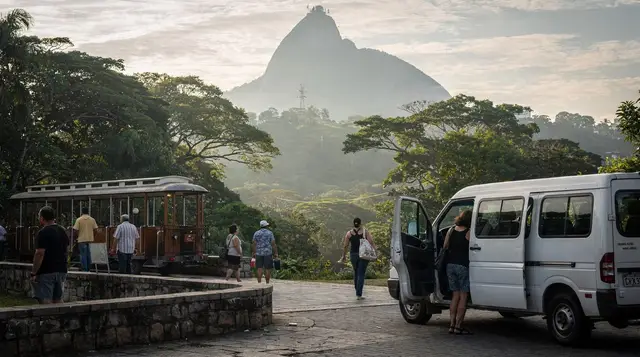
Rio de Janeiro: Christ the Redeemer Guided Hike

Best of Rio in One Day: Christ Redeemer, Sugarloaf & Local Lunch

Christ the Redeemer Entry Ticket by Corcovado Train
Photos show the destination, not the operator's own pictures.