
Tijuca Forest guide — the world's largest urban rainforest
What is Tijuca Forest and how do you visit it?
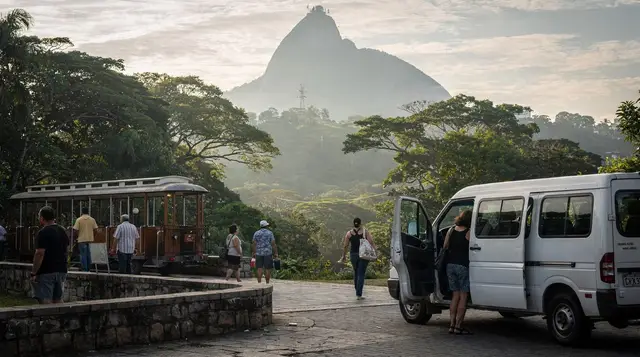
Tijuca National Park is a roughly 32-square-kilometre rainforest inside Rio's city limits, entirely replanted in the 19th century after the original forest was cleared for coffee plantations. There's no ticket booth or single entrance — you drive, taxi, or join a jeep tour into one of its three sectors (Alto da Boa Vista, Serra da Carioca, or the Corcovado sector), and a half-day covers the highlights: Cascatinha Taunay waterfall, Vista Chinesa, and Mesa do Imperador.
| Where | Alto da Boa Vista sector, Tijuca National Park |
| Cost | No entry fee; transport is the real cost, roughly US$40-70/person for a half-day |
| Time needed | Half-day (3-4hrs) for the Cascatinha loop; 5-6hrs for a guided hike |
| Getting there | No bus reaches the forest — taxi, rental car, or a jeep/hike tour |
| Best time | Weekday mornings, before the weekend parking crush at Cascatinha |
A forest that was rebuilt, not preserved
The single fact that reframes everything about Tijuca National Park is that almost none of it is original forest. By the 1850s, coffee plantations had stripped the hills above Rio bare, and the city’s water supply — fed by streams running off those same hills — was failing as a direct result. Emperor Dom Pedro II ordered the land expropriated and replanted, and over the following decades a Brazilian army officer named Manuel Gomes Archer, with a small crew of enslaved and later freed workers, hand-planted several hundred thousand native seedlings across the denuded slopes.
What stands today — dense, tall, genuinely wild-feeling rainforest inside city limits — is the result of that 19th-century reforestation project, not an untouched relic. It’s one of the largest ecological restoration efforts completed before the 20th century, and it’s also, more usefully for a visitor, the reason the terrain reads as “real forest” rather than a manicured city park: the canopy is closed, the understory is thick, and it’s easy to lose your bearings on an unmarked trail within a few hundred metres of a paved road.
At roughly 32 square kilometres, Tijuca is routinely described as the largest urban rainforest in the world — a title that depends a bit on definitions, but the practical version is simple: this is a serious forest, not a landscaped garden, sitting almost entirely inside a metropolitan area of seven million people.
It contains capuchin monkeys, toucans, sloths, and the trailheads for several of the hikes covered elsewhere in this cluster, including Corcovado on foot, Pedra da Gávea, and Pedra Bonita, all of which begin inside or at the edge of the park boundary even though they’re covered as separate hikes because their access points, difficulty, and purpose are different enough to need their own pages.
The three sectors, and what each one is for
Tijuca National Park isn’t one contiguous visitor experience — it’s split into three sectors that don’t connect by road, and most visitors only see one or two of them on a given trip.
Alto da Boa Vista (the Floresta da Tijuca sector) is the historic core and the one built for casual visitors: paved roads, marked short walks, picnic areas, and the park’s best-known waterfall, Cascatinha Taunay. This is where a jeep tour or a self-driven half-day almost always goes, and it’s the sector covered in the most detail below.
Serra da Carioca is the wilder, higher middle sector, reached from the Alto da Boa Vista side by trail rather than road. It holds Pico da Tijuca — at 1,021 metres, the highest point in the park and a genuinely demanding hike distinct from anything else in this cluster — plus a scatter of viewpoints and a former imperial retreat. It’s the sector serious hikers come for and casual visitors mostly skip; it isn’t covered as its own guide here because it’s a summit hike rather than a Rio-icon or beginner-accessible trail, but it’s worth knowing it exists if the Cascatinha loop leaves you wanting more elevation.
The Corcovado sector is technically part of the same park and holds Christ the Redeemer itself, reached either by the cog train from Cosme Velho or on foot through Parque Lage — the full route is in Corcovado on foot and the transport options in the Christ the Redeemer guide. Most visitors treat this as a separate trip entirely, and logistically it is: there’s no direct road between the Corcovado sector and Alto da Boa Vista, so combining both in one day means backtracking through the city, not a scenic drive through the park.
Getting in: no ticket booth, but no bus either
Unlike Christ the Redeemer, Tijuca Forest itself has no single gate, no admission fee, and no fixed opening hours in the way a museum does — the Alto da Boa Vista sector is a public park with roads running through it, open roughly 7am to 7pm, and you simply drive or ride in. That freedom comes with a real logistics problem: there is no direct bus route into the forest, and rideshare apps can be unreliable finding a pickup once you’re inside the park’s winding roads with patchy signal.
The three practical ways in are a rented or hired car (parking is available near the main attractions, though it fills on weekends), an Uber or taxi one-way plus a pre-arranged pickup time or number for the return (agree this before you lose signal), or a jeep tour, which is by far the least stressful option for a first visit because the guide handles navigation, parking, and timing, and typically narrates the reforestation history and points out wildlife you’d otherwise walk past.
a half-day jeep tour of Floresta da Tijuca covers Cascatinha, Vista Chinesa, and Mesa do Imperador in one loop with hotel pickup, which solves both the transport and the navigation problem in one booking — genuinely the easiest way to see the highlights if you don’t want to manage your own driver.
Cascatinha Taunay and the historic core
The Cascatinha Taunay waterfall — a roughly 30-metre cascade named after the French-Brazilian painter Nicolas-Antoine Taunay, whose family helped design the park’s early landscaping — sits a short walk from the Alto da Boa Vista entrance and is the single most-visited spot in the forest. A stone amphitheatre faces the falls, built as a viewing area in the 19th century and still functioning as one. It’s paved, flat, and accessible in ordinary shoes, which makes it the right stop if you have limited time or aren’t up for a real hike — full detail on the waterfall and its swimmable pools, plus the less-visited falls further into the forest, is in waterfalls of Tijuca.
Near the waterfall, the small Capela Mayrink — a 19th-century chapel relocated here and decorated in part with panels attributed to the Brazilian painter Cândido Portinari — is worth the five minutes it takes to see, and the Museu do Açude, a house-turned-museum with a serious modern art collection set in formal gardens, sits a short drive further up the same road if you want a genuine change of pace from forest and viewpoints.
Vista Chinesa and Mesa do Imperador
Two viewpoints anchor the upper part of the Alto da Boa Vista sector, both reachable by road rather than trail, and both worth the stop on a jeep tour or a self-driven loop.
Vista Chinesa (“Chinese View”) is a pagoda-style pavilion built in the 1900s to commemorate Chinese tea growers brought to Rio in the early 1800s to try to establish tea cultivation in the hills — the crop failed, but the pavilion and its sweeping view over the Rodrigo de Freitas lagoon and the coast toward Ipanema and Leblon remain one of the best photo stops in the city, uncrowded compared with Christ the Redeemer or Sugarloaf.
Full detail, including the best light and how it compares with Rio’s other viewpoints, is in Vista Chinesa and Mesa do Imperador and best viewpoints in Rio.
Mesa do Imperador (“Emperor’s Table”) is a stone platform with a picnic table, built for Dom Pedro I to take meals with a view over the city — the outlook here faces more toward Centro and Botafogo than Vista Chinesa’s lagoon angle, and the two are close enough together that a jeep tour or a self-driven visit typically hits both in the same stop.
What you’ll actually see
Manage your wildlife expectations honestly: Tijuca is a real forest with real animals, but it isn’t a safari. The most likely sighting is a troop of capuchin monkeys crossing a road or foraging near a picnic area — common enough that guides can usually find one on a given morning, though nothing is guaranteed. Toco toucans and other birdlife are present but take a quieter, more patient eye than most half-day visitors have time for.
Sloths exist in the park but are genuinely hard to spot without knowing exactly where to look; a guide who does this daily has a real edge over a self-driven visitor here. What you’ll see reliably is the forest itself — closed canopy, exposed roots, the sound of running water almost everywhere, and a temperature noticeably cooler than the beach a few kilometres downhill, which on a hot Rio afternoon is its own reward.
a guided mountain bike ride through the forest is a good option if you want more ground covered and more of a workout than a jeep tour offers without committing to a full hike — routes run mostly on the forest’s fire roads rather than technical single-track, so it suits an intermediate rider more than a total beginner.
Doing it as a hike instead of a drive-through
If your interest in Tijuca is less “see the highlights” and more “actually walk in the forest for a few hours,” a guided hike covering the park’s peaks, caves, and viewpoints with hotel transfers included removes the single biggest obstacle — getting in and out without a car.
a guided hike through Tijuca National Park’s peaks, caves, and waterfalls runs longer than the jeep-tour loop and covers ground the road-based visit skips entirely, including sections that connect toward the Corcovado sector. For hikers specifically chasing waterfalls and swimmable pools rather than viewpoints, waterfalls of Tijuca covers that version of the same forest in more depth, and for the technical, name-brand hikes that use the park as a starting point rather than a destination in themselves, see Pedra da Gávea and Pedra Bonita.
Jeep tour, private driver, or hike — which suits you
There’s no single right way into the forest, and the choice really comes down to how much of the day you want to spend managing logistics versus enjoying the forest itself.
| Option | Time | Cost (per person) | Best for |
|---|---|---|---|
| Jeep tour | ~4hrs | ~US$40-60 | First visit, no car, narrated history, hotel pickup |
| Rental car | Flexible | Rental + parking | Comfortable driving in Brazil, multi-stop day |
| Private driver/taxi | Flexible | ~US$40-70/half-day | Independent pace, own schedule |
| Guided hike | 5-6hrs | ~US$50-80 | Fitness, waterfalls and caves beyond the paved road |
A jeep tour is the closest thing to a no-decisions option — it bundles Cascatinha, Vista Chinesa, and Mesa do Imperador into one loop and removes both the driving and the navigation problem in a single booking. A rental car gives you the most flexibility if you’re already comfortable driving in Rio and want to string together stops at your own pace, including detours the standard jeep loop skips.
A private driver splits the difference — no navigation stress, but your own schedule — and is a reasonable middle option if a group tour feels too rigid but self-driving feels like one logistics problem too many for this particular day. The guided hike is the only option built around actually walking rather than being driven between viewpoints, and it’s the right call if the forest itself, not just the postcard stops, is the point of the visit.
Combining Tijuca with Christ the Redeemer
Because the Corcovado sector sits inside the same national park, several tour operators bundle a Tijuca forest stop with the Christ the Redeemer visit — worthwhile if you want the reforestation history and a bit of jungle alongside the icon, though it means less unhurried time in either place than treating them as separate half-days. If Corcovado is the priority, start with the Christ the Redeemer guide for the ticket and access logistics, and treat a Tijuca forest half-day as a separate outing, ideally on a different day of your trip, so neither gets rushed.
Families, mobility, and realistic expectations
The paved Cascatinha loop is genuinely manageable for a family with young kids or a visitor with limited mobility — flat ground, a short walk from parking, and a payoff (a real waterfall) that doesn’t demand climbing or a long approach. The upper viewpoints and the deeper hiking trails are a different proposition: Vista Chinesa and Mesa do Imperador are reachable by road but the ground around them is uneven in places, and the Cachoeira das Almas hike is a real, moderate trail that isn’t suitable for strollers or anyone unsteady on wet rock.
If your group has mixed fitness or mobility levels, splitting the day — Cascatinha together, then a subset continuing to a viewpoint or hike — works better than forcing one itinerary on everyone. For a fuller sense of what a family day in Rio looks like beyond this one forest, see Rio with kids and the family itinerary.
Practical basics
When to go. Weekday mornings are quietest; weekends bring Rio families out for picnics and the parking areas near Cascatinha fill by mid-morning. Rain turns the unpaved trail sections slick and the waterfalls more dramatic but also muddier underfoot — a light rain jacket is worth carrying regardless of forecast, since the forest generates its own microclimate and can be drizzling even on a dry-looking Rio day. See what to do in Rio when it rains if a wet-weather backup plan matters to your schedule.
What to wear. Closed shoes with real tread for anything beyond the paved Cascatinha viewing area — the short walks near the entrance are fine in sandals, but the moment you’re on an unpaved trail, roots and wet stone make the wrong footwear a real hazard. Bring water; there are no reliable shops once you’re past the entrance area.
Cost. The park itself charges no entry fee for the Alto da Boa Vista sector’s roads and viewpoints. Parking, where available, is inexpensive. The cost that adds up is transport — a private driver or jeep tour for a half-day typically runs somewhere in the US$40-70 range per person depending on group size, which covers the access problem entirely rather than leaving you managing an Uber pickup from inside a forest with patchy signal.
Safety. The forest is generally calm and heavily visited during daylight hours, but it is still forest — stick to marked trails and roads unless you’re with a guide, don’t hike alone on the less-visited Serra da Carioca trails, and keep an eye on the time so you’re not navigating an unlit forest road after dark. Full detail on heat, dehydration, and when a guide is genuinely worth the money across all of Rio’s hikes is in hiking safety in Rio.
Connectivity. Phone signal is patchy once you’re deep in the park’s winding roads, noticeably worse than almost anywhere else in Zona Sul — download an offline map before you set out, and agree any pickup time or meeting point in specific, unambiguous terms before you lose signal rather than assuming you’ll be able to message a driver from inside the forest.
Frequently asked questions about Tijuca Forest
Is Tijuca Forest free to visit?
The Alto da Boa Vista sector’s roads, viewpoints, and Cascatinha Taunay waterfall have no entrance fee. You’ll pay for parking if you drive, or for a tour or private driver if you don’t — the forest itself doesn’t charge admission the way Christ the Redeemer does.
How do I get to Tijuca Forest without a car?
There’s no direct bus into the forest interior. The realistic options are an Uber or taxi with a pre-arranged return, a private driver for a half-day, or a jeep or guided-hike tour that includes transport — the last is the least stressful for a first visit since it removes the pickup-with-no-signal problem entirely.
Is Tijuca Forest actually a rainforest, or is that marketing?
It’s a genuine, closed-canopy tropical rainforest by any ecological definition — dense understory, high humidity, real wildlife — even though it was entirely replanted in the 19th century after the original forest was cut down for coffee plantations. The “world’s largest urban rainforest” claim refers to its size relative to other forests inside a major city, not to its age.
Can I see Christ the Redeemer and Tijuca Forest in the same day?
Yes, since the Corcovado sector is technically part of the same national park, but it means a longer day and less time in each place — most first-time visitors get more out of treating the Alto da Boa Vista forest visit and the Christ the Redeemer visit as two separate half-days rather than rushing both into one.
Are the trails in Tijuca Forest well marked?
The paved paths near Cascatinha and the main viewpoints are clear and easy to follow. The unpaved hiking trails deeper into the Serra da Carioca sector are not consistently marked and have genuine junctions where a wrong turn adds real time — a guide or a downloaded offline map is worth having for anything beyond the paved core.
What’s the best time of day to visit?
Morning, both for cooler temperatures and for the best chance of a monkey or bird sighting, and to beat the weekend parking crush at Cascatinha. Late afternoon light is good for photos at Vista Chinesa specifically — see sunset spots in Rio if timing a viewpoint visit around golden hour matters to you.
Is it safe to hike alone in Tijuca Forest?
The paved core around Cascatinha is fine solo during the day given how many other visitors are around. The quieter, unpaved trails toward Serra da Carioca or Pico da Tijuca are better done with at least one other person or a guide — isolation, not violent crime specifically, is the real risk on those stretches. Full context in hiking safety in Rio.
Hiking & nature tours on GetYourGuide
Verified deep-linked GetYourGuide tours. Book through these links and we earn a small commission at no cost to you.
Rio de Janeiro: Christ the Redeemer Guided Hike

Swim Under Tijuca Waterfalls — Hike, Caves, Wildlife & Rio Views

Wonders of Rio: Christ, Selaron Steps, and Tijuca Forest
Photos show the destination, not the operator's own pictures.