
Corcovado on foot — hiking to Christ the Redeemer through Parque Lage
Can you hike to Christ the Redeemer instead of taking the train?
Yes — a free trail from Parque Lage climbs through Tijuca forest to the base station at Corcovado, roughly 7-8 kilometres round trip with 2.5-3.5 hours of climbing each way, joining the cog railway partway up. It's a genuine, demanding hike, not a park stroll, and the lower section has a documented history of robberies of solo hikers, so the current, practical advice is to go in a group and go early.
The free way up, and what it actually costs you
Almost every visitor reaches Christ the Redeemer by the cog train or a van, both covered in full in the Christ the Redeemer guide and compared directly in corcovado train vs van. Fewer know there’s a third option: a real hiking trail starting at Parque Lage, a public park with a striking colonial-era mansion at its entrance, that climbs through Tijuca forest to meet the base station near the summit.
It costs nothing but the walk itself — but “free” undersells what’s actually involved, and this page exists to give the honest version: the real distance, the real elevation, the real risk history on the lower trail, and what current, practical safety advice looks like rather than either hyping the adventure or scaring people off it entirely.
| Distance | Roughly 7-8km round trip |
| Elevation gain | Around 600 metres |
| Time | 2.5-3.5 hours climbing each way |
| Cost | Free trail, but the summit ticket is still required |
| Best start time | Mid-morning, in a group |
The route and the real numbers
The trail begins at Parque Lage, near Jardim Botânico at the base of the Corcovado massif, and climbs through forest for roughly 7-8 kilometres round trip, gaining around 600 metres of elevation to reach the base station area near the summit platforms. Budget 2.5-3.5 hours for the climb alone, plus the descent — most hikers treat this as most of a day once transport, the climb, time at the summit, and the way back are all counted.
The trail surface is mostly dirt and root through dense forest, with a real, sustained incline rather than the short bursts of climbing found on shorter hikes in this cluster — this is closer in physical demand to Pedra da Gávea than to Pedra Bonita, even though it doesn’t involve any exposed scrambling.
Partway up, the trail runs alongside and eventually crosses the route of the cog railway, which is a useful landmark for confirming you’re still on track, and it’s a genuine forest experience for most of its length — dense canopy, running water in wetter months, the same kind of terrain covered in the Tijuca Forest guide, whose broader sectors this trail cuts through.
You still need a ticket at the top
This trips people up: hiking to the base station does not get you onto the viewing platforms around the statue itself. Corcovado’s summit access is ticketed and capacity-controlled the same way it is for train and van visitors, so a same-day ticket for the platforms is still required once you arrive — full detail on current pricing and how the ticket system works is in the Christ the Redeemer guide. In practice this means arriving at the base station having done a genuine two-to-three-hour climb, and then queuing like everyone else who arrived by train or van. It’s worth knowing this before you commit to the hike specifically to save money — the free part is the climb, not the summit itself.
The lower trail’s robbery history — the honest, current advice
It needs to be said plainly rather than buried in a footnote: the lower section of the Parque Lage trail has a documented history of robberies targeting hikers, particularly those walking alone, particularly during quieter early-morning or late hours. This isn’t a rumour or an outdated internet scare story — it’s a real pattern that shaped how the trail is used today, and it’s the reason the practical, current advice differs from what a casual hiking guide elsewhere in the world might tell you.
What actually reduces the risk, based on how the trail is used successfully every day: go in a group of at least two, ideally more — solo hikers are disproportionately the ones targeted, simply because they’re an easier, more isolated target than a group. Go earlier in the morning rather than very early or at dusk — enough other hikers and park visitors are typically on the trail by mid-morning that you’re not moving through empty forest alone, while true first-light departures see far fewer people around.
Consider a guided hike for your first time on this trail specifically, not because the hike itself demands technical expertise, but because the safety calculus on the lower section genuinely benefits from local, current knowledge of which hours and which exact stretches see the most foot traffic, which changes over time in a way a static guidebook page can’t track as reliably as someone who does this route regularly. This is the same broader principle covered across all of Rio’s isolated trailheads in hiking safety in Rio — isolation, not the forest itself, is the actual risk factor.
a guided hike up to Christ the Redeemer through Parque Lage removes the solo-hiker risk factor entirely, handles navigation on a trail with real junctions, and bundles the summit ticket so you’re not queuing separately after already completing a demanding climb.
a guided hiking journey to Christ the Redeemer is a comparable option if the timing of the above doesn’t fit your schedule — worth checking both for departure time and group size before booking.
How the risk on this trail has changed over time
It’s worth being specific about what “documented history” means here rather than leaving it vague. The robbery pattern on the lower Parque Lage trail became prominent enough in past years that it shaped how the route is talked about and used today — heavier informal patrols by park staff and guides on busier days, a strong cultural default among locals toward hiking this trail in groups, and a steady shift of independent travellers toward guided options specifically for this route more than for most of Rio’s other trails.
Conditions on any given trail can improve or worsen over months, and a page like this one is necessarily a snapshot rather than a live feed — which is exactly why the practical advice leans on durable behavioural principles (group size, timing, guide use) rather than a claim that the trail is currently either “safe now” or “still dangerous,” since neither framing ages well. If you’re checking closer to your trip date, a quick look at recent traveller reports or a message to a local guide or your hotel about current conditions is a sensible five-minute step before committing to a solo attempt.
What a guided hike actually adds here
Beyond the safety case, a guide on this specific route adds real value most visitors don’t anticipate: local naturalist knowledge of the forest itself (this is, after all, the same Tijuca forest covered elsewhere in this cluster, with the same wildlife and reforestation history), a paced climb that accounts for a group’s mixed fitness levels rather than the fastest hiker setting the tone, and — practically — a bundled summit ticket that removes the risk of arriving at the base station on a sold-out day having already spent three hours climbing.
Guides who run this route regularly also know which of the trail’s several junctions cause the most confusion and flag them proactively, which matters more here than on better-marked hikes elsewhere in this cluster.
How this compares to the train and van
It’s worth being honest about the trade-off rather than just listing it. The train and van, covered fully in the Christ the Redeemer guide and compared directly in corcovado train vs van, get you to the summit in 20-30 minutes for a fixed, predictable price, with none of the physical demand or trail-specific safety planning this page describes. The hike trades that convenience for a genuinely different experience: hours inside the forest rather than a short ride through it, a real sense of having earned the view rather than been delivered to it, and a lower direct cost offset by the guide fee most visitors should reasonably budget for.
Neither choice is the “correct” one — it depends on what kind of day you want, how much time you have, and how you feel about the safety considerations laid out above. A useful gut check: if reading the robbery-history section above made you uneasy rather than simply informed, that’s a reasonable signal to take the train or van instead, and there’s no reason to feel you’re missing out by doing so — plenty of visitors have a completely satisfying Corcovado visit without ever setting foot on this trail.
Combining the hike with the wider forest
Because the trail runs through the same national park as the rest of Tijuca Forest, some visitors extend the day with a stop at Vista Chinesa and Mesa do Imperador or the waterfalls of Tijuca — though logistically this usually means treating them as a separate half-day given the distance and the fact that a Corcovado hike already fills most of a morning on its own.
If your main interest is the forest itself rather than reaching the statue specifically, it’s worth reading the Tijuca Forest guide to decide whether a shorter, easier forest visit might suit your trip better than committing to the full Corcovado climb.
Getting to Parque Lage
Parque Lage sits near Jardim Botânico, a 15-20 minute Uber or taxi ride from most Zona Sul hotels, costing roughly R$25-40 (about US$5-8). There’s no direct bus to the trailhead itself; as with most trailheads in this cluster, a taxi or rideshare with your return plan settled in advance is the simplest approach — see Uber and taxis in Rio.
Weather and when to avoid the trail entirely
Rio’s forest trails respond quickly to rain, and Corcovado’s climb through Tijuca is no exception: the dirt and root surface turns genuinely slick within an hour of a downpour, and the risk isn’t just discomfort — a wet root or rock on a sustained incline is a real slip hazard, not a minor annoyance.
If the morning of your planned hike looks visibly wet, the honest advice is to postpone rather than push through, since a slip on the lower or middle trail is a more likely cause of an aborted hike than anything to do with the robbery risk covered above. See what to do in Rio when it rains for a backup plan, and check conditions again the following morning — Rio’s rain tends to arrive in short, intense bursts rather than settling in for a full day, so a postponed hike often works the next morning.
What to bring
Real hiking shoes — this is a genuinely long, sustained climb, not a short walk, and worn sneakers will show their limits by the second hour. At least two litres of water per person, since there’s nowhere to refill once you leave the park entrance. A light rain layer, since forest weather here can differ from the forecast at sea level. Cash and ID for the summit ticket if you’re buying it on arrival rather than in advance — and know that same-day capacity is not guaranteed in high season, so checking availability before committing to the hike is worth the five minutes it takes.
A note on fitness relative to the other hikes
For visitors trying to gauge how this hike fits against the rest of this cluster before committing, the honest comparison is that Corcovado on foot demands more sustained cardiovascular effort than any hike here except Pedra da Gávea, but without that hike’s technical exposure — no rope, no scramble, just a long, real uphill walk.
If you’ve managed a two-to-three-hour hike comfortably elsewhere and want to test yourself against Rio’s heat and humidity before attempting Pedra da Gávea later in your trip, this is a reasonable, lower-risk way to do it. If even that description sounds like more than you want, the train or van will get you the same summit view without the physical commitment, and there’s no reason to feel you’re missing part of the “real” Rio experience by choosing them.
Why some people choose this over the train
The appeal isn’t really the money saved — by the time you’ve factored in transport to Parque Lage and the summit ticket itself, the savings versus the van are modest. The real draw is the forest: a genuine multi-hour hike through Tijuca National Park, on foot, ending at one of the most photographed landmarks on earth, rather than a 20-minute ride that skips the whole experience of the mountain. If that appeals to you and you’re reasonably fit, it’s a legitimately rewarding way to spend a morning. If your priority is simply reaching the statue efficiently, the train or van, covered in corcovado train vs van, is the more sensible choice.
Who this hike suits
This is a good match for a fit, group-minded traveller who wants a genuine forest experience and doesn’t mind trading convenience for effort and a bit of extra planning around safety. It’s a poor match for a solo traveller unwilling to arrange a group or a guide, anyone on a tight schedule who can’t afford the half-day this realistically takes, or anyone whose main priority is simply reaching the statue as efficiently as possible — for all three of those cases, the train or van described in the Christ the Redeemer guide is the more sensible choice, and choosing it isn’t a lesser way to see one of the world’s most recognisable landmarks.
Frequently asked questions about hiking Corcovado on foot
Is it safe to hike Corcovado through Parque Lage?
It’s manageable with the right precautions: go in a group rather than alone, go in the morning rather than very early or late, and consider a guide for your first time given the trail’s documented history of targeting solo hikers on the lower section. It is not a hike to do alone at dawn or dusk.
How long does the hike take?
Budget 2.5-3.5 hours for the climb alone, plus the descent and time at the summit — most people treat this as most of a day once transport and the summit visit are included.
Do I still need to pay for a ticket if I hike?
Yes — the hike gets you to the base station, but the viewing platforms around the statue are ticketed and capacity-controlled the same as for train and van visitors. Confirm same-day ticket availability before committing to the hike in high season.
How difficult is the trail?
Genuinely demanding — a sustained forest climb gaining around 600 metres over several kilometres, closer in physical effort to Pedra da Gávea than to shorter hikes in this cluster, though without any exposed scrambling.
Is the trail well marked?
Reasonably, and it eventually runs alongside the cog railway line, which helps confirm you’re on track — but it’s still forest trail with real junctions, and a guide or an offline map is a sensible precaution rather than overkill.
Can I hike up and take the train back down?
Not reliably — train tickets and hiking access are managed separately, and mixing them isn’t guaranteed to work at the gate. Plan for a round-trip hike, or confirm current rules with a guide before assuming otherwise.
What time should I start?
Mid-morning strikes the best balance — enough other hikers and park visitors around to avoid being isolated, while still leaving enough daylight to complete the climb, queue for the summit, and descend before dark. Avoid true first-light or late-afternoon starts unless you’re with a guide.
tours.icons-viewpoints
Verified deep-linked GetYourGuide tours. Book through these links and we earn a small commission at no cost to you.
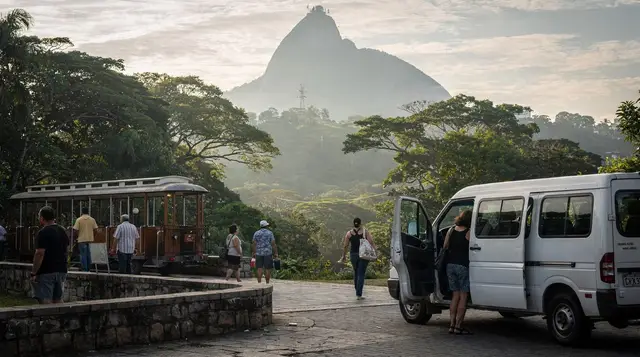
Rio de Janeiro: Christ the Redeemer Guided Hike

Best of Rio in One Day: Christ Redeemer, Sugarloaf & Local Lunch
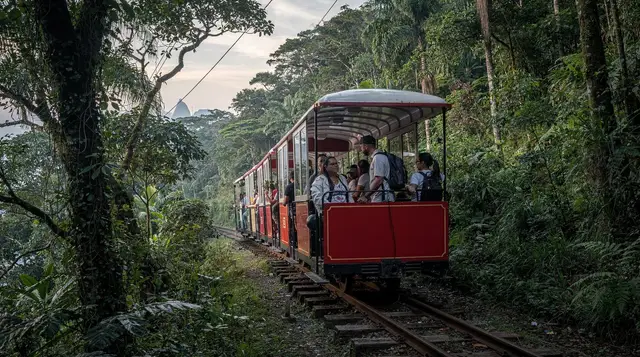
Christ the Redeemer Entry Ticket by Corcovado Train
Photos show the destination, not the operator's own pictures.