
Vista Chinesa and Mesa do Imperador — the forest viewpoints
What are Vista Chinesa and Mesa do Imperador?
Two free viewpoints inside Tijuca National Park, a short drive apart. Vista Chinesa is a Chinese-style pavilion overlooking the Rodrigo de Freitas lagoon and Zona Sul beaches; Mesa do Imperador is a shaded stone table-and-terrace once used by Emperor Pedro II, looking out over Corcovado and the forest itself. Neither has an entry fee, and both require a car or taxi since no public transport reaches them.
| Where | Alto da Boa Vista sector, Tijuca National Park |
| Cost | Free — no entry fee at either viewpoint |
| Time needed | 3-4hrs door to door independently; 5-6hrs on a fuller jeep/hike loop |
| Getting there | No bus or metro — taxi, private driver, or a jeep/hike tour |
| Best time | Late afternoon at Vista Chinesa for light; midday fine at Mesa do Imperador |
A note on the wider Alto da Boa Vista area
Both viewpoints sit inside Alto da Boa Vista, the highest-altitude neighbourhood accessed by the park’s road network and effectively the gateway to Tijuca forest’s upper section. It’s a genuinely different environment from the beach neighbourhoods most visitors spend their trip in — cooler, quieter, wrapped in cloud forest rather than concrete — and treating a visit here as a deliberate change of pace from the rest of a Rio itinerary, rather than a quick tick-box stop, tends to make for a more satisfying afternoon than rushing between the two mirantes and leaving immediately.
The view from inside the forest, not above it
Most of Rio’s famous viewpoints are bare summits — Corcovado, Sugarloaf — reached by cable car or cog train, standing on exposed rock with the city spread out below. Vista Chinesa and Mesa do Imperador are a different kind of view entirely: both sit inside the tree canopy of Tijuca National Park, framed by forest rather than stripped of it, and both cost nothing to visit.
This is the honest reason they beat the postcard shot for a lot of visitors — the Christ the Redeemer view is famous because it’s the highest point in the city; these two are quietly better photographs because the forest does half the composition’s work for you.
Why there’s a forest here at all
The forest both viewpoints sit inside isn’t untouched wilderness — it’s the result of one of the world’s earliest large-scale reforestation projects. By the mid-19th century, the Tijuca hillside had been almost entirely cleared for coffee plantations, and the resulting erosion and water-supply problems for the city below prompted Emperor Pedro II to order a systematic replanting effort starting in 1861, using native species and, notably, enslaved and freed labourers under the direction of Major Manoel Gomes Archer.
What visitors walk through today, well over 150 years later, is a fully regrown forest that looks ancient but is, in ecological terms, a deliberate and largely successful restoration — one of the reasons Tijuca is cited internationally as an early model for urban reforestation.
What a half-day visit actually looks like
A typical independent visit runs three to four hours door to door from a Zona Sul hotel: 20-30 minutes up by taxi, 30-45 minutes at Vista Chinesa including photos, a short drive to Mesa do Imperador, another 20-30 minutes there, and the return trip. Visitors combining a jeep tour or guided hike with the two mirantes should expect closer to five or six hours for the fuller loop, including waterfall or additional viewpoint stops along the way. Neither viewpoint has a fixed minimum visit time — you can move through quickly if you’re tight on schedule, or linger for an hour if the forest setting appeals more than expected.
Vista Chinesa
A Chinese-style pavilion built in 1903, commemorating the Chinese tea growers brought to the Tijuca hillside in the early 19th century, sitting on a promontory that looks directly down over the Rodrigo de Freitas lagoon, Ipanema, and Leblon. The pavilion itself is small — really just a platform and a roof — but the view from its edge, framed by the pagoda’s red columns in the foreground and the beach curve in the distance, is one of the most photographed non-icon shots in the city, and deservedly so.
Getting there. Vista Chinesa sits on Estrada da Vista Chinesa, one of the roads that winds up into Tijuca forest from the Alto da Boa Vista side. No bus or metro reaches it — a taxi, rideshare, or private driver is the only practical option, typically 20-30 minutes from Ipanema or Copacabana. Many visitors combine it with a wider Tijuca forest loop rather than a standalone trip, since the road passes several of the park’s other viewpoints and waterfalls on the way.
a half-day jeep tour through Tijuca forest is the straightforward way to see Vista Chinesa without arranging a driver yourself, usually bundled with a couple of the park’s other stops in the same run.
Comparing the crowd, honestly
Vista Chinesa is more photographed and therefore busier at its peak sunset-hour window, drawing a mix of independent visitors and tour vans that occasionally clogs the small pavilion platform for photos. Mesa do Imperador, by contrast, rarely feels crowded even on a busy weekend, since it lacks the single-iconic-shot draw that pulls people specifically to Vista Chinesa. If avoiding a crowd entirely matters more to you than getting the classic composition, treat Mesa do Imperador as the primary stop and Vista Chinesa as the quick add-on rather than the reverse.
Mesa do Imperador
A short drive further into the forest sits Mesa do Imperador — the Emperor’s Table — a stone picnic table and terrace built for Emperor Pedro II, who used the spot as a retreat from the heat of the city below. The view here faces the opposite direction from Vista Chinesa’s, looking toward Corcovado and across the forest canopy rather than the coast, and it’s shaded and genuinely cooler than either the lagoon-facing pavilion or the exposed summits elsewhere in the city.
It’s a good picnic spot in the literal sense — bring food and use the stone table, as Pedro II’s household once did — and a good rest stop if you’re doing a longer walk or drive through the park. It’s quieter than Vista Chinesa on most days, simply because it’s slightly further off the main loop and less famous by name.
Pedro II, Brazil’s last emperor, reigned from 1831 until the country’s transition to a republic in 1889, and was known for a genuine personal interest in the natural sciences and in the Tijuca reforestation project specifically — this table wasn’t a formal state monument but a practical spot he used on visits to inspect the forest’s progress, which gives it a more personal, less ceremonial character than most imperial-era sites in Rio. That informality carries through to how it’s used today: unlike Vista Chinesa’s more structured, photograph-first pavilion, Mesa do Imperador rewards actually stopping and sitting rather than shooting a quick photo and moving on.
Vista Chinesa vs Mesa do Imperador, side by side
| Vista Chinesa | Mesa do Imperador | |
|---|---|---|
| View | Lagoon, beaches, ocean horizon | Corcovado and the forest canopy |
| Crowd | Busier, especially sunset hour | Quiet even on busy weekends |
| Best for | A single strong postcard photo | Sitting, resting, a picnic |
| Best light | Late afternoon, warm on the water | Midday, filtered by canopy |
| Mood | Structured, photograph-first | Informal, contemplative |
Neither is objectively better — they answer different questions. If you only have time for one and want the shot everyone recognises, take Vista Chinesa. If you’d rather have somewhere quiet to actually sit with a view over the forest and Corcovado, Mesa do Imperador is the better half-hour. Most visitors who make the drive up do both, since the extra distance between them is small.
Other stops on the same road
The Estrada da Vista Chinesa and the surrounding park roads pass several other worthwhile stops that most visitors combine with the two main viewpoints rather than treating as separate trips: the Museu do Açude, a small museum in a former estate with formal gardens partway down the hillside, and Cascatinha Taunay, a genuine waterfall a short walk from a parking area — useful context if you’re also planning the fuller Waterfalls of Tijuca visit. A driver or guided tour that already knows the road can string three or four of these together in a single half-day without doubling back, which is harder to arrange efficiently on your own without local knowledge of the park’s layout.
Combining the two with the rest of Tijuca
Both sit inside Tijuca National Park, the largest urban forest in the world, and are usually visited as two stops on a longer loop that can also take in waterfalls and hiking trails. See Tijuca Forest guide for the full park picture and Waterfalls of Tijuca if you want to add a swimming stop to the same trip.
a guided hike through Tijuca’s peaks, caves, and waterfalls with transfers is the fuller option if you want to turn the viewpoint visit into a proper half-day in the forest rather than a quick in-and-out.
How the two compare to each other
If you can only visit one, the choice comes down to what you want from the view. Vista Chinesa gives the wider, more instantly recognisable composition — lagoon, beaches, and the ocean horizon in one frame — and is the better pick if you want a single strong photograph. Mesa do Imperador gives a quieter, more contemplative experience, facing inward toward the forest and Corcovado rather than outward to the coast, and is the better pick if you want somewhere to actually sit, eat, and rest rather than shoot and move on. Doing both costs little extra time, since they sit on the same general stretch of park road, and most visitors who make the trip up do exactly that rather than choosing between them.
Why this beats the postcard shot
The honest case for prioritising these two over, or alongside, Christ the Redeemer and Sugarloaf: no queue, no ticket, no sellout risk, and a genuinely different photographic composition than every other visitor’s Corcovado shot. Vista Chinesa in particular gives a wide, uncluttered view of the lagoon and the beach curve that most Sugarloaf or Corcovado photos can’t replicate, because those summits are too high and too far to isolate that specific stretch of coastline. For the wider ranking of how these two stack up against the paid icons, see Best viewpoints in Rio.
When to go
Late afternoon light works well at Vista Chinesa, since the pavilion faces roughly toward the setting sun over the lagoon — arrive an hour or so before sunset for the best colour without the Sugarloaf-level crowd competing for the same railing. Mesa do Imperador, shaded and forest-facing, is more forgiving of midday light and works well as a lunch stop in the middle of a longer Tijuca visit. Both are inside a national park that closes at a fixed hour — check current park hours before planning a late visit, since the access roads gate shut and getting stuck inside after closing is a genuine inconvenience.
Pairing with a hike rather than just a drive
For visitors who’d rather earn the view than be driven to it, both Vista Chinesa and Mesa do Imperador connect to the wider trail network inside Tijuca National Park, and several of the park’s hiking routes — covered separately at Tijuca Forest guide and Hiking safety in Rio — pass near or through both viewpoints on longer loops. This is a genuinely different way to experience the same forest that produced these two mirantes, on foot rather than through a car window, and it’s worth considering for anyone who enjoyed their forest-framed character and wants more of it.
Combining with a wider west-city day
Because both viewpoints sit on the Alto da Boa Vista side of Tijuca, they combine naturally with a longer loop through the park rather than standing as a two-stop errand — the same road network passes Cascatinha Taunay and connects toward the waterfalls of Tijuca if swimming or hiking appeals more than a second viewpoint. For visitors staying closer to Santa Teresa than the main Zona Sul beach strip, this side of the forest is also a noticeably shorter drive than from Copacabana or Ipanema, worth factoring in if your itinerary is built around minimising transit time between stops.
Weather and practicalities
Both viewpoints are inside cloud forest, and Tijuca gets more rain than the coastal Zona Sul — pack for the possibility of a shower even on a sunny beach day down at sea level. Mosquitoes are a mild but real nuisance in the humid months; repellent is worth carrying. Neither site has food or water for sale, so bring both if you’re combining the visit with a longer forest walk.
Photography specifics
At Vista Chinesa, shoot from the pavilion’s edge with one of the red support columns in the foreground for the classic framing — it gives depth to what would otherwise be a flat wide shot of the lagoon. Late afternoon, an hour or so before sunset, puts warm light directly on the water and the beach curve beyond it. At Mesa do Imperador, the forest canopy filters the light throughout the day, which makes it more forgiving of midday visits than the open, glare-prone summits elsewhere in the city — a real advantage if your schedule doesn’t allow for golden-hour timing at every stop on a packed day.
What locals actually think of these two spots
Ask a carioca where to take a visiting friend for a photo that isn’t the same Christ the Redeemer shot everyone already has, and Vista Chinesa comes up constantly — it has the local reputation of being the view tourists miss, precisely because it doesn’t have a ticket booth or an official “sight” status pushing it onto every first-timer’s list. Mesa do Imperador is more of a locals’-locals spot: fewer visitors know the name at all, and the people who do tend to treat it as a quiet lunch stop rather than a photo destination, which is part of its appeal if a crowd-free half-hour matters more to you than a famous name.
Getting there without a car
Since no bus or metro reaches either viewpoint, the practical options are a taxi or rideshare booked for a return trip (ask the driver to wait, or book round-trip through your hotel), a private driver for a half-day covering multiple Tijuca stops, or a guided tour that includes transport as part of the price — the jeep tour and hiking tour linked above both solve this directly. See Getting around Rio de Janeiro for the wider transport context.
For families and less mobile visitors
Vista Chinesa’s viewing platform is reachable by a short, level path from the parking area, which makes it one of the more accessible viewpoints in the city for a stroller or a visitor with limited mobility — the pavilion’s edge and railings are worth checking against specific needs, but the approach itself isn’t the obstacle it is at some of Rio’s other lookouts.
Mesa do Imperador’s stone terrace is similarly close to where a car parks, with less uneven ground than a genuine hiking viewpoint. Neither site has shade beyond the pavilion roof or the forest canopy itself, and neither has food or water for sale, so plan accordingly for a family visit — see Rio with kids for the wider picture of what works well for a family day in the city.
Frequently asked questions about Vista Chinesa and Mesa do Imperador
Is there an entry fee for Vista Chinesa or Mesa do Imperador?
No — both sit inside the publicly accessible parts of Tijuca National Park and have no ticket or gate fee, unlike the paid cable car and cog train summits elsewhere in the city.
How far apart are the two viewpoints?
A short drive, roughly 10-15 minutes apart on the park’s access roads, making it easy to combine both in a single half-day visit.
Can I walk between Vista Chinesa and Mesa do Imperador?
It’s possible on marked trails for a fit hiker, but most visitors drive or are driven between them — the road distance and elevation make walking a genuine hike rather than a stroll.
Is Vista Chinesa crowded?
Less than Sugarloaf or Christ the Redeemer, but it’s popular enough that sunset hour sees a meaningful number of visitors, tour vans included. Midday and early morning are noticeably quieter.
Do I need a guide to visit these viewpoints?
No — a taxi or rideshare with a return arrangement is enough for independent visitors, though a guided jeep or hiking tour is a reasonable option if you want the wider Tijuca forest context explained along the way.
Is it safe to visit on my own?
Yes, during daylight hours — these are well-visited, publicly accessible viewpoints inside a managed national park. See Rio de Janeiro safety guide for the fleet-wide safety picture if you want more general context.
What should I bring?
Comfortable shoes, water, insect repellent, and a light layer — the forest is noticeably cooler and damper than the coast, even on a hot day at sea level.
Is Vista Chinesa wheelchair accessible?
The viewing platform itself is reachable by a short, level path from the parking area, making it more accessible than most of Rio’s other viewpoints, though the pavilion’s edge and railings are worth checking against specific mobility needs before planning around it.
Why is it called Vista Chinesa?
The name refers to the Chinese tea growers Portuguese colonial authorities brought to this exact hillside in the early 19th century in an attempt to establish a domestic tea industry — the pavilion, built decades later in 1903, commemorates that history rather than marking anything Chinese about the view itself.
Can I see Vista Chinesa and Christ the Redeemer on the same day?
Yes, and it’s a common pairing — both sit within Tijuca National Park’s broader area, though they’re reached by different access roads and aren’t visible from each other, so plan them as two separate stops rather than assuming proximity means a combined ticket or route.
tours.icons-viewpoints
Verified deep-linked GetYourGuide tours. Book through these links and we earn a small commission at no cost to you.
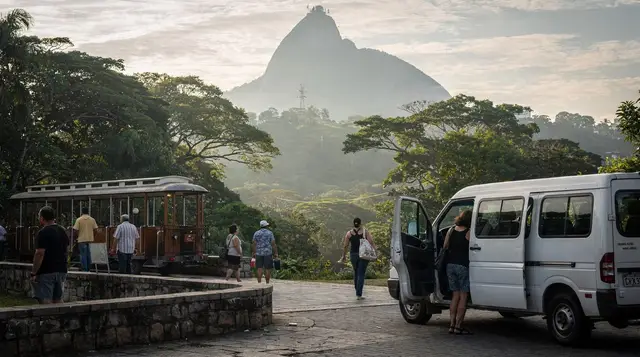
Rio de Janeiro: Christ the Redeemer Guided Hike

Best of Rio in One Day: Christ Redeemer, Sugarloaf & Local Lunch
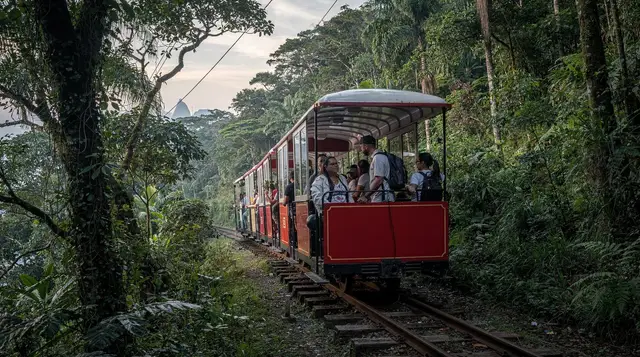
Christ the Redeemer Entry Ticket by Corcovado Train
Photos show the destination, not the operator's own pictures.