
Adventure sports in Rio — what's genuinely worth it, and what's a gimmick
What adventure sports can you do in Rio de Janeiro?
Rio offers a genuinely rare mix of urban adventure sports — tandem hang gliding off Pedra Bonita, world-class rock climbing on Sugarloaf, surfing at several city and out-of-town beaches, and boat trips on Guanabara Bay, all reachable from a single hotel base. The best ones (hang gliding, climbing, diving at Arraial do Cabo) are genuinely distinctive; a few marketed as "adventure" are milder than the branding suggests.
| Where | Pedra Bonita, Sugarloaf, Arpoador, Guanabara Bay, Arraial do Cabo |
| Cost | R$40 (kayak/hr) to R$650 (diving day trip) |
| Time needed | Half-day for most, full day for Arraial diving |
| Weather risk | High for hang gliding, climbing, diving, surfing |
| Best time | Book early trip days with a buffer day nearby |
A city with genuine adventure sport, not just branding
This guide exists because most “top adventure activities in Rio” lists read like a copy-pasted checklist — hang gliding, favela tour, samba class, all flattened into the same enthusiastic tone regardless of what each one actually involves, what it costs, or how likely it is to get cancelled.
The seven activities covered across this cluster of guides are treated individually elsewhere on this site, each with its own honest detail on cost, weather risk, and operator vetting; this page is the map of how they relate to each other — which ones justify the hype, which ones are milder than their branding suggests, and how to sequence them around Rio’s genuinely real weather dependency rather than assuming every scheduled activity will simply happen as booked.
Adventure tourism marketing tends to stretch the word “adventure” over anything mildly active, and Rio is no exception — but underneath the marketing, this city has a genuinely rare cluster of real adventure sports within a single, compact urban area: a mountain you can hang glide off, a granite face you can climb, ocean swell you can surf, and a bay you can sail across, all within a 30-45-minute radius of most Zona Sul hotels. This guide is the honest overview: what each activity actually involves, roughly what it costs, how weather-dependent it is, and where the marketing outruns the reality.
The full list, ranked by how genuinely distinctive it is
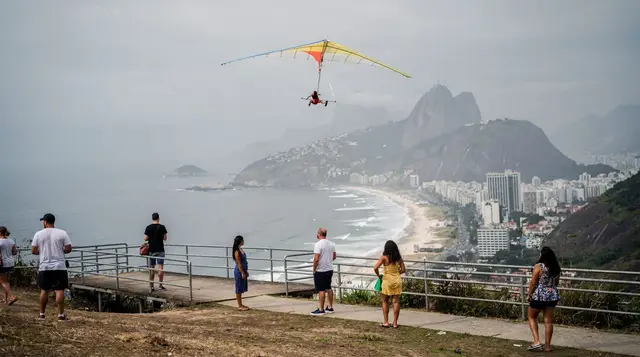
Hang gliding — the standout. A tandem flight off Pedra Bonita’s ramp, landing on São Conrado beach, is one of the more dramatic short flights available anywhere in the world, not just in Rio, and it’s genuinely accessible to complete first-timers with a certified pilot. Full detail, including cost and how to check a pilot’s license, is in Hang gliding in Rio.
a tandem hang gliding flight is the single most-booked adventure activity in the city for good reason.
Rock climbing — a close second. Sugarloaf’s granite face has real, historic multi-pitch routes that put Rio in a small club of major world cities with genuine urban climbing, not a gym-dressed-as-adventure substitute. See Rock climbing in Rio for routes, grades, and guided beginner options.
a Sugarloaf hiking and climbing tour is the accessible entry point for visitors with no climbing background.
Diving at Arraial do Cabo — genuinely good, but a real commitment. Cold-water upwelling delivers visibility that beats anywhere closer to Rio, at the cost of a 2.5-3 hour trip and a real chance of a wind-related cancellation. See Diving near Rio for the full honest picture, including how often trips actually get cancelled.
Surfing — solid and accessible, with one honesty caveat. Arpoador and the beaches further west offer real, rideable surf and easy lesson access, but Rio’s water quality drops sharply after heavy rain — see Surfing in Rio for the water-quality rule worth actually following.
Boat trips on Guanabara Bay — a genuinely good, low-effort way to see the city’s skyline from open water, more scenic outing than adrenaline sport, but a worthwhile half-day regardless. See Boat trips on Guanabara Bay.
Cycling — low-key relative to the rest of this list, and better thought of as active sightseeing than adventure sport, but genuinely excellent for what it is: a flat, protected beachfront path and a lagoon loop that most visitors underrate. See Cycling in Rio.
Kayaking and SUP — the mildest entry on this list, and honestly marketed roughly right — a pleasant, low-intensity paddle on the lagoon or a sheltered Urca cove, not an adrenaline activity, worth doing for the scenery rather than the thrill. See Kayaking and SUP in Rio.
Why Rio’s geography makes this cluster possible
Most cities with a strong adventure-sports scene build it around a single feature — a mountain range, a coastline, a river. Rio is unusual in stacking several distinct geographies into one compact urban footprint: a granite mountain massif rising directly out of the city (Sugarloaf, Corcovado, and the Pedra Bonita/Tijuca ridge), a genuine Atlantic coastline with real swell, a sheltered bay, and — a short drive along the coast — cold-water upwelling clear enough for proper diving.
That combination is what makes it possible to hang glide in the morning and be back on a beach towel by lunchtime, or climb Sugarloaf and sail across the bay on the same day. Few cities anywhere let you meaningfully sample this many distinct outdoor sports without leaving a single metro area.
Physical fitness needed, activity by activity
Fitness demands vary more across this list than the marketing usually admits. Hang gliding and kayaking/SUP require minimal fitness — a tandem pilot or the flat, unhurried nature of a lagoon paddle does most of the physical work. Surfing lessons and cycling the flat beachfront sit in the middle — moderate effort, accessible to most reasonably active visitors without serious athletic background.
Climbing and diving sit at the more demanding end — climbing requires grip strength and comfort with sustained physical exertion on rock, and a full diving day involves carrying gear, managing buoyancy, and, on Arraial’s better sites, genuinely cold water that adds its own physical toll. None of this rules anyone out — every activity has a version suited to a beginner or a less fit visitor — but it’s worth matching expectations to the specific activity rather than assuming uniform difficulty across “adventure sports” as a single category.
What’s genuinely a gimmick, or oversold
Not everything marketed as “extreme” in Rio deserves the label. Bungee-style attractions and carnival-adjacent thrill rides that occasionally appear in tourist listings are amusement-park activities dressed in adventure-sport language, not comparable in substance to hang gliding off a real mountain or climbing real rock — treat any listing using words like “extreme” or “adrenaline” without a specific, verifiable activity description (a named route, a named launch site, a named dive location) with some skepticism.
The genuine activities on this list — hang gliding, climbing, diving, surfing — all have specific, checkable locations and operators; that specificity is itself a decent filter for telling a real adventure activity from a repackaged tourist ride.
surf lessons in Copacabana and Ipanema is a straightforward, honestly marketed entry point if surfing is the one you want to try first — no gimmick, just real instruction on a real break.
Cost comparison across the list
Roughly, from cheapest to most expensive per session: kayak or SUP rental (R$40-70/hour), cycling (R$25-80 for a rental), a lagoon boat trip on Guanabara Bay (R$80-250), a surf lesson (R$150-250), a guided climb (R$350-550), a hang gliding tandem flight (R$550-750), and a full diving day trip to Arraial do Cabo (R$450-650, plus a longer time commitment). None of these are prohibitively expensive relative to other world adventure-sport destinations, and several — the lagoon paddle, the beachfront cycling — cost next to nothing while delivering a genuinely good experience. See Rio de Janeiro on a budget for how this list fits into a wider trip budget.
Cost comparison at a glance
| Activity | Typical cost | Duration | Weather risk |
|---|---|---|---|
| Kayak/SUP rental | R$40-70/hour | 1-2 hours | Low |
| Cycling rental | R$25-80 | Half-day | Low |
| Guanabara Bay boat trip | R$80-250 | Half-day | Medium |
| Surf lesson | R$150-250 | 1.5-2 hours | Medium |
| Guided climb | R$350-550 | Half-day | High |
| Hang gliding tandem | R$550-750 | 2-3 hours | High |
| Arraial do Cabo diving | R$450-650 | Full day | High |
Weather and cancellations — the honest pattern across all of them
Nearly every activity on this list is weather-dependent to some degree, and this is worth understanding as a pattern rather than activity by activity: hang gliding needs specific wind direction and strength; climbing needs dry rock; diving at Arraial needs calm wind for both boat access and water clarity; surfing depends on swell and, separately, on rain-driven water quality.
Responsible operators across all of these cancel or reschedule rather than run an activity in unsafe or degraded conditions, and that should read as a sign of a properly run operation, not bad luck or poor planning on your part. Building at least one buffer day into a trip that includes several of these activities — rather than scheduling every single one on a tight, back-to-back itinerary — is the single most useful piece of practical advice in this entire cluster of guides. See Best time to visit Rio de Janeiro for the seasonal pattern behind all of this.
a guided bike tour through Botafogo, Flamengo, and the lagoon is the good buffer-day activity on this list — flat, low-effort, essentially weather-immune outside of genuinely heavy rain, and a solid plan B if a hang gliding or diving day gets postponed.
Booking through a marketplace vs arranging locally
Every activity on this list can be booked in advance through a marketplace with reviews, or, in several cases, arranged more informally once you’re in Rio — a board rental at Arpoador, a walk-up lagoon kayak, or a hang gliding pilot soliciting business at the São Conrado car park. The trade-off is consistent across the whole cluster: advance booking through a platform with reviews gives you price transparency, a documented cancellation policy, and some assurance about licensing or certification standards; arranging locally can occasionally be cheaper but removes nearly all of that protection, and is exactly where the informal, undercutting operators mentioned throughout this cluster tend to operate.
For the higher-stakes activities — hang gliding, diving, and climbing specifically — booking ahead through a reviewed platform is worth the modest premium. For the lower-stakes ones — a lagoon kayak rental, a beachfront bike — walking up on the day is entirely fine and often simpler.
Building an adventure-focused itinerary
For visitors specifically prioritizing this cluster of activities over Rio’s museums and nightlife, a rough allocation across a week works well: one day for hang gliding (with a buffer day nearby in case of cancellation), one day for climbing or a Sugarloaf visit, one day trip to Arraial do Cabo for diving (ideally with an overnight given the wind risk), and the remaining days split between surfing, cycling, and a Guanabara Bay boat trip, which slot in more easily around weather than the higher-stakes bookings.
See Rio de Janeiro beach and outdoors itinerary for a structured version of this, and How many days do you need in Rio de Janeiro? for how this fits against Rio’s other major sights if adventure sports aren’t your only priority.
Safety across the board
Every activity in this cluster involves a real, if generally low, physical risk, and the single biggest safety lever across all of them is the same: book through an operator with a verifiable review history and a clear license or certification standard, rather than an informal deal arranged on the beach or at a trailhead. This applies as much to a hang gliding pilot’s CBVL registration as it does to a dive operator’s certification requirements or a climbing guide’s route knowledge — the specifics differ, but the underlying logic doesn’t. See Rio de Janeiro safety guide for the wider safety picture across the city beyond adventure sports specifically.
Frequently asked questions about adventure sports in Rio
What’s the single best adventure activity in Rio if I can only do one?
Hang gliding, for most visitors — it’s the most distinctive experience on this list and doesn’t require prior skill or fitness beyond basic health. See Hang gliding in Rio for the full detail.
Which of these activities is the least weather-dependent?
Cycling and the lagoon kayak/SUP rentals — both are low-effort, don’t depend on ocean swell or strong wind, and only really get cancelled by genuinely heavy rain.
Are these activities safe for a solo traveler?
Yes, generally — all of them are commonly booked and done solo, joining a shared group session rather than requiring your own private group. See Solo travel in Rio de Janeiro for the wider picture on solo travel logistics in the city.
Do I need travel insurance for adventure sports specifically?
Worth checking your policy’s exclusions — some standard travel insurance policies exclude specific categories like scuba diving or hang gliding, or set depth or altitude limits. Confirm coverage before booking if you’d be relying on the policy for an injury.
How many of these can I realistically fit into a one-week trip?
Comfortably three to four, if you build in at least one buffer day for weather-dependent bookings and don’t try to stack hang gliding, climbing, and a full Arraial day trip into three consecutive days without any slack.
Is Rio’s adventure sports scene aimed at experienced athletes or beginners?
Both, with clear entry points for beginners at every activity on this list — tandem hang gliding, introductory climbing lessons, beginner surf lessons, and Discover Scuba diving all exist specifically for first-timers, alongside harder options for those with real experience.
What should I book first if I’m planning around limited good-weather days?
Hang gliding and diving, since both have the highest cancellation risk and the most value in having schedule flexibility around them — book those early in your trip with buffer days available, and fit the lower-risk activities (cycling, boat trips, kayaking) around whatever days remain.
Can I do adventure sports and still see Rio’s main sights on the same trip?
Yes, comfortably — most of these activities take a half-day or less, and several (climbing Sugarloaf, the Guanabara Bay boat trips) essentially double as sightseeing. See How many days do you need in Rio de Janeiro? for how to balance an adventure-heavy itinerary against Christ the Redeemer, the beaches, and the rest of the city’s major sights.
Are there any adventure activities specifically outside the city worth adding to this list?
The Costa Verde and Região dos Lagos day-trip belt covered elsewhere on this site — hiking around Petrópolis and Teresópolis, or the beaches near Búzios — extends this cluster further if a week in Rio isn’t enough. This guide focuses specifically on activities reachable within the city and its immediate surroundings, Arraial do Cabo’s diving being the one exception given how directly it completes the adventure-sports picture.
How does this cluster compare in cost to a similar adventure-sports trip elsewhere in the world?
Generally cheaper — Rio’s pricing across hang gliding, climbing, diving, and surfing sits below equivalent activities in North America, Western Europe, or Australia, while matching or exceeding them on the quality and setting of the experience itself, which is a large part of why this cluster draws dedicated adventure travellers specifically to Rio rather than treating it as a side activity on a beach-focused trip.
tours.outdoor-adventure
Verified deep-linked GetYourGuide tours. Book through these links and we earn a small commission at no cost to you.

Rio: Jeep Tour 4 Wonders with Lunch

Hang gliding Hang gliding Experience Rotorfly
Rio de Janeiro: Pedra Bonita Hike and Hang Gliding Flight Watching
Photos show the destination, not the operator's own pictures.