
Diving near Rio — Arraial do Cabo is the real dive site, and the wind cancels it
Where is the best place to dive near Rio de Janeiro?
Arraial do Cabo, about 2.5-3 hours from Rio, has the region's best diving — clear water caused by cold-water upwelling, healthy reef and marine life, and visibility that beats anything closer to the city. It also has a genuine, well-known wind pattern that cancels or postpones a meaningful share of scheduled dive trips, so book with flexibility rather than a single fixed day.
Why “diving near Rio” really means Arraial do Cabo
Rio city’s own coastline isn’t a serious diving destination — the water along Zona Sul and the bay is too affected by sediment, boat traffic, and, in parts of Guanabara Bay, pollution, to offer the visibility a diver actually wants.
The real answer to “where do you dive near Rio” is Arraial do Cabo, a small town roughly 2.5-3 hours east along the coast, which has built a genuine regional diving reputation on a specific, unusual piece of oceanography: cold-water upwelling that pulls clear, nutrient-rich water up from deep offshore, producing visibility and marine life density that nothing closer to the city can match. This guide covers what that upwelling actually means for a visiting diver, what the dives look like, and — the part every honest guide to this region has to include — how often the wind shuts the whole thing down.
| Where | Arraial do Cabo, 2.5-3hrs from Rio |
| Visibility | 15-25m on a good day |
| Water temp | High teens to low 20s°C — wetsuit standard |
| Cost | Around R$450-650/person, incl. transport, 2 dives, gear |
| Main risk | Wind cancellations — build in schedule slack |
The upwelling, explained simply
Arraial do Cabo sits at a point on the coast where prevailing winds push surface water offshore, pulling cold, clear water up from deeper offshore layers to replace it — a phenomenon called upwelling. That cold water carries far less suspended sediment than the warmer coastal water found elsewhere along this stretch of Brazil, which is why Arraial’s visibility regularly reaches 15-25 metres on a good day, genuinely comparable to far more famous dive destinations, and well beyond what’s realistic anywhere closer to Rio itself.
The trade-off: the water is noticeably colder than the tropical water most visitors expect from a Brazilian beach town, often in the high teens to low twenties Celsius even when the air temperature is warm, so a wetsuit is standard gear here, not an optional extra.
What the dive sites actually look like
Arraial’s dive sites include rocky reef formations, submerged caves and swim-throughs, and a genuine variety of marine life supported by the nutrient-rich upwelling water — reef fish, rays, turtles on many dives, and occasional larger pelagic sightings depending on the season and site. Sites range from shallow, beginner-appropriate reef dives suited to a first open-water certification dive, up to deeper, more technical sites for experienced divers, including cave and cavern formations that require specific comfort with overhead environments.
A dive operator will match site selection to your certification level and experience — this isn’t a one-size destination, and being upfront about your actual logged dive count and certification matters for getting matched to the right site rather than either an underwhelming easy dive or an over-your-head technical one.
an Arraial do Cabo scuba diving day trip from Rio is the standard way to do this without staying overnight — transport, two dives, and gear typically bundled into a single long day.
The wind — the part that cancels trips
This needs to be said as plainly as the upwelling itself is celebrated: the same wind pattern that creates Arraial’s clear water also creates a genuine, well-documented cancellation problem. Strong or shifting wind — particularly the persistent northeast wind common in parts of the year — can churn up the very water the upwelling clears, dropping visibility sharply and, when strong enough, making boat-based dive access unsafe outright.
Locals and dive shops in Arraial are used to this and reschedule routinely; what a visiting tourist on a single-day booking from Rio needs to understand is that a dive trip booked for one specific day, especially during a windier stretch of the year, has a real, non-trivial chance of being postponed or cancelled, not a small technicality buried in fine print.
The practical response: if diving is a priority rather than a nice-to-have, build slack into your itinerary — book a day trip with a day or two of buffer before you need to leave the region, or consider an overnight in Arraial do Cabo itself rather than a single rushed day trip from Rio, so a wind-cancelled morning can shift to the following day rather than being lost entirely. See Arraial do Cabo day trip from Rio for the logistics of the trip itself, and Best time to visit Rio de Janeiro for the seasonal pattern — no season is entirely wind-free, but some stretches of the year see calmer average conditions than others.
Marine life you might actually see
Arraial’s upwelling doesn’t just clear the water — it feeds it, and the nutrient-rich cold current supports a genuinely rich marine ecosystem for a site this close to a major city. Common sightings on a typical dive include large schools of reef fish, rays gliding along the sandy bottom between rock formations, and sea turtles at several of the more established sites — not guaranteed on every single dive, but common enough that most operators mention it as a realistic expectation rather than a rare bonus.
Divers with more experience and the right season sometimes report larger pelagic sightings further offshore, though this depends heavily on site, timing, and a fair amount of luck, and shouldn’t be the deciding factor in booking a standard day-trip package aimed at a broader range of experience levels.
Cabo Frio — the nearby alternative
Cabo Frio, a short distance further along the same coast from Arraial, shares some of the same upwelling-driven clear water and is sometimes offered as an alternative or additional stop on a diving day trip, particularly for operators based slightly further from Arraial itself. It’s generally considered a notch below Arraial for serious diving — fewer established sites, less consistently exceptional visibility — but it’s a reasonable secondary option if a specific Arraial trip is unavailable on your dates, or if you’re already staying in Cabo Frio for other reasons and want to add a dive without a separate transfer to Arraial.
Timing within the day
Morning departures are standard and for good reason: wind tends to build through the day along this coast, so an early start gives the best chance of calm conditions and maximum visibility before any afternoon wind picks up. A typical day-trip schedule departs Rio in the very early morning, dives mid-morning while conditions are most favourable, and returns by early evening — a long day, but one built specifically around the site’s own wind pattern rather than arbitrary tour scheduling. Overnight visitors in Arraial itself have more flexibility to simply wait out a bad-wind morning and dive in the afternoon or the following day instead, one more argument for the overnight option over a single fixed-day trip from Rio.
Cost
A day-trip diving package from Rio, including transport, two dives, and gear rental, runs roughly R$450-650 (about US$85-120), depending on the operator and whether lunch is included. This is meaningfully more than most of Rio’s other outdoor activities, reflecting both the distance travelled and the specialized gear and certified dive-master supervision involved. Snorkeling alternatives, covered below, run considerably cheaper for visitors who want the marine life without the certification and gear commitment of full scuba diving.
an all-inclusive scuba diving package bundles the full day, worth comparing directly against the Arraial-specific listing above on exactly which dive sites and how many dives are included.
Snorkeling as the lower-commitment alternative
Not every visitor wants to commit to a certified dive, and Rio’s own waters do offer a genuine snorkeling option that doesn’t require the trip out to Arraial or any diving certification.
a snorkel and swim-with-turtles boat tour at the Tijuca Islands covers this — a boat trip to a cluster of small islands off the Rio coast with clearer water than the mainland beaches and a realistic chance of swimming near sea turtles, all without the gear, certification, or day-trip distance that full scuba diving at Arraial requires. It’s the sensible choice for families, for visitors on a tighter schedule, or simply for anyone who wants marine life without the deeper commitment.
Certification — do you need one already
Most dive operators require at minimum an Open Water certification (PADI, SSI, or equivalent) for independent diving on Arraial’s standard reef sites, though many also offer a Discover Scuba introductory dive for complete beginners, a supervised single dive with a dive instructor that doesn’t require prior certification. If you’re not certified and want to try diving without committing to a full certification course during your trip, ask specifically for the introductory option rather than assuming certification is mandatory across the board — it varies by operator and by which specific sites they’ll take an uncertified diver to.
Best months, honestly
No month is entirely wind-free, but the pattern shifts enough across the year to be worth knowing before you pick dates. The calmest average conditions tend to fall in the autumn and early winter shoulder months, when the persistent northeast wind that drives cancellations is less consistent than in the peak of summer or the windier spring stretch.
That said, a genuinely calm week in a “bad” month and a genuinely windy week in a “good” one both happen regularly enough that booking around a general seasonal pattern is a way to shift the odds, not a guarantee — the buffer-day advice above matters in every month, just slightly less in the calmer ones. See best time to visit Rio for how this fits the city’s broader seasonal picture.
Getting to Arraial do Cabo
Arraial sits roughly 2.5-3 hours from Rio by road, reached by a booked transfer, a day-trip tour bus, or a rental car for those preferring to control their own schedule and stay overnight. Given the wind-cancellation risk described above, a booked tour that includes transport and handles rescheduling on your behalf is generally the lower-stress option over a self-driven trip planned around a single fixed day. Buzios, a beach town a short distance further along the same coast, is often combined with an Arraial visit — see Búzios vs Arraial do Cabo for how the two compare if you’re deciding how to split time between them.
Insurance and safety notes
Dive-specific travel insurance is worth checking for separately from a general travel policy — some standard policies exclude scuba diving, or cap coverage depth below what a genuine open-water dive at Arraial might reach, particularly on the deeper technical sites.
Reputable operators carry their own liability insurance and require a signed medical questionnaire before diving, flagging conditions (certain heart or lung conditions, recent surgery, pregnancy) that are standard exclusions across the diving industry generally, not unique to this region. As with every weather-dependent activity in this guide, a certified, experienced dive-master calling off a dive in unsafe wind or swell is a sign of a well-run operation, not bad luck — the same principle covered for hang gliding pilots in Hang gliding in Rio and for climbing guides in Rock climbing in Rio applies just as directly here.
Combining diving with a Buzios or Arraial stay
Divers doing an overnight rather than a rushed day trip often pair Arraial with nearby Búzios, a short drive up the coast and a genuinely different kind of beach town — more boutique shopping and restaurant scene, less about the water itself. Splitting a two-or-three-night stay between the two, with a dedicated diving day built into the Arraial half, is a common and sensible way to get real flexibility around the wind without sacrificing the rest of what this stretch of coast offers. See Búzios vs Arraial do Cabo for the fuller comparison of how to split time between the two towns.
Where this fits with Rio’s other water activities
Diving is the most distance- and commitment-heavy entry on this list of Rio’s water-based activities — see Adventure sports in Rio for how it compares on cost and effort to surfing, kayaking, and the bay boat trips covered elsewhere in this cluster, and Getting around Rio de Janeiro for the transport logistics of a day trip this far outside the city itself.
Who this suits
Certified divers with some existing experience get the most out of Arraial’s fuller range of sites, including the more technical cave and cavern dives. Complete beginners are well served by the Discover Scuba introductory option or, better still, the snorkeling alternative above, which removes both the certification question and the higher cost of a full dive package. Anyone prone to seasickness should note that dive sites are reached by boat, sometimes across choppier water than the sheltered conditions found on Rio’s own Guanabara Bay trips — see Boat trips on Guanabara Bay for that calmer, closer alternative if open-water boat conditions are a concern.
Frequently asked questions about diving near Rio
Is there any decent diving actually in Rio city, or do I have to go to Arraial?
Rio’s own coastline isn’t a serious dive destination — sediment and, in the bay, pollution limit visibility. Arraial do Cabo is genuinely the regional answer, not just the marketed one.
How often do dive trips actually get cancelled by wind?
Often enough that it shouldn’t be a surprise — wind cancellations are a routine, expected part of diving this stretch of coast, not a rare exception. Building schedule flexibility around your dive day meaningfully reduces the disappointment if it happens.
Do I need my own gear?
No — day-trip packages from Rio include full gear rental (wetsuit, tank, regulator, BCD, mask and fins) as standard. Bringing your own mask, if you have one properly fitted, is a comfort upgrade many divers prefer.
How cold is the water really?
Colder than most visitors expect from a Brazilian beach destination — often in the high teens to low twenties Celsius due to the upwelling, which is exactly what creates the clear water. A full wetsuit is standard, not optional.
Is Arraial do Cabo worth an overnight rather than a day trip?
If diving is a real priority, yes — it removes the single-shot risk of a wind cancellation derailing your only planned day, and Arraial itself is a worthwhile beach town beyond the diving. See Arraial do Cabo day trip from Rio for the day-trip logistics if an overnight isn’t feasible on your itinerary.
Can complete beginners try diving without a certification course?
Yes, via a Discover Scuba-style introductory dive supervised directly by an instructor — ask your chosen operator specifically about this option rather than assuming full certification is required.
What’s the best alternative if I don’t want to commit to full diving?
Snorkeling at the Tijuca Islands off Rio’s own coast, covered above, gives a genuine taste of clear water and marine life without certification, extra cost, or the distance to Arraial.
Is Cabo Frio a good substitute if Arraial trips are fully booked?
It’s a reasonable secondary option with some of the same upwelling-driven clear water, though generally considered a step below Arraial for the range and quality of established dive sites.
Do I need to worry about decompression sickness flying home right after diving?
Standard diving guidance applies — leave at least 12-18 hours between your last dive and a flight, longer for multiple dives in a day. Factor this into your itinerary if diving falls close to your departure date, and mention your dive schedule to your operator, who can advise on the specific gap needed for your dive profile.
tours.outdoor-adventure
Verified deep-linked GetYourGuide tours. Book through these links and we earn a small commission at no cost to you.

Rio: Jeep Tour 4 Wonders with Lunch

Hang gliding Hang gliding Experience Rotorfly
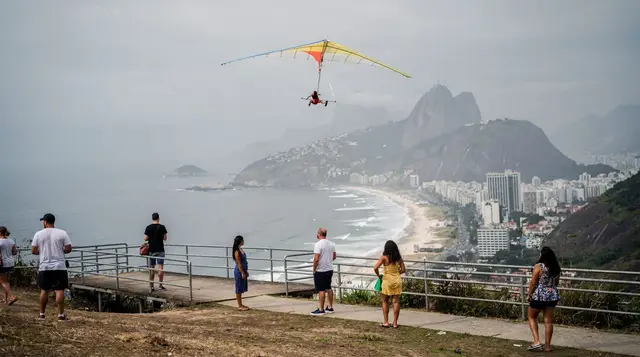
Rio de Janeiro: Pedra Bonita Hike and Hang Gliding Flight Watching
Photos show the destination, not the operator's own pictures.