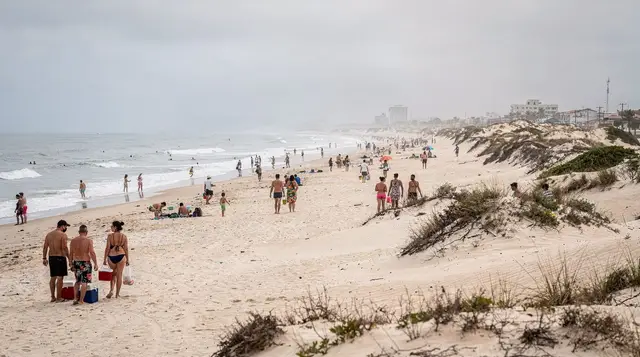
Arraial do Cabo has a reputation, and on a calm day it earns it: water clear enough that boats appear to float on air, in shades of blue and green that genuinely surprise first-time visitors used to Rio’s murkier city beaches. It also has a real logistics catch that most tour listings gloss over.
Is the Arraial do Cabo boat trip worth it, and what happens if it’s windy? On a calm day, yes, unreservedly — the standard boat loop to Praia do Farol and a handful of coves shows off water clarity that few places in Brazil can match. The catch: this stretch of coast is genuinely windy, especially in spring (September–November), and operators cancel, shorten, or reroute trips regularly when conditions turn. This isn’t a rare inconvenience; it’s a real possibility worth planning around, not something to discover on the day.
| Where | Região dos Lagos, ~2.5–3h from Rio (BR-101/RJ-140) |
| Cost | Shared boat trip R$80–150pp; diving R$250–400 |
| Time needed | 1 full day for the boat trip; 2 nights with a wind buffer |
| Getting there | 1001 bus from Novo Rio, or car |
| Best time | Dec–Mar or Jun–Aug for calmer seas |
Getting there
Buses run from Rio’s Novo Rio terminal (1001 and other operators cover the route) taking roughly 2.5–3 hours, at a cost of around R$60–90. By car, it’s the same time via the BR-101 and RJ-140. Arraial do Cabo is close enough to Búzios (about 45 minutes) and Cabo Frio (about 20 minutes) that many trips combine two or three of the region’s towns.
The town centre and main departure points for boat tours are compact and walkable from the bus station; you won’t need onward transport unless you’re staying somewhere outside the centre.
Where to stay
Arraial do Cabo has grown its accommodation options considerably as its reputation has spread, though it’s still smaller and less varied than Búzios. A simple pousada room runs roughly R$180–300/night; a handful of nicer boutique guesthouses near Praia dos Anjos or Praia Grande run R$350–600. If a boat trip is genuinely the whole point of your visit and you’re building in a buffer day for wind, budgeting for two nights rather than one is the safer plan, both financially and logistically.
Staying near Praia dos Anjos puts you close to the harbour where most boat tours depart, useful for an early start; staying near Praia Grande gives easier access to a broader, calmer swimming beach for downtime between boat trips.
The boat trip: what it actually covers
The standard schooner or speedboat loop runs 4–6 hours and typically stops at three or four points: Praia do Farol (see below), Gruta Azul (a sea cave with strikingly blue light), and one or two additional coves for swimming and snorkelling. Prices run roughly R$80–150 per person for a shared boat; smaller private charters cost more.
Bring reef-safe sunscreen and expect the boat to anchor rather than dock at most stops — you’ll swim or use a small tender to reach shore, so pack accordingly (dry bag, secured phone case).
Day trip from Rio with boat tour and lunch is the standard full package — transport, the boat loop, and a meal — and the easiest single booking if you want the whole day handled.
Praia do Farol
Widely rated one of the best beaches in Brazil, and reachable only by boat (there’s no road access) — which keeps it far less crowded than a beach this good would otherwise be. Fine white sand, water clarity that rivals the Caribbean comparisons the region trades on, and a backdrop of the Ilha do Cabo Frio cliffs. Most boat tours include a stop here, typically 45 minutes to an hour, which is enough for a swim but not a lazy full afternoon — if Praia do Farol specifically is your priority, ask whether a longer stop is available or possible with a smaller charter.
The beach takes its name from a lighthouse on the headland above it, on land controlled by the Brazilian Navy and not open to casual tourist access — don’t plan a visit around reaching the lighthouse building itself; the beach below it, reached by boat, is what tours actually deliver.
For travellers who prioritize this specific beach over the rest of the boat loop, smaller private charters or kayak trips from Praia dos Anjos offer more time at Farol than the standard shared-boat itinerary, at a higher per-person cost but with real flexibility on how long you stay.
Diving
Arraial’s clear water and rocky reef structure make it one of the better diving spots on this stretch of coast, with visibility that can reach 15–20 metres on a good day — genuinely excellent for Brazil’s Atlantic coast, though still short of the Caribbean’s best sites. Wreck dives and reef dives are both on offer through local operators, with options for certified divers and beginner try-dives alike.
A handful of dive shops around Praia dos Anjos run both boat dives to sites further out and shore dives for beginners, with equipment rental included in most package prices. If you’re not yet certified but curious, a try-dive (a supervised, shallow introductory dive with an instructor, no certification required) is a common and reasonably priced way to test the water — literally — before committing to a full certification course elsewhere.
Scuba diving day trip from Rio bundles the transport and a guided dive into a single day, suited to certified divers or those doing an introductory dive with an instructor.
Why the water is so clear here
The clarity that gives Arraial do Cabo its reputation comes down to a specific oceanographic quirk: the town sits at a point where the coastline juts out enough to trigger upwelling, a process where cold, nutrient-rich deep water rises to replace surface water pushed away by prevailing winds. That cold water carries less suspended sediment and organic material than the warmer coastal water typical of most of this coast, which is why visibility here regularly outperforms nearby beaches with otherwise similar conditions.
It also means the water is noticeably colder than you’d expect from a Brazilian beach at this latitude — a genuine surprise for first-time visitors expecting bathtub-warm tropical water. A rash guard or light wetsuit top makes an extended swim or snorkel considerably more comfortable, particularly outside the warmest summer months.
Land-based sights
Not everything in Arraial do Cabo requires a boat. The Mirante do Cabo Frio, a viewpoint above the town, offers a sweeping view over the peninsula and out to the Ilha do Cabo Frio without needing to board anything. Praia dos Anjos, the harbour beach where most boats depart, is a working fishing beach as much as a tourist one, with boats and nets a regular part of the scene rather than a curated backdrop.
The town also has a small but genuine whale-watching season (roughly July–November) when humpback whales pass along this stretch of coast on their migration — a handful of operators run dedicated whale-watching trips during this window, a different product from the standard swimming-and-snorkelling boat loop and worth asking about specifically if your visit falls in that period.
The wind problem — and what to do about it
This needs to be said plainly, because most tour marketing doesn’t say it: Arraial do Cabo sits at a point where cold-water upwelling and consistent regional wind patterns meet, and it is genuinely one of the windier towns on this coast. That upwelling is actually part of why the water here is so clear and cold relative to nearby beaches — the same conditions that make the water striking also make the sea choppy often enough to disrupt boat trips.
Wind is most disruptive in spring (September–November), when trips are most likely to be cancelled, shortened, or rerouted to calmer, less scenic stops. It can happen in other seasons too, just less frequently. If a boat trip is the entire reason for your visit:
-
Build in a buffer day. If you’re only in the region for one day and the boat is cancelled, you’ve lost the whole point of the trip. Two nights gives you a fallback.
-
Ask before you book, not after — reputable local operators will tell you honestly if the forecast looks marginal, rather than take your money and cancel same-day.
-
Have a land-based backup. Praia dos Anjos and Praia Grande, both accessible without a boat, are pleasant swimming beaches in town that don’t depend on calm seas, and the town’s viewpoints (Mirante do Cabo Frio, Costa do Sol) are walkable regardless of wind.
- Check the forecast yourself, too. Local wind and swell forecasting apps popular with Brazilian sailors and surfers give a more granular, hour-by-hour picture than a general weather app — worth a look the evening before if a specific boat trip is the centrepiece of your visit.
-
Consider a mid-week visit. Weekday demand is lower, which sometimes gives operators more flexibility to consolidate smaller groups onto fewer boats rather than cancelling outright when conditions are marginal.
Boat tour of Arraial do Cabo’s beaches and natural monuments is a shorter, more flexible-length alternative to the full-day trip, worth considering if you’d rather not commit a whole day to a single weather-dependent booking.
A rough budget for a trip built around the boat trip
For travellers weighing whether an overnight stay is worth the extra cost: a bus round trip from Rio runs roughly R$120–180. A shared boat tour with lunch runs roughly R$80–150 per person. One night in a simple pousada adds R$180–300. All told, a one-night trip built specifically around getting the boat trip in, with a buffer against wind, runs somewhere around R$500–800 per person — a modest premium over a rushed day trip, and one that meaningfully improves your odds of actually seeing what you came for.
Diving adds a separate cost layer — a guided dive, including equipment rental, typically runs R$250–400 on top of transport, more for certification courses that run over multiple days.
Seasonality at a glance
| Season | Sea conditions | What to expect |
|---|---|---|
| Dec–Mar | Generally calm | Peak crowds, warmest water, book well ahead |
| Apr–May | Calm, cooling | Good trade-off — fewer people, still reliable boats |
| Jun–Aug | Calm, coolest | Winter but genuinely good boat-trip odds, thinner crowds |
| Sep–Nov | Windiest | Highest cancellation risk; build in a buffer day if visiting now |
No season guarantees a calm sea — Arraial’s upwelling and wind patterns mean any month can turn choppy — but this table reflects the honest odds rather than marketing-brochure optimism.
Packing for the boat and the water
Because most stops on the standard loop involve anchoring rather than docking, what you carry matters more here than at a beach you simply walk onto. A dry bag or a sealed waterproof phone pouch protects electronics during the swim-or-tender transfers to shore at Praia do Farol and the smaller coves. Reef-safe sunscreen is worth seeking out specifically — Arraial’s marine environment, particularly around the dive sites, is the kind of clear, biodiverse water that benefits from visitors not adding oxybenzone and octinoxate to it.
A rash guard or light wetsuit top earns its space in the bag even on a hot day, given how much colder the upwelling keeps the water compared with what the air temperature suggests. Bring cash for the smaller land-based kiosks near Praia dos Anjos and the Mirante do Cabo Frio viewpoint, where card acceptance is less reliable than in central Búzios. Motion sickness tablets are a sensible precaution on windier days, since the boat loop’s open-water stretches can produce real chop even when trips aren’t cancelled outright.
Combining Arraial with Búzios or Cabo Frio
Because Arraial sits within about 20–45 minutes of both Cabo Frio and Búzios, a fair number of travellers structure their Região dos Lagos trip around all three rather than picking one. A common pattern: base in Cabo Frio for its lower prices, day-trip to Arraial for the water and boat loop, then spend a night or two in Búzios for the evening scene before heading back to Rio.
This spreads the wind risk too — if Arraial’s boat trip is cancelled on your planned day, staying nearby rather than committing to a single round-trip from Rio gives you a realistic shot at rescheduling for the next day instead of losing the activity entirely.
Travellers with less time sometimes try to combine all three towns in a single long day; it’s possible by tour or rental car, but it’s a lot of driving for very little time in any one place, and it removes the buffer-day flexibility that makes an Arraial visit reliable in the first place. If the boat trip genuinely matters, an overnight base beats a single marathon day almost every time.
Frequently asked questions about Arraial do Cabo
What happens if my boat trip is cancelled for wind?
Most operators either reschedule for the next available slot or offer a partial refund — policies vary, so ask before booking, especially in September–November when cancellations are most common. Land-based swimming at Praia dos Anjos or Praia Grande is a reasonable fallback if you can’t reschedule.
Is the water really that clear?
On a calm day, yes — visibility of 10–15 metres or more is common, genuinely rivalling Caribbean comparisons the region is known for. On a windy or churned-up day, it’s noticeably less impressive, which is part of why timing matters here more than at most beach destinations.
How is Arraial do Cabo different from Búzios?
Arraial has the clearer water and the stronger boat-and-diving culture; Búzios has more beaches to choose from, better dining, and real nightlife. See the full comparison for which suits your trip.
Can I reach Praia do Farol without a boat tour?
No — there’s no road access, which is exactly why it stays uncrowded relative to its reputation. A boat, whether a shared tour or private charter, is the only way in.
Is Arraial do Cabo good for non-divers?
Yes — the boat trip and beach time don’t require diving experience, and swimming, snorkelling, and simply admiring the water are the more common activities for most visitors. Diving is an add-on for those specifically interested in it.
How much should I budget for a day in Arraial do Cabo?
A shared boat tour runs roughly R$80–150 per person; add lunch (often included on full-day tours, otherwise R$40–70) and transport from Rio (bus roughly R$60–90 round trip). A frugal full day, tour included, can be done for under R$250 per person.
Is Arraial do Cabo worth visiting if I’ve already been to Búzios?
Yes, if clear water and a boat trip weren’t the focus of your Búzios visit — the two towns genuinely offer different experiences, and many travellers do both, either as a combined multi-stop trip or as separate visits.
What’s the best season to visit for calm seas?
December–March and June–August tend to have calmer conditions than the spring months (September–November), when regional wind patterns most often disrupt boat trips. No season guarantees calm water, but these give better odds.
Why is the water so cold if Arraial do Cabo is in tropical Brazil?
Coastal upwelling — the same process responsible for the exceptional clarity brings cold, deep water up to the surface, which is why swimming here feels noticeably chillier than at nearby beaches. A rash guard or light wetsuit top helps for extended time in the water.
Is there a whale-watching season?
Yes, roughly July through November, when humpback whales migrate along this stretch of coast. A handful of operators run dedicated whale-watching trips during this window, separate from the standard swimming-and-snorkelling boat tours.
How does Arraial do Cabo compare to Cabo Frio?
They’re close neighbours (about 20 minutes apart) but different in focus — Arraial is built around its water clarity and boat culture, while Cabo Frio is a larger, more ordinary town known for its dune beaches and lower prices. Many visitors base in one and day-trip to the other.
Can I snorkel without joining a boat tour?
To some extent — Praia dos Anjos and other shore-accessible beaches offer decent snorkelling on calm days, though the clearest water and most striking formations (Gruta Azul, the approach to Praia do Farol) are genuinely boat-only.
Is Arraial do Cabo suitable for non-swimmers?
The town itself and its viewpoints, yes — but the core appeal (the boat trip, the beaches, the diving) is genuinely water-focused, so a non-swimmer will get considerably less out of a visit here than a strong swimmer or snorkeller comfortable in open water.
Is Arraial do Cabo good for a solo trip?
Yes — the compact town centre, well-established tour operators used to filling boats with individual travellers, and a reasonably social hostel scene make it an easy destination to visit alone, more so than a couples-oriented resort town like Búzios.
What should I do if I only have time for one activity here?
The boat trip to Praia do Farol and Gruta Azul is the single activity that best captures why people come to Arraial do Cabo — if wind cancels it, land-based swimming at Praia dos Anjos or the Mirante do Cabo Frio viewpoint are the best fallback uses of a short visit.
How far in advance should I book a boat tour?
A few days ahead is usually enough outside peak season; during December–February and around holidays, book at least a week out if possible, both because demand is higher and because you’ll want flexibility to shift your booking if the forecast turns windy closer to your date.
Arraial do Cabo delivers on its reputation more reliably than most hyped destinations — as long as you respect the wind. Pair it with Búzios or Cabo Frio for a fuller Região dos Lagos trip, and check day trips from Rio for how it fits alongside the rest of the coast. If you’re still choosing between Arraial and its glossier neighbour, the direct comparison lays out which one better matches what you actually want from the trip.