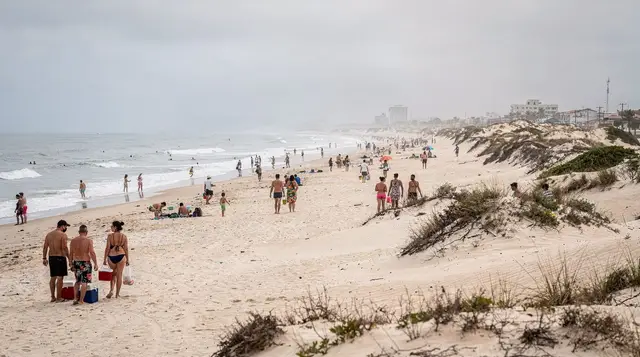
Cabo Frio doesn’t have a headline attraction the way its neighbours do, and it’s worth saying that plainly rather than inventing one. What it has instead is size, lower prices, and decent dune beaches — reasons enough to stop, but not reasons to build a whole trip around it alone.
| Where | Região dos Lagos, ~2.5h from Rio (BR-101/RJ-140) |
| Cost | Pousada R$120–200/night; meal R$40–70 |
| Time needed | Half a day paired with Búzios/Arraial; 1–2 nights as a base |
| Getting there | 1001 bus from Novo Rio, or car |
| Best time | Dec–Mar or Jun–Aug for calm, warm conditions |
The town’s history is older and more contested than its resort-town neighbours suggest. Portuguese colonizers and French traders competed for control of this stretch of coast in the 16th and 17th centuries, largely over access to brazilwood, the dye-producing tree that gave the country its name — Forte São Mateus was built specifically to secure Portuguese control after repeated conflict with French incursions. That layered colonial history is part of why Cabo Frio, unlike Búzios, developed as a genuine working town first and a tourist destination second.
Is Cabo Frio worth visiting on its own, or only as part of a wider trip? It’s genuinely worth a stop, mainly for its beaches and its prices — noticeably lower than Búzios for food and lodging — but it lacks a single standout feature. Most travellers get more out of it as a cheaper base for exploring the region, or a half-day addition to a Búzios or Arraial do Cabo trip, than as a destination chosen for its own sake.
Getting there
The 1001 bus company runs services from Rio’s Novo Rio terminal, taking around 2.5 hours and costing roughly R$60–85. By car, the same BR-101/RJ-140 route applies. Cabo Frio’s proximity to its neighbours — about 20 minutes to Arraial do Cabo, 30–40 minutes to Búzios — makes it a genuinely practical base if you’re planning to see more than one town in the region and want to minimize accommodation costs.
The town itself is larger and more spread out than Búzios or Arraial, with a real bus and taxi network rather than everything being walkable — worth knowing before you assume you can stroll between beaches the way you might in the smaller towns nearby.
Where to stay
Cabo Frio’s accommodation is where its value proposition shows most clearly — a simple pousada or hotel room near the centre or Praia do Forte runs roughly R$120–200/night, meaningfully cheaper than a comparable room in Búzios. There’s less boutique character than Búzios’ hotel scene — expect functional, comfortable options rather than design-forward properties — but for travellers prioritizing value over atmosphere, that trade-off is often worth making.
Staying near Praia do Forte puts you within walking distance of the town’s best beach and the dune system; staying in the older town centre near the historic fort gives easier access to the bus station and a more local, less beach-resort feel.
What Cabo Frio actually offers
Praia do Forte and the dunes. The town’s best-known beach, backed by genuine sand dunes — locally famous, and among the largest dune systems on this stretch of coast. Sandboarding is a popular activity here, with rentals available near the dune access points for a modest fee. The dunes themselves are a legally protected area, so stick to marked access paths rather than driving or riding vehicles across them.
Praia do Peró, further from the centre, is a longer, wilder stretch of open-ocean beach popular with surfers and kitesurfers, with more consistent wind than the calmer town beaches — a different character from Praia do Forte and worth the extra trip if watersports are the point of your visit.
The historic centre and fort. Cabo Frio has an actual fortification, the Forte São Mateus, dating to the colonial period when this coastline needed defending from pirates and foreign incursions — smaller and less visited than similar sites elsewhere in Brazil, but a straightforward stop if you’re in the area and interested in the region’s colonial history. The fort sits on a promontory with a decent coastal view thrown in, which makes the modest entry fee worthwhile even if military history isn’t your main interest.
Passagem beach and the strait. Praia da Passagem, at the narrow strait separating Cabo Frio from Arraial do Cabo across the water, is calmer and shallower than Praia do Forte — a good option for families or anyone wanting a swim without the dune-adjacent wind that can pick up at Praia do Forte in the afternoon.
Lagoa de Araruama. One of the largest hypersaline lagoons in the world sits just inland from Cabo Frio, historically the source of the region’s salt industry — old salt pans (salinas) are still visible along parts of its shore, a genuinely different landscape from the beach-facing side of town, worth a look if you have transport and some extra time.
Prices. This is genuinely the town’s strongest selling point for budget-conscious travellers — meals, accommodation, and tours here run noticeably below Búzios’ resort-town rates, often by a third or more for comparable quality. A simple pousada room runs roughly R$120–200/night, and a full restaurant meal R$40–70, both meaningfully less than equivalent options in Búzios.
Exclusive Cabo Frio beaches, history, and nature tour covers the dunes, a beach stop, and the historic centre in a single guided outing, useful if you’re short on time and want the highlights without arranging transport between them yourself.
Watersports
Cabo Frio’s more consistent coastal wind, particularly around Praia do Peró, makes it a reasonable spot for kitesurfing and windsurfing lessons — less internationally known than Brazil’s dedicated kite destinations further north, but a legitimate local scene with a handful of schools operating out of the beach. Lessons for beginners typically run as a multi-hour package (equipment, instruction, and safety briefing included) rather than a one-off hourly rental, given how much setup and supervision the sport requires for anyone new to it.
Stand-up paddleboarding is a gentler, more accessible alternative available on the calmer stretches near Praia da Passagem, suited to anyone wanting time on the water without the learning curve or equipment commitment of kitesurfing.
Private Hawaiian canoe experience in Cabo Frio is a calmer, guided alternative if kitesurfing isn’t your thing but you still want time on the water — a fixed-crew outrigger canoe activity that’s more accessible than it sounds.
Eating in Cabo Frio
Food follows the town’s overall value proposition — you’ll find the same regional staples as elsewhere on this coast (grilled fish, moqueca, shrimp dishes) at prices noticeably below Búzios or even Arraial do Cabo. A full sit-down meal runs roughly R$40–70 per person; simpler per-kilo lunch spots run R$30–45. The restaurant scene lacks Búzios’ polish and variety of international cuisine, but for straightforward, well-priced Brazilian coastal cooking, Cabo Frio holds up well.
The historic centre near the fort has a cluster of more traditional, locally run restaurants; the area around Praia do Forte leans more toward casual beach kiosks and quick-service spots aimed at day visitors.
A day-trip itinerary from Rio
For travellers doing Cabo Frio as a single day trip rather than an overnight stay, a workable sequence looks like: an early bus from Rio (arriving by late morning), a walk through the historic centre and Forte São Mateus, lunch near the centre, then an afternoon at Praia do Forte for the dunes and a swim before catching a mid-to-late-afternoon bus back. This is a full day, and it doesn’t leave much slack — building in a buffer for bus delays or simply wanting more beach time is sensible if this is your plan.
A more relaxed alternative treats Cabo Frio as one stop on a longer loop — arriving by bus, spending a few hours, then continuing on to Arraial do Cabo (a short taxi or local bus ride) rather than returning directly to Rio, effectively combining two of the region’s towns into a single day without the fatigue of a full round trip to each separately.
Using Cabo Frio as a regional base
Because of its size and lower prices, some travellers base themselves in Cabo Frio and day-trip to Búzios and Arraial do Cabo rather than the reverse. This works reasonably well given the short drive times between all three, though it does mean you’ll miss Búzios’ evening scene unless you specifically stay out late and arrange a return, and you lose the flexibility of being on-site in Arraial if a boat trip needs rescheduling around wind (a real consideration — see Arraial do Cabo’s page for why).
If your priority is saving money across a multi-town trip to the Região dos Lagos, this base strategy is worth considering. If you want the best possible experience of any single town, staying in that town directly usually serves you better.
The airport
Cabo Frio has its own regional airport (Aeroporto Internacional de Cabo Frio), with domestic flights connecting to São Paulo and, seasonally, a handful of other Brazilian cities — a genuinely useful alternative to the Rio–bus route for travellers coming from outside Rio de Janeiro state, or heading directly to the Região dos Lagos without passing through Rio first. It’s small compared to Rio’s Galeão or Santos Dumont, with fewer daily flights, so check current routes and schedules before relying on it as your primary access point; most travellers based in Rio will still find the bus more practical and considerably cheaper.
Combined Búzios, Arraial do Cabo, and Cabo Frio day trip covers all three towns from Rio in a single long day — a reasonable option if your schedule genuinely can’t accommodate separate visits, though it’s a lot of driving and gives each town only a fraction of a day.
Cabo Frio versus its neighbours, honestly
| Cabo Frio | Búzios | Arraial do Cabo | |
|---|---|---|---|
| Headline draw | Value, dunes, size | Nightlife, dining, beach variety | Water clarity, boat trips, diving |
| Typical pousada | R$120–200/night | R$250–400/night | R$180–300/night |
| Typical dinner | R$40–70pp | R$80–150pp | Comparable to Cabo Frio |
| Nightlife | Minimal | Real evening scene | Modest |
| Best base for | Budget-conscious, multi-town trips | A dedicated beach-and-dining trip | Water-focused trips |
This table is the honest version of what the rest of this page argues: Cabo Frio doesn’t compete on any single feature, but it wins clearly on cost, which is exactly why it works well as a base rather than a headline stop.
A sample two-night, three-town plan
For travellers wanting to see the whole Região dos Lagos without paying resort prices every night: base in Cabo Frio for two nights, spending the first afternoon at Praia do Forte and the historic centre, then day-tripping to Arraial do Cabo (about 20 minutes away) on the second day for the boat trip and clear water, before an evening trip into Búzios (30–40 minutes) for dinner and a look at Rua das Pedras before heading back to sleep in the cheaper Cabo Frio room.
This isn’t the most relaxed way to see the region — it involves more moving around than staying put in one town — but it’s a genuinely effective way to sample all three towns’ distinct strengths without paying Búzios rates for every night of the trip.
What to pack for Cabo Frio specifically
Because sandboarding is one of Cabo Frio’s specific draws, closed shoes or sturdy sandals are worth packing beyond the usual beach flip-flops — the dune sand gets genuinely hot underfoot in the middle of the day, and a board rental session works better with footwear you don’t mind getting sandy inside. Sunscreen matters more here than at more sheltered beaches, since the open dune area and Praia do Peró’s exposed stretch offer little natural shade.
Bring cash for the smaller kiosks and rental stands near the dune access points and Praia do Peró — card acceptance is less consistent here than in central Búzios, and small operators often work cash-only for board and equipment rentals. A light jacket or windbreaker is worth having if you’re trying kitesurfing or windsurfing at Praia do Peró, where the consistent coastal wind that makes it good for the sport also makes the beach itself noticeably breezier than the calmer town beaches.
Frequently asked questions about Cabo Frio
What makes Cabo Frio different from Búzios and Arraial do Cabo?
Size and price, mainly — it’s a genuine city rather than a resort village, with lower costs for food and accommodation, but it doesn’t have a single standout feature to match Búzios’ nightlife or Arraial’s water clarity.
Is Cabo Frio worth a full day trip on its own from Rio?
It can be, particularly for the dunes at Praia do Forte and the historic fort, but most travellers get more value combining it with a stop in Búzios or Arraial do Cabo rather than visiting it in isolation.
Are the sand dunes at Praia do Forte real, or a marketing exaggeration?
They’re real and genuinely sizeable — one of the larger dune systems on this coast, and sandboarding here is a legitimate local activity, not an overstated tourist claim.
Is Cabo Frio cheaper than Búzios?
Yes, noticeably — accommodation, food, and many tours run roughly a third less than comparable options in Búzios, making it a sensible base for budget-conscious travellers exploring the region.
Is Cabo Frio good for kitesurfing?
Reasonably — Praia do Peró has more consistent wind than the calmer town beaches, and there are local schools offering lessons, though it’s a smaller scene than Brazil’s dedicated kitesurfing destinations further along the coast.
How far is Cabo Frio from Búzios and Arraial do Cabo?
About 30–40 minutes to Búzios and roughly 20 minutes to Arraial do Cabo, making it practical to base here and day-trip to both if minimizing cost is a priority.
Does Cabo Frio have much nightlife?
Not really, especially compared to Búzios’ Rua das Pedras — it’s a quieter, more residential town in the evenings, with a modest selection of restaurants and bars rather than a real nightlife scene.
Is Cabo Frio safe for tourists?
Broadly yes in the tourist-facing beach and centre areas, with the same general precautions from Rio’s safety guide applying — it’s a bigger, more ordinary Brazilian city than its resort neighbours, so a bit more everyday street awareness is sensible than in the tightly tourism-focused parts of Búzios.
Does Cabo Frio have its own airport?
Yes — a small regional airport with domestic flights, mainly connecting to São Paulo. It’s a useful option for travellers coming from outside Rio, though most Rio-based visitors will still find the bus route more practical and cheaper.
What is Lagoa de Araruama, and is it worth visiting?
One of the world’s largest hypersaline lagoons, just inland from Cabo Frio, historically the base of the region’s salt industry — old salt pans are still visible along parts of its shore. It’s a worthwhile detour for anyone with transport and an interest in the region’s less beach-focused landscape, though it’s not a must-see for a short visit.
Is Cabo Frio a good base for exploring the whole Região dos Lagos?
Yes, particularly for budget-conscious travellers — its central location and lower prices make it practical to day-trip to both Búzios and Arraial do Cabo without paying resort-town rates for every night of the stay.
Is Praia do Forte good for swimming, or mainly for the dunes?
Both — it’s a genuine swimming beach with decent waves, not just a dune backdrop, though conditions can be breezier here than at the more sheltered Praia da Passagem, which suits calmer swimming better.
Can I sandboard at Praia do Forte without renting equipment?
Rental is the norm rather than bringing your own board — a handful of stands near the dune access points rent boards for a modest hourly or per-run fee, and staff typically give a quick rundown on technique for first-timers before you head up the dune.
Is Cabo Frio a good option for a longer, budget-focused stay?
Yes, probably the best of the three Região dos Lagos towns for this specifically — its lower prices across accommodation, food, and many tours make it the most practical base for travellers prioritizing value over polish, especially if you’re happy to day-trip to Búzios and Arraial do Cabo for their specific standout features rather than needing everything in one place.
Is Cabo Frio well suited to solo travellers?
Reasonably — it’s a larger, more ordinary city than its resort neighbours, which means less of a built-in social scene for solo visitors compared to Arraial do Cabo’s hostel culture, but its lower prices and practical bus connections make it an easy, low-hassle base for a solo trip through the region.
What’s the single best reason to choose Cabo Frio over Búzios or Arraial?
Cost, plainly — if budget is the deciding factor for this leg of the trip, Cabo Frio delivers a comparable beach-and-dune experience at a noticeably lower price than either of its more famous neighbours, without sacrificing much beyond a bit of polish and nightlife.
Cabo Frio’s honest pitch is value and dunes, not a headline feature — pair it with Arraial do Cabo or Búzios for the fuller Região dos Lagos experience, or see Búzios vs Arraial do Cabo to decide which of the two headline towns to prioritize. For the wider question of how much time to spend in this part of the coast versus the Costa Verde further south, day trips from Rio lays out the full set of options side by side.