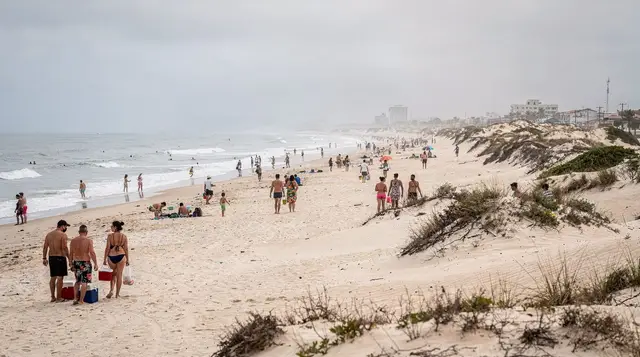
Búzios is a small peninsula that international fame outgrew decades ago — Brigitte Bardot’s 1960s visits put it on the map, and it’s stayed a fashionable resort town ever since, with the beach-town infrastructure (boutique hotels, real restaurants, an actual bar scene) to show for it.
| Where | Região dos Lagos, ~2.5–3h from Rio (BR-101/RJ-124) |
| Cost | Pousada R$250–400/night; dinner R$80–150pp |
| Time needed | 2–3 nights for a real range of beaches |
| Getting there | Auto Viação 1001 bus from Novo Rio, or car |
| Best time | April–June or September–November |
The story is well-worn locally but worth knowing: Bardot visited as an unknown young actress in 1964, before her fame had fully taken off, and returned regularly afterward once it had. A statue of her sits on the Orla Bardot waterfront promenade today, and the association stuck hard enough that Búzios has spent the sixty-odd years since building an identity around a certain glamour that its neighbours further along this coast simply don’t have.
Is Búzios worth visiting, and how is it different from Arraial do Cabo? Yes, and they genuinely aren’t interchangeable. Búzios has around 20 named beaches spread around the peninsula, a real evening scene on Rua das Pedras, and a resort-town level of comfort. Arraial do Cabo, an hour up the coast, has the clearer, more turquoise water and a boat-trip culture, but a plainer town with less to do after dark. Pick Búzios for a multi-day beach-and-dining trip, Arraial for the water itself — see the full comparison if you’re still deciding.
Getting there
Auto Viação 1001 runs a direct bus from Rio’s Novo Rio terminal to Búzios, taking around 2.5–3 hours and costing roughly R$70–100 depending on the service class. By car, it’s about the same time via the BR-101 and RJ-124, with the last stretch a two-lane road that gets genuinely congested on Friday evenings and Sunday afternoons during summer — factor in extra time if you’re driving during peak season.
Within Búzios, the peninsula is small enough to walk between the central beaches, but a rental buggy (a local favourite, roughly R$150–250/day) or taxi is worth it for reaching the further beaches like Praia Brava or João Fernandes without a long walk in the heat.
Where to stay
Búzios has more accommodation variety than anywhere else in the Região dos Lagos, from simple guesthouses to genuine luxury boutique hotels. A basic pousada room runs roughly R$250–400/night; mid-range boutique properties, often in restored colonial-style buildings near the centre, run R$500–900; and the top-tier resorts and beachfront villas run well above that, particularly around New Year’s and Carnival when prices can double or triple.
Location matters more here than in most beach towns: staying within walking distance of Rua das Pedras puts you close to restaurants and nightlife but further from the calmer bay beaches; staying near Ferradura or João Fernandes gives easier beach access but means a taxi or buggy ride into the centre most evenings. Decide which matters more before booking.
Rua das Pedras
The cobblestone main strip through the old fishing village centre — restaurants, bars, ice cream shops, and boutiques packed into a few walkable blocks. This is where Búzios’ reputation as a livelier resort town than its neighbours comes from: it has an actual evening scene, with outdoor seating, live music some nights, and a crowd that stays out past 10pm, something you won’t find in Arraial or Cabo Frio.
Restaurant prices reflect the resort-town status — a sit-down dinner runs roughly R$80–150 per person, noticeably more than a similar meal in Cabo Frio. It’s not overpriced by international resort standards, but it’s not the cheapest stop on this coast either.
The strip runs along a genuinely pretty stretch of cobblestone facing the harbour, with fishing boats still moored a short walk from the restaurant tables — a reminder that Búzios was a working fishing village before it was a resort town, even if that history is easy to miss amid the boutique shopping. A handful of the original fish restaurants from before the tourism boom still operate, generally offering better value and more authentic cooking than the newer, more design-forward spots that have opened around them in the decades since.
New Year’s and peak season, honestly
Búzios is one of Brazil’s most popular New Year’s Eve destinations outside Rio itself, and the town’s small size means peak-season crowding is a real consideration, not a minor inconvenience. Between December 28 and January 2, prices for accommodation can run two to three times their normal rate, restaurants require reservations well in advance, and the beaches and Rua das Pedras are genuinely packed. The same applies, to a lesser degree, around Carnival and the main summer holiday weeks (January and February generally).
If crowds and premium pricing aren’t part of your plan, avoid these windows — April through June and September through November offer nearly identical weather and beaches with a fraction of the visitor volume and considerably lower prices across the board.
Which beach, and when
Búzios’ beaches split roughly into two characters, and picking the wrong one for what you want is the most common mistake.
Calm bay beaches (Ferradura, Ossos, João Fernandes) sit on the sheltered inner side of the peninsula — flat, warm water good for swimming and families, minimal surf. Ferradura in particular is popular for stand-up paddleboarding and kayaking given its horseshoe-shaped, wave-free bay.
Open-ocean beaches (Geribá, Tucuns, Praia Brava) face the Atlantic directly and have real surf — Geribá especially is a legitimate surf beach with a beach-bar scene to match, popular with a younger crowd. These aren’t the beaches for calm swimming; check conditions if that’s what you want.
Praia da Ferradurinha and Azeda/Azedinha are smaller, quieter coves — Azeda and Azedinha in particular are reachable only by a short walk or boat and reward the extra effort with clearer water and fewer people than the main beaches.
Praia dos Ossos, close to the centre and Rua das Pedras, is historically significant as the town’s original harbour and settlement point (the name — “beach of bones” — comes from a whaling operation that once processed catches nearby, not anything more ominous) and makes a convenient, calm swim for anyone staying centrally without wanting to travel far.
A rough mental map helps on a first visit: the inner, town-facing side of the peninsula (Ossos, João Fernandes, Ferradura) is calmer and more central; the outer, ocean-facing side (Geribá, Tucuns, Brava) has real surf and a younger, more active crowd; and the smaller coves (Azeda, Azedinha, Ferradurinha) reward those willing to walk a little further for fewer people and clearer water.
Most visitors do best picking two or three beaches to actually spend time at rather than trying to see all 20 — a rental buggy makes beach-hopping between a handful in a day manageable, but rushing through all of them turns into a day of parking and walking rather than swimming.
Beach clubs (barracas or, at the higher end, full beach-club setups with loungers, table service, and a cover charge) are common on the more popular beaches, particularly Geribá and Ferradura. A day’s lounger and umbrella rental runs roughly R$60–120 depending on the beach and season, often with a minimum food-and-drink spend attached. Public beach access is always free — the clubs are optional, not a requirement to use the beach — but they’re a genuine part of the Búzios experience if a full-service beach day is what you’re after.
Water activities beyond swimming
Because of its varied coastline, Búzios supports a wider range of water sports than most of its neighbours. Stand-up paddleboarding and kayaking are popular on the calm bay beaches (Ferradura especially), with rental stands typically charging R$40–80/hour. Sailing and catamaran day trips around the peninsula, stopping at several beaches accessible only by water, are a common half-day or full-day activity, particularly good for seeing the coastline from an angle most beach-based visitors never get.
Walking tour through Búzios’ natural pools circuit covers several of the smaller, harder-to-find swimming spots with a guide who knows the access points, which are not always obvious from the road.
The trolley and orientation tours
For a first-day orientation, a trolley (bondinho) city tour loops the peninsula’s main viewpoints and beach access roads in a couple of hours — useful for deciding which beaches deserve a return visit before committing a full day to any one of them.
Búzios trolley adventure city tour is a low-effort way to get oriented on arrival, particularly useful if you’re only in town for a couple of nights and want to make efficient use of the time.
Day trip from Rio, or stay over?
Búzios works as a day trip — buses and tours make the round trip feasible in a single long day — but it sells the destination short. A day trip typically means one or two beaches and a walk down Rua das Pedras before the return bus; it skips the evening scene entirely, which is genuinely one of Búzios’ strongest features compared to its neighbours.
Full-day Búzios trip from Rio is a reasonable option if a day trip is all your schedule allows, but if you can manage 2–3 nights, you’ll see more beaches, avoid the compressed schedule, and actually experience Rua das Pedras after dark rather than in transit-conscious daylight hours.
If you’re weighing Búzios against a combined trip to Arraial do Cabo and Cabo Frio in the same region, a multi-stop tour covering all three in a day is available but is, honestly, a lot of driving for a single day — better suited to travellers with limited time than anyone hoping to properly experience any one of the three.
Combined Búzios, Arraial do Cabo, and Cabo Frio day trip exists for exactly that limited-time scenario.
Búzios’ beaches at a glance
| Beach | Character | Best for |
|---|---|---|
| Ferradura | Calm, sheltered bay | Families, SUP, kayaking |
| João Fernandes | Calm, sheltered bay | Swimming with kids |
| Ossos | Calm, historic, central | An easy central swim |
| Geribá | Open-ocean, real surf | Surfers, a younger crowd, beach bars |
| Tucuns / Praia Brava | Open-ocean, real surf | Surfers wanting fewer crowds than Geribá |
| Azeda / Azedinha | Small, quiet coves | Clearer water, fewer people, a short walk |
Picking two or three from this list, rather than attempting all 20 named beaches, is the realistic approach for a 2–3 night stay.
A rough budget for a few days in Búzios
For travellers weighing whether Búzios’ resort-town prices are worth it: a bus round trip from Rio runs roughly R$140–200. A basic pousada room runs R$250–400/night, so two nights adds R$500–800. Meals run R$80–150 per sit-down dinner, with cheaper options available a block or two back from Rua das Pedras; budgeting R$150–250/day for food across breakfast, lunch and dinner is realistic.
A rental buggy for beach-hopping adds R$150–250/day if you want one. All told, a modest two-night trip built around beach-hopping and one proper dinner out runs somewhere around R$1,200–1,800 per person — noticeably more than a Cabo Frio equivalent, but reflecting the resort-town polish and range of beaches that make Búzios worth the premium for many travellers.
Getting around once you’re there
Within the peninsula, distances are short but not always walkable in the midday heat, and the road layout curves around the coastline rather than running in a straight grid — a rental buggy is the single most popular local solution, and it’s worth trying at least once even if you’re mostly walking, since it gives access to beaches like Praia Brava or the far side of Ferradura without a long, shadeless walk. Buggy rental runs roughly R$150–250 per day, and most agencies offer them without needing an international licence, though basic driving competence and comfort with open-sided, low-speed vehicles helps.
Taxis and ride-hailing apps cover the same ground without the novelty, and are the more sensible choice for a single evening out on Rua das Pedras if you’d rather not worry about parking. For a first full day getting oriented, the trolley tour mentioned above is a reasonable lower-effort alternative to renting anything at all — it covers the main viewpoints and beach access roads in a couple of guided hours, useful for deciding which beaches merit a return visit before committing rental costs to reaching them independently.
Frequently asked questions about Búzios
How many days do I need in Búzios?
Two to three nights lets you see a genuine range of beaches — a calm bay beach, an open-ocean surf beach, and one of the quieter coves — plus an evening or two on Rua das Pedras. A single day trip covers the highlights but skips the town’s best feature: its nightlife.
Is Búzios or Arraial do Cabo better?
They suit different priorities. Búzios has more beaches, better dining, and a real evening scene; Arraial has clearer, more strikingly turquoise water and a stronger boat-trip culture. See the detailed comparison for a fuller breakdown.
Which Búzios beach is best for swimming with kids?
Ferradura or João Fernandes — both are calm, sheltered bay beaches with minimal surf, unlike the open-ocean beaches like Geribá, which have real waves and are better suited to surfers and confident swimmers.
Is Búzios expensive?
More than Cabo Frio and comparable to or slightly above Arraial do Cabo — it’s a genuine resort town, and restaurant and hotel prices reflect that, especially in December–February.
Do I need a car in Búzios?
Not strictly — buses and taxis cover the essentials, and the central beaches are walkable — but a rental buggy makes beach-hopping between the further-flung beaches (Geribá, Praia Brava) much easier and is a genuinely popular local option.
When should I avoid Búzios?
New Year’s week and Carnival, unless that’s specifically your plan — prices spike and the town is at its most crowded. December–February generally is peak season; April–June and September–November offer warm weather with far fewer crowds.
How many beaches should I actually try to visit?
Two or three is realistic for a two-to-three-night stay if you want proper time at each — one calm bay beach, one open-ocean surf beach, and possibly a quieter cove. Trying to tick off all 20 named beaches turns the trip into logistics rather than relaxation.
Is Búzios good for a honeymoon or romantic trip?
Yes — it’s one of the more established options on this coast for that kind of trip, with boutique hotels, a genuine dining scene, and sunset-facing beaches that suit an evening out. Ferradura and the quieter coves in particular are popular for a calmer, more intimate beach day than the livelier Geribá.
Are there boat trips to nearby islands from Búzios itself?
Yes — smaller schooner and speedboat trips run from the peninsula to nearby coves and islets not reachable on foot, a lower-key version of the boat culture more associated with Arraial do Cabo or Angra dos Reis, worth considering if you want a half-day on the water without leaving Búzios itself.
Is Búzios good for solo travellers or only couples and groups?
It works well for solo travel too — the compact centre and Rua das Pedras’ evening scene make it easy to meet people, and several beach clubs and boat tours are set up for individual bookings rather than requiring a group. It’s simply better known for its couples and honeymoon reputation.
How does the peninsula’s geography actually work?
Búzios sits on a narrow finger of land jutting into the Atlantic, which is exactly why it packs so many distinct beaches into a small area — the calm inner bay beaches and the exposed outer ocean beaches are sometimes only a few hundred metres apart despite feeling like entirely different coastlines.
Is Búzios safe for tourists?
Generally yes — it’s a well-established, tourism-dependent town with a strong incentive to keep it that way. Ordinary precautions apply, same as anywhere: don’t leave valuables unattended on the beach, and use official transport at night.
Can I visit Búzios as a day trip and still see the beaches properly?
You’ll see one or two, not the range that makes Búzios worth the trip. If beach-hopping and the evening scene both matter to you, an overnight stay is the better call — see day trip or overnight for the wider trade-off across this whole region.
Do I need a beach club, or can I just use the free public beach?
Public beach access is always free in Brazil — beach clubs are an optional upgrade for loungers and table service, not a requirement. Bring your own chair, towel, and umbrella if you’d rather skip the cover charge, especially on quieter beaches away from the main clubs.
What is Rua das Pedras like during the day versus at night?
By day it’s a fairly quiet shopping street of boutiques and cafés; by night, particularly from around 8pm, it transforms into the region’s liveliest strip, with restaurants filling their outdoor seating and bars staying busy well past midnight on weekends. Visiting only in daylight gives an incomplete picture of what makes it Búzios’ signature feature.
Is Búzios walkable, or do I need transport every day?
The central beaches and Rua das Pedras are walkable from most centrally located accommodation, but reaching Geribá, Praia Brava, or the further coves comfortably usually means a buggy, taxi, or rideshare — walking distances between the outer beaches are longer than they look on a map, especially in midday heat.
Búzios rewards more time than a single day allows — pair it with Arraial do Cabo for the region’s clearest water, or read best beaches in Rio for how these day-trip-belt beaches compare to the city’s own. If you’re planning a wider loop through the Região dos Lagos, Cabo Frio makes a reasonable, cheaper base from which to visit both Búzios and Arraial without paying resort-town prices for every night of the trip.