
What cariocas actually do on Sunday
Sunday in Rio isn’t a rest day in the way it is in a lot of cities — it’s the day the whole population seems to step outside at once, and the pattern repeats itself, block by block, from the beach road to the neighbourhood market. If you want to see the city the way cariocas actually live it rather than the way a tour itinerary presents it, Sunday is the day to loosely follow the local script instead of your own.
| Time | What’s happening |
|---|---|
| 7am-1pm | Avenida Atlântica closed to cars — walk, cycle, join the flow |
| Late morning-afternoon | Beach, properly, with the whole city out |
| Any time | Neighbourhood feira for food and a wander |
| 1-4pm | Long family lunch, often feijoada |
| Afternoon | Football if there’s a match, or the Lagoa loop |
| 4-6pm | Informal roda de samba starts in Lapa or Santa Teresa |
| Evening | City winds down early and deliberately |
The morning starts with the road closed
Along Copacabana, and equivalent stretches in Ipanema and Leblon, the beachfront avenue closes to cars every Sunday morning and fills instead with cyclists, joggers, rollerbladers, and people just walking because they can, in the middle of a normally traffic-choked road. It’s one of the best free things in the city and it happens every single week, rain or shine, without any ceremony around it. The full detail on hours and where exactly it happens is in Sunday on the Avenida Atlântica — but the short version is: if you’re anywhere near Copacabana or Ipanema on a Sunday morning, walk down to the beachfront and join it.
Then the beach, properly, for the whole day
Sunday is the day Zona Sul’s beaches are at their most crowded and most genuinely social — families claim a patch of sand near their regular posto, groups bring a cooler and a ball, and the beach becomes less a place you visit for an hour and more a place you spend the day. Best beaches in Rio and the posto system explained will help you read the sand the way locals do — which stretch belongs to which crowd, and why nobody minds. Futevôlei games run constantly along the shoreline; if you’ve never seen it, futevôlei and beach sports explains what you’re watching.
The feira happens somewhere in the city every single day, but Sunday’s are the big ones
A feira is an open-air street market — produce, cheese, flowers, hot food stalls, sometimes clothes and housewares — and nearly every neighbourhood has one on a fixed weekly schedule. The Sunday feiras tend to be the biggest and most social, less about a quick grocery run and more about running into neighbours, eating a pastel (a fried, stuffed pastry) standing up, and drinking a fresh juice while you shop. Markets of Rio has the full list by neighbourhood and day.
If you’d rather not decode the stalls alone, a guided food walk through a street market with a chef is a good way to learn what the fruit, cheeses and snacks actually are before you start buying.
Lunch is the anchor of the day, and it runs long
If Sunday has a centrepiece, it’s lunch — often at a grandparent’s or parent’s house, often built around feijoada, the black bean and pork stew that’s traditionally a Saturday dish in a lot of Rio but shows up on Sunday tables constantly too, especially in restaurants that serve it as a weekend special. It’s a meal meant to run two, three hours, with conversation as much the point as the food. If you want to experience it as a visitor, several restaurants across the city do a proper Sunday feijoada — see the feijoada guide for where it’s done properly rather than as a tourist-menu shortcut.
Football, if there’s a match
If Flamengo, Fluminense, Botafogo, or Vasco have a home match, a real slice of the city organises its Sunday around it — bars fill early, jerseys come out, and Maracanã or the smaller stadiums draw a crowd that’s as much about the ritual as the result. See how to see a football match in Rio and Flamengo vs. Fluminense if you want to understand the rivalry before you go. If there’s no home match on your Sunday, a stadium visit combined with a casual game of beach soccer gives you a taste of the same football culture.
The Lagoa loop, for the ones who’d rather move than lie on sand
Around the Lagoa Rodrigo de Freitas, the lake circled by a path popular with runners and cyclists any day of the week, Sunday brings out families on rented bikes and groups doing the full loop at an unhurried pace, often finishing at one of the lakeside kiosks for a coconut water or a beer. It’s a quieter, less beach-centric version of the same “whole city outside” energy.
The evening slows down, deliberately
By early evening, especially after a long lunch, a lot of Rio genuinely winds down rather than gearing up for a big Sunday night out — the contrast with Friday and Saturday nightlife is real. Restaurants near the beach fill for an early, relaxed dinner; the big nightlife strips like Lapa are noticeably quieter than on a Friday. It’s less “nothing happens” and more “everyone already spent the day outside and is tired in a good way.”
Why this matters for how you plan your own Sunday
Most first-time visitors default to treating Sunday like any other sightseeing day — Christ the Redeemer in the morning, Sugarloaf in the afternoon — and miss the fact that Sunday has its own distinct rhythm that’s arguably more worth experiencing than another icon. If you have any flexibility in your itinerary, put Sunday on the beach, the Avenida, and at a feira rather than checking off another paid attraction; you can do the icons on a weekday when they’re just as good and considerably less crowded.
Museums and indoor culture, for the part of the day that isn’t outdoors
Not every carioca spends the whole of Sunday outside — the Museu do Amanhã and the Museu de Arte do Rio both see a steady Sunday crowd, particularly families looking for an air-conditioned midday break between a beach morning and an evening out, and a number of museums run reduced or free admission on Sundays specifically, drawing a noticeably more local, less tourist-heavy crowd than on a weekday. If the heat gets to be too much around 1-2pm, this is the local move rather than pushing through on the sand.
Live music finds its way into the afternoon
Beyond the organised samba circuit that dominates Friday and Saturday nights, Sunday afternoons often carry their own quieter live-music tradition — an informal roda de samba (samba circle) at a boteco in Lapa or Santa Teresa, sometimes starting as early as 4 or 5pm and winding down before a proper Sunday-night routine of getting ready for the work week. It’s lower-key than the tourist-oriented samba shows, more genuinely local, and one of the more rewarding things to stumble into if your Sunday afternoon has flexibility built in. See samba clubs in Rio for where this tradition runs strongest.
Santa Teresa tram and Lapa walking tourGetting between the pieces of the day
None of this requires a car or a tour bus — the pieces of a carioca Sunday cluster geographically in Zona Sul, so the road closure, a beach stretch, a feira, and lunch are often within a 15-20 minute walk of each other, or a short, cheap Uber if the heat has worn you down. The one exception is if football or Santa Teresa’s samba scene is on the plan, since both sit a bit further from the beach and are worth budgeting extra transit time for, especially if a match is drawing crowds toward Maracanã.
How this compares to a Rio Saturday
Saturday shares some of Sunday’s energy — feijoada shows up as often on a Saturday table as a Sunday one, and the beach is nearly as busy — but Saturday night carries the city’s biggest nightlife push, with Lapa and the samba clubs at full volume, in a way Sunday deliberately doesn’t. If your trip only has one weekend day free, Sunday gives you the fuller “how locals actually live” picture in daylight; Saturday gives you the bigger night out.
How a visitor’s Sunday differs from a resident’s, and why that’s fine
A resident’s Sunday is built around routine — the same feira, the same lunch table, the same beach spot — in a way a visitor’s obviously can’t replicate in a single trip. That’s fine; the point isn’t to perfectly imitate a local Sunday but to borrow its shape for a day: skip the temptation to cram in another paid attraction, and instead let the morning road closure, a long beach stretch, a market wander, and an unhurried meal carry the day the way they would for someone who actually lives here. It tends to be, by a wide margin, the day visitors remember most fondly after the trip is over, more than any single ticketed sight.
A rainy Sunday looks different, but the rhythm survives
If a downpour hits, the road closure and beach plans shift but the underlying pattern — family time, food, an unhurried pace — doesn’t disappear, it just moves indoors: a longer lunch, a museum visit, or simply staying in with family until it clears, which it usually does within an hour or two given how localized Rio’s rain tends to be. See what to do in Rio when it rains for the fuller picture of how the city adapts on a wet day.
Frequently asked questions about Sunday in Rio
What time does the Avenida Atlântica close to traffic on Sunday?
Typically from early morning until early afternoon, roughly 7am to 6pm depending on the stretch, as covered above.
Are restaurants and shops open on Sunday in Rio?
Beach kiosks, restaurants, and feiras run as normal or busier than usual. Some shops in business districts like parts of Centro close, but anything in Zona Sul catering to residents and visitors stays open.
Is Sunday a good day to visit Christ the Redeemer or Sugarloaf?
It’s busier than a weekday, since it’s when both tourists and locals with the day off tend to go. If you have flexibility, a weekday morning is quieter for the icons, leaving Sunday for the beach and the Avenida.
Do cariocas really eat feijoada every Sunday?
Not literally every household every week, but it’s common enough as a Sunday or Saturday tradition, especially at family gatherings and in restaurants running weekend specials, that it’s a safe generalisation about the culture.
Is the beach more crowded on Sunday than other days?
Yes, noticeably — Sunday and Saturday are the busiest beach days, with families and larger groups out for the whole day rather than a quick swim before work.
Is Sunday a good day for a football match in Rio?
Yes, if Flamengo, Fluminense, Botafogo, or Vasco has a home fixture — Sunday afternoon is one of the most common matchday slots, and the ritual around it is a genuine slice of local culture.
What should I do if it rains on my Rio Sunday?
The rhythm shifts indoors rather than disappearing — a longer lunch, a museum visit like the Museu do Amanhã, or simply staying in with family until a typically short, localized downpour clears.
tours.culture
Verified deep-linked GetYourGuide tours. Book through these links and we earn a small commission at no cost to you.
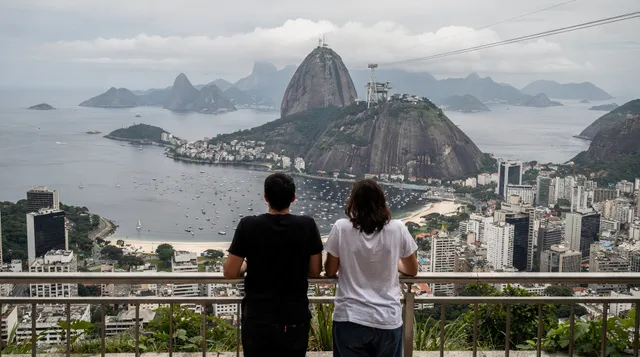
From Rio de Janeiro: Sugarloaf Mountain Tour with Cable Car

Boat Tour Open Bar A Floor Arraial do Cabo
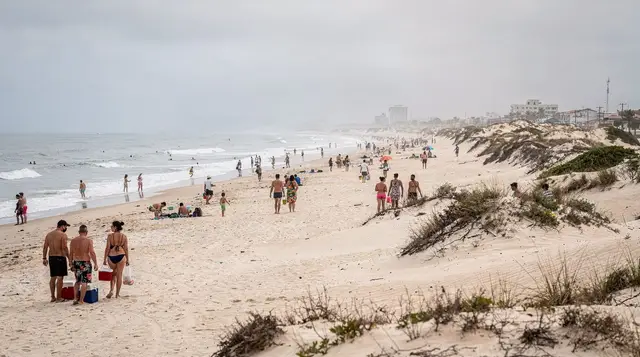
Rio de Janeiro: Arraial do Cabo Scuba Diving Day Trip
Photos show the destination, not the operator's own pictures.