
Mirante Dona Marta — the view every photographer actually uses
What is Mirante Dona Marta and is it free?
A free viewpoint on a hillside above Botafogo, at roughly 355 metres, offering the classic wide shot of Sugarloaf, the bay, and the beaches that appears in most professional photographs of Rio. There is no entry fee and no ticket; the practical cost is a taxi or rideshare up, since no public transport reaches the platform.
The shot you’ve already seen, before you’ve taken it
If you’ve seen a wide, elevated photograph of Rio with Sugarloaf rising out of the bay and the beaches curving away toward the horizon, there’s a good chance it was taken from Mirante Dona Marta. This is the viewpoint working photographers actually use, not the one every tourist defaults to — and it costs nothing to visit. This page covers how to get up there, what the platform actually looks like, and something most travel guides skip entirely: Dona Marta sits directly beside Santa Marta, a community where people live, and visiting it well means understanding that before you arrive.
| Where | Hillside above Botafogo, roughly 355m |
| Cost | Free — no ticket or entry fee |
| Getting there | Taxi/rideshare, 15-20 min from Botafogo or Copacabana |
| Time needed | 20-30 min at the platform; add an hour for a guided walk |
| Best time | Late afternoon into sunset, or early morning for clearer air |
Why “mirante” and not “morro”
Rio’s Portuguese draws a real distinction that’s worth knowing before you go: a morro is a hill or peak, often carrying the informal sense of a hillside community built on its slopes, while a mirante specifically means a lookout or viewing point — a built or designated spot for the view, regardless of what sits around it. Dona Marta is a mirante built on the edge of Santa Marta, a morro in the fuller sense of the word. Locals use both terms precisely, and picking up the distinction is a small but genuine way to talk about the place the way cariocas do, rather than flattening the whole hillside into one undifferentiated “favela view.”
What’s actually up there
The mirante is a paved platform on a hillside spur above Botafogo, at roughly 355 metres — lower than either Corcovado or Sugarloaf, but positioned at an angle that puts both of those landmarks into the same frame as the bay and the beach curve, which neither of them can do from its own summit. There’s a small parking area, a low railing along the viewing edge, and — depending on current installation — a large yellow-and-blue frame sculpture that’s become an unofficial photo prop, a nod to the neighbourhood’s connection to footballer Michael Jackson’s “They Don’t Care About Us” video, which was filmed on the Santa Marta hillside in 1996.
The platform itself is small, and there’s no ticket booth, no queue system, and no fixed opening hours in the way the paid summits have — it’s a public overlook, open-air, free to stand at for as long as you like.
A brief, honest history of Santa Marta
Santa Marta developed like many of Rio’s hillside communities, through informal settlement on public and private land beginning in the mid-20th century as workers moved to the city for jobs they couldn’t afford housing near.
It became internationally known for two very different reasons: the 1996 filming of Michael Jackson’s “They Don’t Care About Us” video on its steep alleys, directed by Spike Lee, which brought a level of global visibility few of Rio’s hillside communities have had; and in 2008, when it became the first community to receive a Unidade de Polícia Pacificadora (UPP), a permanent police unit intended to establish state presence and reduce armed-group control.
That history — global pop-culture fame paired with a specific security intervention — is part of why Santa Marta sees more organised tourism than most comparable communities, and why the guided-walk option below exists in the first place, run by residents who have built a livelihood around visitors’ genuine curiosity rather than around the mirante’s view alone.
Getting up there
No public bus or metro route serves the mirante directly. The practical way up is a taxi or rideshare from Botafogo or Copacabana, roughly 15-20 minutes depending on where you start, following the road that winds up alongside the Santa Marta community. Ask the driver to wait if you want a round trip without arranging a second pickup — there’s limited passing rideshare traffic at the top itself, so summoning a new car from the platform can mean a wait.
a sunrise visit to Dona Marta combined with Christ the Redeemer is a structured way to do this if you’d rather not arrange the taxi logistics yourself, and it solves the golden-hour timing question in one booking.
What to actually bring
Beyond a camera, there’s genuinely little needed for a mirante visit — no ticket, no gear, no special footwear given the paved platform. Cash in small denominations is worth carrying if you plan to tip a driver waiting for you, or buy a drink from any informal vendor who occasionally sets up near the parking area. A light layer helps, since the platform sits high enough to catch a genuine breeze even on a hot, still day down at sea level.
The community beside the viewpoint
Santa Marta is a real neighbourhood — homes, shops, a school, families who have lived on this hillside for generations — and the mirante sits at its edge, not above it as a detached balcony. This is worth being direct about: this is not a viewing platform over other people’s lives, and treating it as one is the wrong way to visit.
Stay on the mirante platform itself rather than wandering into the surrounding residential streets uninvited, don’t photograph people’s homes or doorways as backdrop without their knowledge, and if you want to see more of the community than the view from the platform, do it through an operator who works with and pays local guides from Santa Marta itself, not an outside company that treats the neighbourhood as scenery. Full context on how to think about this kind of visit honestly, including which operators do it right, is at Favela tours done right and The truth about favela tours.
Santa Marta itself has a public funicular (plano inclinado) that residents use daily and that visitors can ride respectfully as a way to see the community’s own streets and its own view — a genuinely different, and better, experience than only stopping at the mirante below. a Santa Marta community walk with a local guide is run by guides from the neighbourhood itself, which is the version of this visit worth doing if the mirante view alone leaves you curious about the place behind it.
The funicular, in more detail
The plano inclinado is a small, sloped funicular built to give Santa Marta’s residents a practical alternative to climbing hundreds of steps daily on the community’s steepest sections — genuinely functional public transit, not a tourist attraction dressed up as one.
Riding it as a visitor, ideally as part of a guided walk rather than alone, gives a view of the community from inside its own streets that the mirante below simply can’t offer, and it’s a concrete way to put a small amount of money directly into the local economy rather than only photographing the view from a distance. If you do this independently rather than with a guide, be conscious that you’re riding transit alongside residents going about their day, not a ride built for sightseeing.
When to go for the best light
Late afternoon into sunset gives the classic warm light on Sugarloaf and the water, and the angle means the sun sets roughly behind you rather than into your lens, which is a real advantage over several of Rio’s other west-facing viewpoints. Morning is quieter and the air is often clearer before the day’s haze builds up over the bay — a genuine trade-off between crowd and colour that’s worth deciding on purpose rather than defaulting to sunset because that’s what everyone else does.
What visitors get wrong here
The most common mistake is treating the mirante as the whole story and Santa Marta as backdrop — taking the photo and leaving without a second thought for the community whose hillside makes the shot possible. The fix isn’t complicated: acknowledge that you’re a guest on the edge of someone’s neighbourhood, keep your visit to the platform unless you’ve arranged a proper community walk, and if you do want to see more, pay for it through a local operator rather than assuming a quick, unguided wander through the streets is either welcome or safe.
The second common mistake is under-planning the taxi logistics — arriving without a return plan and discovering there’s little passing traffic to flag down at the top. Sort the return trip before you go up, not after.
How it compares to the paid summits
Dona Marta has no queue, no ticket, no sellout risk, and — because it sits lower and at a different angle than Corcovado — a real chance of a clear view even on a day when cloud is sitting on top of Christ the Redeemer. What it doesn’t have is proximity to either icon itself; you’re looking at them from a distance, not standing beside them. For a lot of visitors that trade is a clear win, and the honest ranking of Rio’s viewpoints, free and paid, sits at Best viewpoints in Rio.
Weather and the best season
Dona Marta sits at 355 metres, low enough that cloud cover rarely obscures it the way it regularly does at Corcovado’s 710-metre summit — one more practical reason it edges out the paid icon on reliability, alongside the cost and crowd advantages already covered. The dry season, roughly May-September, gives the clearest air and the best odds of an unbroken view all the way to the horizon; the wetter months still work most days but carry a higher chance of haze sitting over the bay by late afternoon, which softens the classic sunset colours without ruining the visit outright.
Safety, specifically
The mirante itself is regularly visited and generally comfortable by day. Santa Marta was one of the first communities to receive a permanent police pacification unit, and the area around the viewpoint sees steady foot traffic from both residents and visitors. As with anywhere in Rio, avoid displaying expensive camera gear or jewellery unnecessarily, don’t linger after dark, and if you’re unsure about current conditions, ask your hotel or a local guide before planning a visit — see Rio de Janeiro safety guide for the fleet-wide picture.
Photography, specifically
Shoot from the platform’s western end for the composition that includes both Sugarloaf and the widest stretch of visible coastline in one frame. A wide-angle lens captures the scale of the bay well; a longer lens is worth having too for isolating Sugarloaf itself against the water, since the mirante’s distance from the mountain compresses the two nicely at moderate zoom. Because the platform is small, arriving even twenty minutes before your target light window matters more here than at wider paid summits, where more railing space is available to spread a crowd across.
Accessibility
The mirante platform itself is paved and level, reachable directly from the parking area with no stairs, making it one of the more physically accessible free viewpoints in the city — a genuine advantage for visitors with mobility limitations over Vista Chinesa’s forest setting or Morro da Urca’s hiking trail. The Santa Marta funicular and the community’s interior streets are considerably steeper and less accessible, which is a separate consideration if you’re planning to go beyond the platform itself.
Pairing it with the rest of a Zona Sul day
Dona Marta sits close enough to Botafogo and Cosme Velho that it pairs naturally with a Corcovado visit on the same half-day, or with a wider Zona Sul loop that also takes in Sugarloaf. See Rio de Janeiro in two days for a sequenced example, and Sunset spots in Rio for how it fits into a wider sunset-chasing day.
How Dona Marta compares to Rio’s other viewpoints, on cost alone
Every other major Rio viewpoint charges an entry fee that scales with how iconic it is: Christ the Redeemer and its cog train run well into the R$100s, Sugarloaf’s two-stage cable car sits in a similar bracket, and even smaller paid lookouts add up over a multi-day trip.
Dona Marta is the rare exception on any serious Best viewpoints in Rio list that costs literally nothing beyond the taxi fare — which makes it worth building into a trip even if your budget is already allocated to the paid icons elsewhere. For a visitor deciding how to spend a limited sightseeing budget, pairing one paid summit with one or two free viewpoints like Dona Marta or Vista Chinesa is a genuinely common, sensible way to balance cost against the view without settling for a lesser one.
What locals actually think of the mirante
Ask a carioca about Dona Marta specifically, rather than Santa Marta more broadly, and the answer is usually some version of “it’s the view without the crowd” — cariocas who bring visiting friends and family here tend to do it precisely because it avoids the queues and ticket lines of the paid summits while still delivering a genuinely postcard-worthy shot.
It’s less a hidden secret than a locally preferred alternative: Instagram and professional photography have made Dona Marta well known among visitors too, but it still sees a fraction of the daily footfall of Corcovado or Sugarloaf, simply because there’s no organized tour infrastructure funnelling large groups up on a schedule.
Bringing the whole trip together at this one stop
Because Dona Marta puts both Sugarloaf and the wider Zona Sul coastline in a single frame, it’s genuinely useful as an orientation stop early in a trip, not just a photo op near the end — standing at the railing and being able to point out Copacabana, Ipanema, Botafogo, and Sugarloaf all at once helps make sense of the city’s geography in a way that’s harder to absorb from ground level. Visitors doing this on day one or two of a longer stay often find the rest of their itinerary — deciding which beaches to prioritize, how Corcovado and Sugarloaf relate to each other geographically — makes more sense afterward.
Frequently asked questions about Mirante Dona Marta
Is Mirante Dona Marta free?
Yes — there’s no entry fee or ticket, unlike Christ the Redeemer or Sugarloaf. The only real cost is the taxi or rideshare fare to get up there.
Do I need a tour to visit, or can I go independently?
You can go independently by taxi or rideshare with no booking required. A guided or operator-led visit is worth considering only if you want to responsibly see more of the Santa Marta community itself, not just the mirante platform.
Is it safe to visit Mirante Dona Marta?
Yes, by day and with normal precautions — it’s a regularly visited public viewpoint. See Rio de Janeiro safety guide for the wider context.
Why is there a yellow-and-blue frame at the viewpoint?
It’s a photo installation connected to Santa Marta’s history, including its association with the Michael Jackson video filmed there in 1996 — it’s become an informal photo spot on the platform.
How does the view compare to Sugarloaf’s?
Different rather than better or worse — Dona Marta gives you Sugarloaf itself in the frame, which you obviously can’t get from Sugarloaf’s own summit, plus a wider view of the bay and beach curve from a lower, closer angle.
Can I visit the Santa Marta community itself, not just the mirante?
Yes, respectfully, through an operator that works with and pays local guides — see Favela tours done right for how to choose one properly, and avoid outside operators who treat the neighbourhood as a photo backdrop rather than a place people live.
Is there parking at the mirante?
Yes, a small lot at the platform itself, though it fills up around sunset — arriving by taxi or rideshare avoids the parking question entirely.
What’s the best time of day to go?
Sunset for the warmest light on Sugarloaf and the bay, or early morning if you’d rather avoid the sunset crowd and get clearer air before the day’s haze builds up.
Is Santa Marta the same as Rocinha or Vidigal?
No — Santa Marta, Rocinha, and Vidigal are three separate communities in different parts of the city, each with its own history and character. Santa Marta is the smallest of the three and the one directly associated with Mirante Dona Marta; Rocinha and Vidigal have their own separate tour infrastructure covered elsewhere.
How long should I budget for a visit to just the mirante?
Twenty to thirty minutes covers the viewpoint itself comfortably. Add an hour or more if you’re combining it with a guided community walk and the funicular.
Is the walk up from Botafogo possible instead of a taxi?
Technically, but it’s a steep, indirect route with no clear pedestrian path built for it — this isn’t a walkable viewpoint in practice, and a taxi or rideshare is the realistic option for essentially all visitors.
How does Dona Marta compare on cost to Christ the Redeemer or Sugarloaf?
It’s free, against the well-over-R$100 combined cost of a Corcovado cog train ticket or a two-stage Sugarloaf cable car. It’s not a substitute for either — you’re not standing beside the icon itself — but as a budget-conscious addition to a trip that already includes the paid summits, it costs nothing beyond the taxi fare up.
Can I see Dona Marta at night?
The platform has no formal closing time or gate, but there’s minimal lighting and little passing traffic after dark, making a night visit impractical and not recommended without a specific, arranged plan — stick to daylight hours, ideally finishing before sunset fades to full dark.
tours.icons-viewpoints
Verified deep-linked GetYourGuide tours. Book through these links and we earn a small commission at no cost to you.
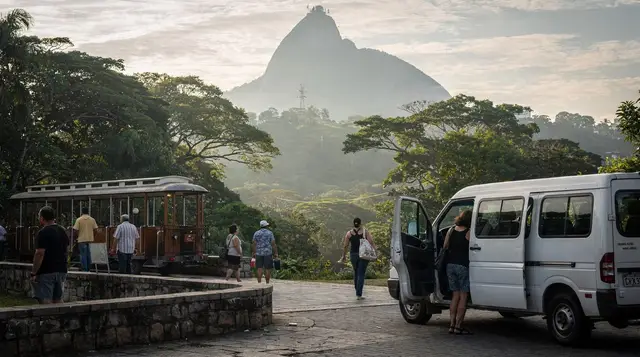
Rio de Janeiro: Christ the Redeemer Guided Hike

Best of Rio in One Day: Christ Redeemer, Sugarloaf & Local Lunch
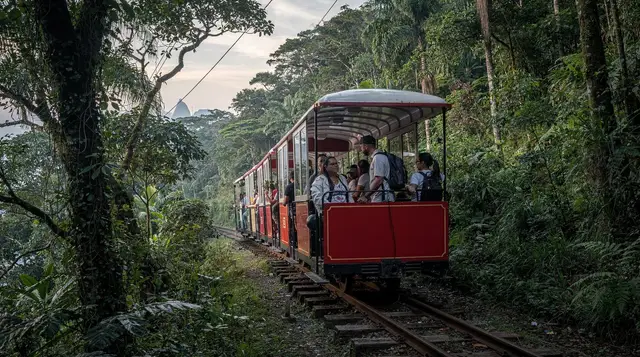
Christ the Redeemer Entry Ticket by Corcovado Train
Photos show the destination, not the operator's own pictures.