
Rio vs São Paulo — for a traveller choosing one
Should I visit Rio de Janeiro or São Paulo?
Rio, for most first-time visitors to Brazil — it delivers the beach, mountain, and landmark experience most people picture when they imagine a Brazil trip, in a single compact, walkable-in-parts city. São Paulo is the stronger choice for visitors specifically prioritising food (Brazil's most diverse and ambitious dining scene by a wide margin), contemporary art, and big-city energy over beach and landscape — a different trip, not a lesser one.
Two enormous, genuinely different cities
Rio de Janeiro and São Paulo are Brazil’s two largest cities, roughly 430km apart, and they get compared constantly by visitors trying to decide where to spend limited time in Brazil — but they’re built around almost entirely different appeals. Rio is a landscape city: beach, mountain, and forest woven directly into the urban fabric. São Paulo is a metropolis city: enormous, dense, and built around food, culture, and business rather than any single natural landmark. This page is for the visitor who genuinely has to choose one, not for someone planning to see both (in which case, see the honest combination advice at the bottom).
| Pick Rio if | Beach, mountain, landmarks, first Brazil trip |
| Pick São Paulo if | Food, art, city culture, business travel |
| Distance apart | ~430km, ~1hr flight (Santos Dumont-Congonhas) |
| Doing both | 3-4 days each is a reasonable minimum |
| Cheaper base | Neither — but Rio’s beachfront premium is steeper |
The case for Rio
Rio delivers the images most people associate with Brazil before they’ve ever researched a trip: Christ the Redeemer and Sugarloaf overlooking a coastline of beaches, forested mountains rising directly out of dense neighbourhoods, and a beach culture — Copacabana, Ipanema — that’s genuinely central to daily life, not a resort add-on.
For a first Brazil trip, or any trip where landscape, beach time, and iconic landmarks matter, Rio is the clearer choice, and it’s also considerably more geared toward short-stay tourism, with a well-established infrastructure of tours, English-language signage in the main visitor areas, and a more compact core of must-see sights than São Paulo’s sprawl.
That mix of nature and city is easiest to see on the ground. You can climb Morro da Urca and look back over the bay, or book a guided hike up the hill with a cable car ride and beach stop if you’d rather not work out the route alone. Other options sit close by: the best viewpoints in Rio and the Tijuca forest are a short hop from the beach neighbourhoods, and the water is part of the picture too, whether that means kayaking and paddleboarding or simply an hour on the sand following the beach etiquette locals take for granted. None of this has an equivalent in São Paulo, which is the honest core of the comparison.
The case for São Paulo
São Paulo’s appeal is different but genuine: Brazil’s largest and most diverse dining scene by a wide margin, spanning everything from São Paulo’s huge Japanese and Italian immigrant communities to ambitious contemporary Brazilian cooking; a serious contemporary art and design scene, including major museums and galleries; and a sheer scale and energy — Latin America’s biggest city — that appeals to travellers who prioritise urban culture over landscape. It lacks Rio’s beach and mountain draw almost entirely (São Paulo is inland), which makes it a poor fit for a visitor whose Brazil trip is fundamentally about beach and nature, but a genuinely strong fit for one built around food and city culture.
The honest trade-off, side by side
Landscape and beach: Rio, decisively — São Paulo has essentially none of this. Food and dining diversity: São Paulo, by most serious food-focused travellers’ accounts, offers Brazil’s deepest and most varied scene. Iconic, postcard-ready landmarks: Rio. Big-city energy, nightlife variety, and scale: São Paulo.** Ease for a short, focused visit:** Rio’s more compact core of sights suits a shorter trip better than São Paulo’s sprawl. Safety perception and practical navigation for a first-time Brazil visitor: Rio’s tourist infrastructure is generally considered more visitor-ready, though both cities require the same ordinary big-city awareness.
If you can only spend a few days in Brazil
For most first-time visitors with limited days, Rio is the stronger single choice — it delivers a fuller, more self-contained sense of “Brazil” as most people picture it, and its beach, mountain, and landmark trio doesn’t require the deeper cultural or culinary interest that makes São Paulo click. See first time in Rio and how many days in Rio for how to structure a Rio-focused trip.
If you can do both
For a longer trip, combining both cities works well and shows two genuinely different faces of Brazil — a common pattern is Rio first for landscape and landmarks, then São Paulo for a food-and-culture-focused close to the trip, connected by a short domestic flight (roughly an hour, flown frequently between Santos Dumont and São Paulo’s Congonhas airport — see Santos Dumont airport for that specific route). Three to four days in each is a reasonable minimum to get a genuine feel for both rather than a rushed skim of either.
What a trip actually costs in each city
Neither city is cheap by Brazilian standards, but the shape of the spending is different. In Rio, the premium sits in location: a hotel in Copacabana or Ipanema, a block or two from the sand, costs noticeably more than an equivalent room ten minutes further back in Botafogo or Flamengo, and that gap is really a payment for the beach walk, not for anything else. In São Paulo, pricing is more uniform across neighbourhoods since there’s no single defining strip everyone wants to be near, so a good hotel in Jardins or on Avenida Paulista costs roughly what a comparable one costs in most other central districts.
Food flips the pattern: Rio’s restaurant scene is solid but fairly narrow in range, so a casual dinner out lands in a predictable mid-range bracket most nights. São Paulo’s food scene spans much further in both directions — extraordinary-value lunch buffets (per-kilo places, “quilo” restaurants, are a real institution and a genuinely good budget move) sit alongside some of South America’s most expensive tasting-menu restaurants, so a food-focused visitor’s daily spend swings far more depending on how they choose to eat.
| Category | Rio de Janeiro | São Paulo |
|---|---|---|
| Hotels | Beachfront Zona Sul commands a real premium; a short distance back drops the price noticeably | More even pricing across central neighbourhoods |
| Everyday meals | Predictable mid-range bracket most nights | Wide range — excellent-value per-kilo lunches to Brazil’s priciest tasting menus |
| Getting around | Cheap where the metro reaches; short Uber hops elsewhere | More Uber-dependent overall given the larger distances between areas of interest |
Neither city is a budget destination relative to elsewhere in Brazil — smaller coastal towns and the northeast are considerably cheaper — but between the two, a traveller who eats mostly at mid-range spots and stays a short walk from the beach will likely spend a bit more in Rio, while a traveller chasing São Paulo’s top restaurants will spend more there than an equivalent Rio itinerary, simply because the ceiling on a São Paulo dinner is so much higher.
Getting around once you’re there
Rio’s tourist-relevant geography is genuinely compact: the metro’s two main lines connect the airport area, downtown, and the Zona Sul beach neighbourhoods (Copacabana, Ipanema, Leblon) reasonably well, and most of what a first-time visitor wants to see sits within a fairly tight coastal band that’s walkable in sections or a short Uber ride apart. The main practical friction is between the beach neighbourhoods and attractions further out — Christ the Redeemer, Sugarloaf’s base, Santa Teresa — where traffic and one-way road patterns can make a trip take longer than the map distance suggests, especially in late afternoon.
São Paulo is a different scale problem entirely. Its metro network is more extensive than Rio’s on paper, but the city’s sheer footprint means the neighbourhoods a visitor actually wants — Jardins, Vila Madalena, Avenida Paulista, the historic centre, Pinheiros — aren’t necessarily near each other or near a convenient line, and a taxi or Uber between two of them at rush hour can easily take 45 minutes to an hour for a trip that looks short on a map.
Traffic congestion is a genuine, daily fact of life rather than an occasional inconvenience, and visitors who plan a São Paulo day the way they’d plan a Rio day — assuming they can casually hop between three or four neighbourhoods — routinely run out of time. The practical fix is picking one or two neighbourhoods per day rather than trying to cover the city’s spread in a single outing.
Timing your visit by season
Rio’s seasons matter more to a trip than São Paulo’s, because Rio’s appeal is so tied to beach weather. December through March is the hot, humid peak — beach season proper, but also Carnival and New Year’s Eve on Copacabana, both of which mean higher prices and denser crowds well beyond the events themselves. April through June and September through November are shoulder months with more comfortable temperatures and thinner crowds, generally the best trade-off for a first visit. June through August is Rio’s cooler, drier stretch — still warm by most standards, but with clearer skies that make the views from Christ the Redeemer and Sugarloaf noticeably better than during the hazier, more humid summer months.
São Paulo’s seasonal swing is smaller in absolute beach-versus-no-beach terms but still real: its higher elevation (roughly 800 metres) means cooler nights year-round than Rio, and June through August can bring genuinely chilly evenings, occasionally down into single-digit Celsius territory, which surprises visitors who packed for tropical Brazil.
December through February is São Paulo’s rainy season, typically short, intense afternoon thunderstorms rather than all-day rain, so they rarely wreck a full day but are worth building a little flexibility around. Because São Paulo’s appeal is food and culture rather than outdoor beach time, its weather matters less to the trip’s success than Rio’s does — a rainy afternoon in São Paulo just means moving the next restaurant reservation earlier, while the same rain in Rio can cancel a whole day’s plan.
Mistakes people make when choosing between the two
A few recurring misjudgements are worth flagging before booking. The first is assuming São Paulo has usable beach access nearby — it doesn’t; the closest coastal towns (Guarujá, Santos) are a good ninety minutes to two hours away and aren’t a substitute for Rio’s urban beaches, so a visitor who wants both beach and São Paulo’s food scene in one trip needs to plan that as two separate legs, not a day trip. The second is underestimating São Paulo’s scale and planning a day there the way one would plan a day in Rio’s compact core — trying to see the historic centre, have lunch in Jardins, and finish with dinner in Vila Madalena routinely turns into a day mostly spent in traffic.
The third is not budgeting a buffer day around the Rio–São Paulo flight connection itself; the flight is short, but airport transfers, security, and the reality that flights get delayed mean treating the connecting day as a full travel day rather than assuming both a morning in one city and an evening in the other will happen smoothly.
The fourth is choosing Rio for a business trip on the assumption that Rio is Brazil’s commercial hub — it isn’t; São Paulo is the financial and corporate centre, and a traveller here for business almost always needs to be based there, with Rio reserved for the leisure extension rather than the trip’s core. The fifth is booking Rio accommodation late for a Carnival-period or New Year’s trip — prices in Zona Sul spike well ahead of both events and availability in Copacabana and Ipanema tightens months out, a pattern São Paulo doesn’t really have outside of its own major events calendar.
What each city actually feels like on the ground
Beyond the sights, the day-to-day texture of the two cities differs more than most comparisons mention. Rio’s Zona Sul has a genuine beach-town rhythm even though it’s a dense, global city — people in flip-flops and boardshorts on the metro, a coconut water stand on nearly every corner, a pace that visibly slows on a sunny weekend afternoon.
São Paulo runs on a different clock entirely: a serious financial capital’s energy, restaurant reservations booked weeks out at the top spots, gallery openings and design events filling a cultural calendar that has nothing to do with the beach. Neither rhythm is better, but a visitor who prefers Rio’s downshifted pace can find São Paulo’s density exhausting, and a visitor drawn to São Paulo’s constant motion can find Rio’s beach-first culture underwhelming if food and art aren’t the priority — worth being honest with yourself about which rhythm you actually want before booking.
If your trip is short and you can only do a day trip between them
For visitors based primarily in one city with a single spare day, a day trip to the other rarely works well given the roughly one-hour flight plus airport time on both ends — it eats most of a day for a rushed, shallow taste of a city that rewards a proper multi-day visit far more. The stronger use of a spare day in either city is going deeper locally: another Rio neighbourhood or beach if based in Rio, another São Paulo district if based there. Save the other city for a dedicated multi-day leg on a future trip or a longer visit this time, rather than squeezing in a day trip that shortchanges both ends.
Food in Rio, for visitors who still care about eating well
Choosing Rio doesn’t mean giving up on good food, it just means a different kind of eating. Rio’s strengths are informal: the neighbourhood boteco, the street food, the açaí and juice bars, and a plate of feijoada shared at a long table. If you want a structured introduction, a guided tasting such as a walking food tour of Copacabana with several tastings gives a first-timer a sense of the local flavours without needing to research each stop. For more ideas, see what to eat in Rio and the markets of Rio. It won’t replace São Paulo’s range for a dedicated food traveller, but it covers most of what a short visit calls for.
Football and other reasons to pick one city
A smaller tiebreaker for some travellers is sport. Rio’s football culture is part of the city’s identity, and a visit to the Maracanã is a highlight for many fans, whether or not a match is on. If you’re there outside matchdays, a guided tour of the stadium with transport included is one way to see it, and our guide on how to see a match in Rio covers the rest. For planning a longer stay, the where to stay in Rio guide and the first-timer itinerary are the natural next steps.
Frequently asked questions about Rio vs São Paulo
Which is safer for tourists, Rio or São Paulo?
Both require similar ordinary big-city awareness; neither is meaningfully “safer” in a way that should be the deciding factor on its own. See Rio’s safety guide for Rio’s specific, honest picture.
Which city has better weather?
Rio’s coastal, tropical climate is generally considered more pleasant and more consistently warm than São Paulo’s higher-altitude, more variable inland climate, which sees cooler, sometimes chilly stretches that surprise visitors expecting uniform Brazilian heat.
Is São Paulo worth visiting if I only care about beaches?
No — São Paulo is inland with no beach access of its own; a beach-focused trip should prioritise Rio or consider Brazil’s northeastern coast instead.
How do I get between Rio and São Paulo?
A frequent, roughly one-hour domestic flight (the shuttle route between Santos Dumont and Congonhas airports) is the standard, fastest option; a long-distance bus takes around six hours and is a budget-friendlier if slower alternative.
Which city is better for nightlife?
São Paulo’s nightlife scene is generally considered bigger and more varied given its sheer scale; Rio’s own scene, centred on Lapa, is smaller but has a distinct samba and street-party character São Paulo doesn’t replicate.
Is Carnival better in Rio or São Paulo?
Both cities hold major Carnival celebrations, but Rio’s — particularly the Sambadrome parades — is the more internationally famous and elaborate version; see Rio Carnival guide.
Which city is more walkable?
Rio’s beach neighbourhoods (Copacabana, Ipanema) are genuinely walkable in a way few São Paulo districts match, given São Paulo’s much larger overall footprint and less centralised layout.
Should a business traveller extending a trip choose Rio or São Paulo?
If the business itself is in São Paulo (Brazil’s financial centre), extending into Rio for a few leisure days afterward is a common, well-supported pattern given the frequent, short flight connection.
Popular Rio de Janeiro experiences on GetYourGuide
Verified deep-linked GetYourGuide tours. Book through these links and we earn a small commission at no cost to you.

Rio de Janeiro: Christ the Redeemer Guided Hike

Best of Rio in One Day: Christ Redeemer, Sugarloaf & Local Lunch
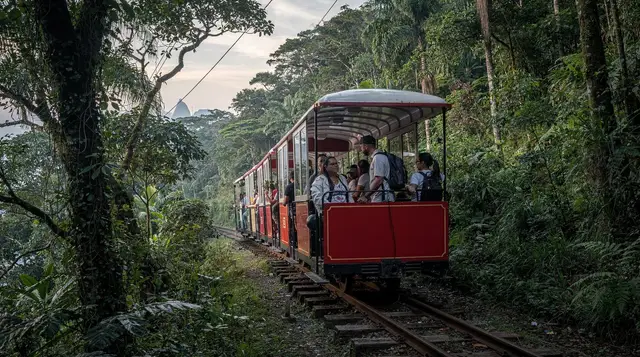
Christ the Redeemer Entry Ticket by Corcovado Train
Photos show the destination, not the operator's own pictures.