
Copacabana beach guide — the posto system, explained
What is the posto system on Copacabana beach?
Copacabana is divided by six lifeguard posts (postos), numbered 1 to 6 from the Leme end to the Arpoador end. Locals use the posto number as shorthand for a stretch of sand and its crowd — Posto 3 skews working-class and local, Posto 5 is the hotel-and-tourist middle, Posto 6 sits at the fort and blends into Arpoador's surf crowd.
Copacabana’s 4km crescent isn’t one beach, it’s six, and cariocas navigate it entirely by posto number rather than any postcard description. This guide breaks down which stretch is which crowd, what actually costs money, and when to go if you want the postcard version with room to breathe.
| Length | 4km, Posto 1 to Posto 6 |
| Cost to sit | Free (chair/umbrella rental optional, ~R$10-30) |
| Best time | Weekday mornings, 6:30-9am |
| Getting there | Metro Line 1 (three stations serve the beach) |
| Fort entry | Roughly R$6-8 |
Six postos, six neighbourhoods of sand
Copacabana is 4km of continuous beach, but nobody who lives here thinks of it as one place. The lifeguard posts — concrete towers spaced roughly every 700 metres along Avenida Atlântica — split it into six numbered sections, and cariocas use the number the way New Yorkers use a cross street. “Meet me at Posto 4” is a complete sentence. Nobody says “meet me on Copacabana beach,” because that tells you nothing.
The numbering runs from the Leme end (Posto 1, technically already in the neighbouring Leme district) to Posto 6 at the southern tip, where the sand narrows and the Copacabana Fort sits on the promontory before the coastline bends into Arpoador and then Ipanema, covered in detail in Ipanema beach guide. Here is what each stretch actually is, not what the postcards say.
Posto 1 (Leme border). Quiet, mostly local, more families and older residents from the Leme apartment blocks than tourists. The sand is a little narrower here because the beach curves inward. Good if you want Copacabana’s calm without the density — bad if you came for the promenade energy.
Posto 2. The stretch in front of the Copacabana Palace hotel and the old art-deco buildings. A mixed, slightly older, moneyed crowd; some gay-friendly presence historically clusters here, though nothing like the concentration Ipanema has around Rua Farme. Kiosks here lean toward classier than functional.
Posto 3. Working-class Rio, plain and simple — this is the stretch locals from the surrounding Zona Sul neighbourhoods actually use on a Sunday, not the one in the brochure. Fewer English menus at the barracas, cheaper coconut water, more radios playing pagode than anywhere else on the beach. It’s also near the old fishing colony (Colônia de Pescadores Z-13), and you’ll still see boats pulled up on the sand early in the morning.
Posto 4 and Posto 5. The tourist-and-hotel core, roughly between Rua Santa Clara and Rua Djalma Ulrich. Most of the big hotel chains sit on this stretch, so this is where the beach vendors know a few words of English, where the volleyball and footvolley nets are busiest, and where the crowd is thickest on any given Saturday. If it’s your first time on Copacabana and you want the full spectacle — vendors, nets, joggers, the whole promenade doing its thing — this is it.
Posto 6. The fort end. The beach narrows as it approaches Forte de Copacabana, a working military installation that also functions as a small museum — entry is a token fee, usually somewhere around R$6-8 (about US$1.50), and the walk along the fort’s outer wall gives you the best photograph of the whole crescent behind you. Past the fort, the beach folds into Arpoador’s rocks, and the crowd changes again — more surfers, more of the sunset-watching ritual that belongs properly to Arpoador rather than Copacabana itself.
Why the posto system exists in the first place
The posts themselves are lifeguard stations, run by Rio’s fire department (Corpo de Bombeiros), and their original purpose is entirely practical — a lifeguard can only watch so much water, so the beach is divided into zones with a tower and a flag at the boundary of each one. What happened over decades is that the zones absorbed social meaning on top of the practical one. Families settled near the post closest to their building. Vendors learned which post’s crowd bought what. Slang calcified around the numbers.
By the 1980s “Posto 9” already meant something specific in Ipanema (the young, alternative crowd), and Copacabana’s numbers picked up their own reputations the same way, just less sharply defined because Copacabana’s crowd was always more mixed to begin with — it’s the biggest, oldest, most continuously inhabited beach neighbourhood in the city, not a single scene the way Ipanema’s Posto 9 is. If you ask a carioca to describe “the Copacabana crowd” in one sentence, most will struggle, because the honest answer is that it changes every 700 metres.
The full origin of this shorthand — why cariocas navigate the entire city’s beaches this way, not just Copacabana’s — is covered in The posto system explained, which is worth reading if you want the social history rather than just the practical map.
The promenade itself
Avenida Atlântica’s black-and-white wave-pattern sidewalk (the calçadão) is as much a Rio symbol as the beach it borders, designed in the 1970s by Roberto Burle Marx and modelled on the Portuguese mosaic paving found in Lisbon. It runs the full 4km, wide enough for the joggers, cyclists, food vendors, and evening strollers who use it as a promenade independent of anyone actually going in the water.
A protected cycle lane sits closer to the sand side; the pedestrian mosaic takes the rest. Walking the full length, Leme to the fort, takes about an hour at an unhurried pace and is one of the better free things to do in the city at golden hour, when the light comes in low across the water and the mosaic pattern actually reads clearly underfoot.
The promenade is also where the beach’s vendor economy operates in its non-liquid form: ambulantes selling grilled cheese on a stick (queijo coalho), roasted peanuts, sarongs, sunglasses, and — the single most Copacabana snack of all — Biscoito Globo, a light, ring-shaped cassava cracker sold from insulated bags by vendors shouting “Globo!” up and down the sand, usually paired with a cup of Mate Leão iced tea from the same or a neighbouring vendor. It’s cheap (a few reais for a bag) and it’s the beach snack locals actually eat, not something aimed at tourists.
Kiosks versus barracas — know the difference
Two separate economies run on this beach and tourists mix them up constantly.
The kiosks (quiosques) are the permanent structures bolted onto the promenade itself, numbered and licensed, serving coconut water, beer, caipirinhas, and simple food — some now rentable for private events in the evening once the beach traffic thins. The barracas are the informal umbrella-and-chair operations that set up fresh every morning directly on the sand, one attendant per stretch of territory, no fixed address.
A barraca will rent you a chair and umbrella for the day — usually R$10-15 per chair (about US$2-3), sometimes a flat R$25-30 for a chair-and-umbrella pair — and they run a tab: you don’t pay per beer, they mark what you order and you settle before you leave. Full etiquette, including how the tab actually works and what a fair barraca fee looks like, is in Rio beach etiquette.
When to actually go
Early — 6:30 to 9am — is when Copacabana is at its most carioca and least crowded: the exercise crowd doing calisthenics on the sand, older residents walking the promenade, surfers checking the break near Posto 6. By 10am the barracas are fully staffed and the beach is filling in. Weekday afternoons are markedly calmer than weekends; a Saturday or Sunday between December and February at Posto 4 or 5 can mean stepping over towels to find sand. If you want the postcard version of Copacabana with room to actually lay a canga down, go on a weekday morning, or push past Posto 2 toward Leme.
Copacabana also floods for specific dates — New Year’s Eve draws close to two million people onto this exact stretch of sand for the fireworks (full detail in New Year’s Eve in Copacabana), and the beach around Carnival is a secondary staging ground for blocos even though the Sambadrome parade itself is elsewhere (see Rio Carnival guide). Outside those windows, Copacabana behaves like a normal, if very large, city beach.
What to actually do here beyond lying on a towel
Footvolley (futevôlei) was invented on this sand in the 1960s and the courts near Posto 4 and 5 are still where you’ll see it played at a serious level, on real nets, by people who grew up on this beach. If you want to try it rather than just watch, a beginner lesson beats trying to improvise against locals who’ve played since childhood — a footvolley lesson on Copacabana gets you the basics with a coach in under two hours.
Surfing exists here too, mostly at the Posto 6 end where the swell wraps around from Arpoador; a surf lesson covering Copacabana and Ipanema is a reasonable way to get in the water without renting gear solo. Early risers can try a sunrise stand-up paddle session off Copacabana before the beach fills in — the water is calmest and the light is better than any afternoon photo you’ll take.
For something that isn’t in the water, a Copacabana food tour threads through the neighbourhood behind the beach — the actual boteco and market culture that most beach-only visitors never see. It pairs well with What to eat in Rio de Janeiro if you want the wider food picture before you commit to one tour.
Where the crowd shifts by season and time of day
Copacabana’s character changes more by hour than most first-time visitors expect. Early morning belongs to residents: the calisthenics groups doing organised routines on marked sections of sand, the walkers and runners on the calçadão before the heat sets in, older men playing dominoes at the kiosk tables. Mid-morning through the vendors arrive in force and the beach fills toward its daytime population — tourists concentrated at Posto 4-5, locals spread more evenly the rest of the way. Late afternoon, as the sun drops behind the hills, the crowd near Posto 6 thickens with people watching the light change over the water, though the real sunset ritual belongs to Arpoador’s rocks just around the point.
Seasonally, December through Carnival (roughly February or March, depending on the year — see Carnival dates and planning) is Copacabana at its fullest and loudest, with temperatures and crowds both at their peak; this is also when petty theft risk rises slightly, simply because of density.
June through August is Rio’s cooler, drier season — the beach empties out, water temperatures drop but rarely become unpleasant, and it’s the best window for photographs of the empty crescent and for actually getting a barraca’s full attention. Full seasonal comparison across the year is in Rio in summer and Rio in winter, and Best time to visit Rio de Janeiro if you’re still deciding when to book the whole trip.
Eating and staying near the beach
Copacabana’s hotel strip runs roughly Posto 2 through Posto 5, with the Copacabana Palace as the anchor at the Posto 2 end and a long run of mid-range and budget options behind it. Staying here puts you inside walking distance of the beach for the whole trip, at the cost of being one of the busier, more tourist-facing neighbourhoods in the city — the full trade-off against Ipanema, Leblon, and other bases is in Where to stay in Rio de Janeiro.
Behind the beachfront towers, the streets running perpendicular to the sand — particularly around Rua Santa Clara and Rua Barata Ribeiro — hold the actual neighbourhood: bakeries (padarias), juice bars, and botecos that have nothing to do with tourism and everything to do with the people who live here year-round. If you only ever cross Avenida Atlântica to reach your hotel, you’ll miss most of what makes Copacabana more than a beach.
Getting there
Line 1 of the metro serves Copacabana at three stations — Cardeal Arcoverde (Posto 1-2 end), Siqueira Campos (Posto 3-4), and Cantagalo (Posto 5-6, close to the Ipanema border). All three sit a short walk from the sand. Buses run the length of Avenida Nossa Senhora de Copacabana one block back from the beach, and taxis or Uber are cheap and plentiful for the short hop from most Zona Sul hotels. See Getting around Rio de Janeiro and Rio metro guide for the wider transport picture, and Galeão airport guide (GIG) if you’re coming straight from the airport.
For safety specifics — what to carry, what to leave at the hotel, and how the flag system works — read Beach safety in Rio before your first day on the sand, not after. And if you’re trying to decide between this beach and its glossier neighbour, the honest comparison is in Copacabana vs Ipanema.
A quick posto reference table
| Posto | Character | Best for |
|---|---|---|
| 1 (Leme border) | Quiet, local, older residents | Calm without the density |
| 2 | Copacabana Palace, mixed older crowd | Classic old-Rio atmosphere |
| 3 | Working-class, genuinely local | Authentic Sunday-crowd Copacabana |
| 4-5 | Hotel core, busiest, tourist-facing | First-timers wanting the full spectacle |
| 6 | Fort end, blends into Arpoador | Photos, surfers, sunset transition |
Renting gear beyond a chair and umbrella
Beyond the standard barraca chair-and-umbrella setup, informal vendors along the promenade rent sports gear by the hour or day — footvolley balls, beach tennis rackets (a genuinely popular local pastime alongside footvolley), and stand-up paddle boards near the calmer stretches toward Posto 1 and 2. Prices are entirely negotiated on the spot rather than posted, so agreeing the rate and the return time before handing over cash avoids any confusion later. None of this requires advance booking — it’s the same walk-up, cash-based economy as the barracas themselves.
Frequently asked questions about Copacabana beach
Which posto should I pick as a first-time visitor?
Posto 4 or 5 if you want the full Copacabana experience — vendors, nets, crowds, the promenade in motion. Posto 1 or 2 if you’d rather have a quieter version of the same beach with an easy walk to Leme’s calmer restaurant strip.
Is Copacabana beach safe during the day?
Yes, in the sense that hundreds of thousands of people use it without incident every week. Petty theft is the real risk, not violent crime, and it’s opportunistic — an unattended phone or bag is the target, not a person. Full behavioural detail is in Beach safety in Rio.
Do I need to pay to sit on the sand?
No — the beach itself is public and free. You only pay if you want a chair and umbrella from a barraca, which is optional; plenty of people bring a canga and sit directly on the sand.
What is Copacabana Fort and is it worth the entry fee?
Forte de Copacabana sits at the Posto 6 end, a still-functioning military site with a small museum and a café. The entry fee is minor — a few reais — and the view back up the length of the beach is worth it on a clear day.
Can I drink alcohol on Copacabana beach?
Yes, openly — beer and caipirinhas from the kiosks and vendors are a normal part of the beach day, sold to anyone regardless of the time.
Is Copacabana crowded even on weekdays?
Less than weekends, but never empty. Posto 4-5 stays busy most days; Posto 1 and 2 are noticeably calmer even on a Tuesday afternoon.
How does Copacabana compare to Ipanema for a first visit?
Copacabana is grittier, more local, more of a working city beach with the promenade energy that made it famous. Ipanema is more polished and younger. Neither is “better” — see Copacabana vs Ipanema for the full breakdown by what you actually want from a beach day.
Where do I rent a chair and umbrella?
Directly from a barraca attendant on the sand — walk up, ask the price, and they’ll set you up. There’s no booking system; it’s entirely informal and negotiated on the spot.
Is Leme the same beach as Copacabana?
Geographically it’s a continuous stretch of sand, but Leme is administratively its own neighbourhood and feels calmer and more residential — many locals treat “Leme” and “Posto 1” as roughly the same idea, the quiet northern end before Copacabana proper begins.
What should I actually pack for a day on Copacabana?
A canga (the local word for a beach sarong, not a towel — full explanation in Why Rio beaches have no towels), sunscreen, a small amount of cash, and not much else. Leave valuables at the hotel; see Beach safety in Rio for the full packing logic.
Does Copacabana get better or worse the further from the metro I go?
Neither, reliably — Posto 1 and 2 are a short walk from Cardeal Arcoverde and are among the calmest stretches, so proximity to a station doesn’t predict crowd density here the way it might elsewhere. The crowd follows the hotels and the historic reputation of each posto, not transit access.
tours.beaches
Verified deep-linked GetYourGuide tours. Book through these links and we earn a small commission at no cost to you.
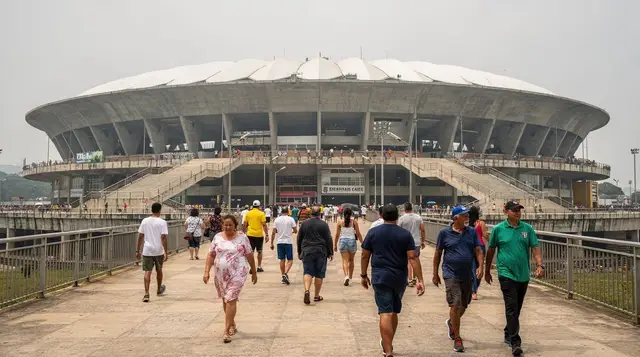
Rio de Janeiro: Maracanã Stadium Tour and Beach Soccer

Rio de Janeiro Sunset Sailing Tour with Drinks
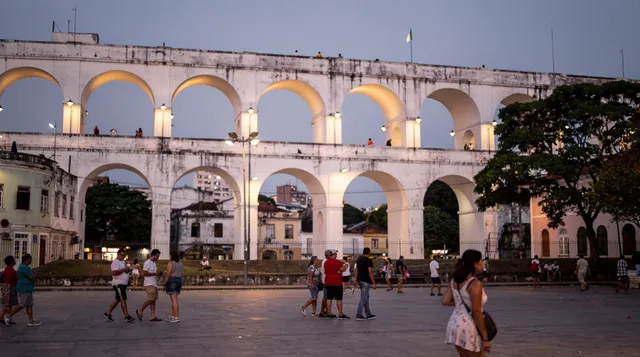
Rio de Janeiro: Samba Class in Copacabana or Ipanema
Photos show the destination, not the operator's own pictures.