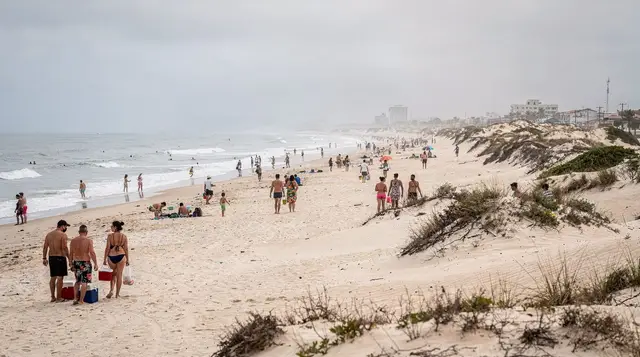
Ilha Grande is the one place on this coast that punishes rushing. It’s a real island, cut off from cars by law since a 19th-century leper colony and a 20th-century maximum-security prison kept development out — both are gone now, but the no-vehicles rule stuck, and it’s the best thing about the place.
Is Ilha Grande worth a day trip from Rio, or do you need to stay over? A day trip is technically possible — some tours run it — but it means 4 to 5 hours of driving and boat transfers before you’ve set foot on a trail, out of a day that also needs to get you back to Rio by evening. Staying one night in Vila do Abraão turns a rushed dash to one beach into an actual trip: you get Lopes Mendes without watching the clock, and the village to yourself once the last day-boat leaves around 5pm.
How you actually get there
There is no bridge and no car ferry for tourists onto Ilha Grande — every route involves a drive to the mainland coast, then a boat.
Via Mangaratiba (the shorter mainland leg, about 2 hours from Rio by car or bus) — a ferry or fast boat crosses to Vila do Abraão in roughly 60–90 minutes depending on the vessel. This is the route most budget travellers use.
Via Angra dos Reis (about 2.5 hours from Rio) — private schooners and speedboats cross to Abraão in 60–90 minutes (schooner) or 20–30 minutes (speedboat). Angra has more frequent departures and more operators, which makes it the more flexible option if you’re not on a fixed schedule. Read the Angra dos Reis page if you’re routing through there.
Via Paraty (about 4 hours from Rio, but the most scenic land leg) — boats to Abraão run 60–75 minutes and pass some of the prettiest coastline on this trip. This only makes sense if Paraty is already part of your route — see Ilha Grande vs Paraty if you’re deciding between the two or trying to fit both in.
Whichever way you go, book the boat leg in advance in high season (December–February, and around Carnival) — the small operators sell out and there is no train, no bus, and no bridge as a backup plan.
One-way transfer from Rio with the boat ticket included removes the guesswork on the drive-plus-boat combination — useful on your first visit, when you don’t yet know which mainland departure point suits your schedule.
Vila do Abraão: the only real village
Everything on the island funnels through Abraão — it’s where the boats land, where the guesthouses and restaurants cluster, and where the trailheads for most hikes start. It has no cars, a handful of unpaved streets, and a beach right in front of the village that is pleasant but not the reason you came.
There’s no ATM guaranteed to be working — bring more cash than you think you’ll need, since card acceptance is patchy outside the larger pousadas. Wi-Fi is slow and mobile signal is unreliable once you leave the village centre; treat this as a feature, not a bug.
Restaurants in Abraão run from simple per-kilo places (R$40–55 for a plate) to a few beachfront spots doing fresh fish (R$60–90 a main). Nothing is expensive by Rio standards, but nothing is cheap either — this is an island with everything shipped or boated in.
The island’s history explains the empty stretches you’ll notice past Abraão’s last guesthouse. Ilha Grande was closed to development for most of the 20th century — first as the site of the Lazareto leper colony, then as home to Cândido Mendes, a maximum-security prison that held some of Brazil’s most notorious inmates until it was demolished in 1994. That closure kept the rest of the island almost entirely undeveloped, which is precisely why so much of it today is protected as a state park (Parque Estadual da Ilha Grande) with forest cover found almost nowhere else this close to a major Brazilian city.
Where to stay in Abraão
Accommodation clusters within a five-to-ten-minute walk of the boat dock, and price tends to track distance from the water and the beach. Budget hostels with dorm beds run roughly R$60–100 a night; a simple private double in a family-run pousada is more like R$150–250; and a handful of nicer boutique guesthouses toward the far end of the village or the quieter Praia Grande beach run R$350 and up, especially in December–February.
Booking ahead matters more here than almost anywhere else on this coast — Abraão is small, boats can be genuinely full in high season, and turning up without a reservation in late December risks finding nothing available at all. Outside peak periods (roughly April–June and August–November), showing up and asking around is more realistic, though still not something to rely on for a Friday or Saturday night.
Lopes Mendes: the beach, and the honest way to reach it
Lopes Mendes is usually ranked among Brazil’s best beaches, and the fine white sand and consistent swell justify the reputation. Getting there from Abraão has two options, and they are genuinely different trips:
Boat + short walk — a water taxi (around R$40–60 per person, shared) runs 45 minutes to a drop-off point, followed by a 30–40 minute walk over a low headland to the beach. This is what most visitors do, and it’s the sensible choice if you want beach time rather than trail time.
Direct hike from Abraão — about 2 hours each way along a coastal trail through forest, past smaller beaches (Palmas, Julia) that make good rest stops. It’s not technical, but it is real walking in island heat and humidity — bring more water than seems necessary. Doing it both ways in one day is 4 hours of walking on top of however long you stay at the beach; most people boat one way and walk the other, or just boat both ways if time is tight.
Guided trekking day trip to Lopes Mendes from Abraão covers the hiking route with a guide, useful if you’d rather not navigate the unmarked forks in the trail alone.
Lopes Mendes has minimal infrastructure — a couple of basic drink and snack stands near the access points in season, nothing more. There’s no shade structure and no rescue station at the far end of the beach; bring what you need for the day.
Other things worth the boat ride
Lagoa Azul (Blue Lagoon) is a snorkelling spot with genuinely clear turquoise water over a rocky bottom, reachable by schooner tour from Abraão — a half-day out, typically combined with one or two other stops along the coast.
Praia Preta and Praia do Aventureiro are further-flung beaches for people who find Lopes Mendes too busy — Aventureiro in particular requires a longer boat ride or a serious hike and has minimal facilities, which is exactly its appeal.
Pico do Papagaio, the island’s dramatic parrot-beak peak, is a genuinely demanding hike (5–6 hours round trip, steep in sections) for a summit view over the whole bay — this is not a casual walk, and it’s worth checking conditions and going with a guide if you’re not an experienced hiker.
Half-day schooner tour to the Blue Lagoon from Abraão is the easiest way to see the water-based side of the island without arranging your own boat.
Money, cards, and what to have on hand
Bring more cash than instinct suggests. Abraão has no ATM guaranteed to be working, and even where card machines exist, connectivity issues mean transactions occasionally fail — a genuinely common enough occurrence that most repeat visitors treat cash as the default rather than the backup. Budget for accommodation, meals, activities, and a buffer for the return boat and transfer in cash before you leave the mainland; some pousadas and tour operators will take a card payment in advance through a booking platform, which is a reasonable way to reduce how much physical cash you need to carry.
Choosing between Abraão and the further-flung beaches
Most first-time visitors base themselves entirely in Vila do Abraão, and for good reason — it’s the only real village, with the widest range of guesthouses, restaurants, and easy access to Lopes Mendes. But a handful of more remote pousadas exist near quieter beaches like Praia Vermelha or Freguesia de Santana, reachable only by boat and offering a genuinely more isolated stay for travellers who’ve already done Abraão once and want less village, more nature. These come with real trade-offs — fewer dining options, less flexibility if plans change, and a boat schedule that dictates your days far more than staying centrally does — so they suit a second visit better than a first.
What to pack, and what to leave behind
Because everything on the island travels by boat and there’s no vehicle traffic to speak of, packing light genuinely matters — you’ll be carrying your own bag from the dock to your guesthouse over unpaved streets, sometimes a fair walk if you’re staying past the village centre. A soft bag or backpack works far better than a wheeled suitcase, which will fight you on the uneven ground.
Beyond the obvious (swimwear, reef-safe sunscreen, a hat), bring cash in small denominations, a headlamp or phone torch for the unlit village streets at night, and insect repellent for the forest trails and evening mosquitoes. Leave valuables you don’t need at your mainland accommodation if you’re doing a round trip from Rio — Abraão is generally safe, but there’s little point carrying anything you’d hate to lose on a boat crossing.
Eating well, without expecting Rio prices
Because everything arrives by boat, prices in Abraão run somewhat higher than an equivalent meal in the city, but the food itself is genuinely good — the village’s per-kilo places serve honest, freshly cooked Brazilian staples, and a handful of beachfront restaurants specialise in the day’s fresh catch, grilled or in a moqueca-style stew. Breakfast is usually included with a pousada stay; for other meals, the streets just back from the dock have the highest concentration of options, and reservations are rarely needed outside the busiest weeks of the year. If self-catering appeals, a small market in the village sells basics, though selection and prices reflect the same shipped-in logistics as everything else here.
Weather, rain, and when the forest trails get slippery
Ilha Grande sits within the Atlantic Forest biome and gets genuine rain, particularly from December through March — short, heavy downpours are common even in the drier months, and the Lopes Mendes hiking trail in particular turns muddy and slick after rain, adding real time and difficulty to what’s otherwise a manageable walk. Pack a light rain layer regardless of season, and if the forecast looks unsettled, lean toward the boat option to Lopes Mendes rather than the hike, since a soaked trail is a genuinely different, more strenuous experience than a dry one. Mornings tend to be clearer than afternoons in the wetter months, which is one more reason to start any hike or boat excursion early rather than mid-afternoon.
Diving and snorkelling around the island
Ilha Grande’s waters, particularly around the Blue Lagoon and a scattering of smaller bays on the island’s less-visited south side, offer genuinely decent snorkelling — not the exceptional clarity of Arraial do Cabo further along the coast, but a reasonable variety of reef fish and rock formations for anyone bringing their own mask and fins or renting on a schooner trip. A handful of local dive operators run guided dives to nearby wrecks and reef sites for certified divers, though this is a smaller, less developed scene than diving around Rio more broadly.
Is a day trip actually worth it?
Be honest with yourself about the maths. A day trip from Rio typically means: 2–2.5 hours driving to the mainland departure point, 30–90 minutes by boat to Abraão, a few hours on the island (realistically just enough for the boat-plus-walk version of Lopes Mendes, not the full hike), then the same transit back. Door to door, that’s a 12-hour day for maybe 3–4 hours of actual island time — tiring, and it doesn’t let you see the island once it empties out in the evening, which is genuinely one of the best parts.
If you can spare one night, do it. Guesthouses in Abraão run from around R$150–250/night for a simple double to R$400+ for something nicer, and the extra cost buys you an unrushed Lopes Mendes, an evening in a village with no cars and no traffic noise, and a morning boat back instead of an afternoon deadline. See day trip or overnight in the Costa Verde for the wider version of this trade-off across the whole coast, and the Rio-and-Costa-Verde itinerary for how to fit Ilha Grande alongside Paraty without a rushed schedule.
Guided day trip to Ilha Grande via Angra dos Reis is the most efficient version if a day trip is genuinely all your schedule allows — it packages the transfers so you’re not managing three separate bookings.
There’s also a practical reason overnighting works better logistically, not just experientially: boat schedules on this coast are not dense. Missing a return boat because your beach day ran long, or because a schooner tour took longer than advertised, can mean waiting hours for the next departure — genuinely disruptive if you’re on a tight same-day return to Rio, and a non-issue if you were already planning to sleep on the island.
Frequently asked questions about Ilha Grande
Can I bring a car to Ilha Grande?
No. The island has been car-free since the prison-era restrictions and it has stayed that way by choice. Everything moves on foot, by water taxi, or occasionally by a small number of service vehicles for deliveries — tourists never drive here.
Is Lopes Mendes really that good, or is it overrated?
It earns most of the hype — fine sand, a long open swell good for bodysurfing, and a setting backed by forest rather than buildings. It gets busy with day-boats between roughly 11am and 3pm; arriving early or staying to watch the last boats leave gives you a much emptier beach.
How much does a trip to Ilha Grande cost, roughly?
Budget travellers can do a return trip including boat, a night in a simple guesthouse, and food for around R$350–500 total. Add guided tours (Lopes Mendes trek, Blue Lagoon schooner) and it rises quickly — those run roughly R$150–250 per activity.
Is Ilha Grande safe?
Yes, generally — it’s a small island with a tourism-dependent economy and a strong incentive to keep it that way. Standard travel sense applies: don’t leave valuables unattended on the beach, and stick to marked trails on the longer hikes since parts of the interior are genuinely remote.
Do I need to book the boat in advance?
In high season (December–February, Carnival, July school holidays), yes — boats sell out and there’s no alternative transport. Outside peak season you can often buy tickets on arrival at the mainland dock, but booking ahead removes the risk.
Can I bring luggage on wheels, or should I pack differently?
Pack differently if you can. Abraão’s streets are unpaved sand and dirt tracks, and a wheeled suitcase becomes a genuine chore the moment you leave the dock — a soft duffel or backpack you can carry comfortably for ten or fifteen minutes is a far better fit for how the village actually works.
Is Ilha Grande good for solo travellers?
Yes, genuinely one of the better options on this coast for solo travel — Abraão has a strong hostel and backpacker culture, boat tours and treks are set up for individual bookings, and the car-free, low-key pace makes it easy to meet other travellers without any particular effort.
Is one day enough, or should I plan for more?
One night is the practical minimum to see Lopes Mendes properly without rushing. Serious hikers wanting Pico do Papagaio or the far beaches like Aventureiro should plan two nights.
What should I pack that people forget?
Cash (ATMs are unreliable), a dry bag for the boat spray, proper hiking shoes if you’re doing the Lopes Mendes trail on foot, and insect repellent — the forest sections have mosquitoes, especially at dusk.
Which mainland departure point is best — Angra, Mangaratiba, or Paraty?
Angra dos Reis generally has the most frequent boats and the shortest crossing by speedboat. Mangaratiba is the shortest drive from Rio. Paraty only makes sense if you’re already stopping there — see the Ilha Grande vs Paraty comparison for the fuller trade-off.
What’s the best time of year to visit Ilha Grande?
April–June and September–November hit the sweet spot — warm enough for swimming, outside the December–February crowds and price surge, and past the worst of the mid-year rain that can make the forest trails slippery and cut visibility on boat trips. December–February is the busiest and most expensive window, especially around New Year’s and Carnival.
Is there phone signal and Wi-Fi on the island?
Limited. Vila do Abraão has patchy mobile signal and slow Wi-Fi in guesthouses and a few cafés, but reception drops off almost completely once you’re on a trail or at a beach outside the village. Treat it as a genuine digital break rather than a minor inconvenience — most visitors end up appreciating it once they’ve adjusted.
What’s the rainiest time of year to avoid?
December through March brings the most rain, along with the highest prices and crowds — a genuinely tricky trade-off, since that period also has the warmest water. April-June and September-November offer a drier, calmer, and cheaper middle ground for most visitors.
Can I eat well on Ilha Grande, or is the food an afterthought?
The food is genuinely good, if a little pricier than an equivalent meal in Rio — fresh fish and moqueca-style dishes at the beachfront restaurants are a highlight, and the per-kilo places in the village cover a reliable, affordable everyday option.
Ilha Grande is the strongest argument on this coast for staying over rather than rushing — see day trips from Rio for how it compares to the other options, or go straight to Paraty and Angra dos Reis to plan the rest of the Costa Verde leg. For a longer, multi-stop route through the whole Costa Verde belt, the Rio-and-Costa-Verde itinerary lays out a realistic pace that gives the island the time it actually needs rather than squeezing it into a single rushed afternoon.