A different Rio, built for cars
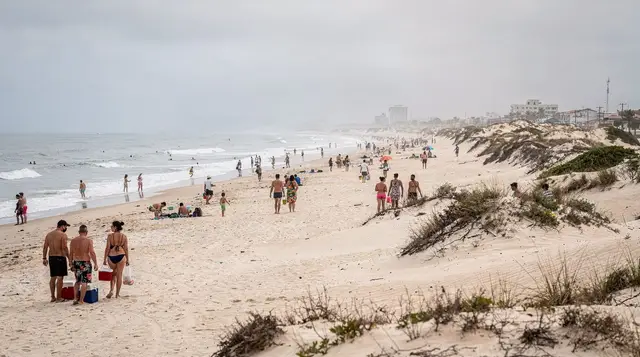
Barra da Tijuca is what Rio looks like when it’s built after the 1970s rather than before it: wide multi-lane avenues, shopping malls with underground parking, gated condominium towers set back from the road, and a beach so long — roughly 18 kilometres, continuing into Recreio dos Bandeirantes further west — that “the beach” stops being a single social scene the way Copacabana or Ipanema is, and becomes more like a background feature of daily life. If you arrive expecting the density and walkability of the Zona Sul, Barra will feel disorienting; if you arrive knowing it’s essentially a car-based Rio suburb with a spectacular beach attached, it makes a lot more sense.
| Where | Zona Oeste, ~20–25min by metro from Ipanema |
| Getting around | Car or Uber recommended — not a walkable grid |
| Best for | Families, space, a car-based day-trip base |
| Time needed | A day, or a full base if you have a car |
| Metro | Linha 4, Jardim Oceânico to General Osório (Ipanema) |
Who Barra actually suits
Families travelling with young kids often do well here: BarraShopping, one of Latin America’s largest malls, and the more upscale VillageMall both offer air-conditioned, easy half-days with reliable food courts and play areas, a real asset with small children on a hot day. The beach itself is wide, less crowded than Copacabana even in peak season simply because of its length, and calmer in feel — more local families, fewer street vendors working every metre of sand, and a generally lower-key atmosphere.
It also suits travellers planning day trips west to Recreio, Grumari and Prainha, or Pedra do Telégrafo, since Barra sits closer to all of them than anywhere in the Zona Sul.
It suits fewer people if you’re travelling without a car and want to walk to dinner, nightlife, or a different beach each day without planning transport — that’s the Zona Sul’s whole advantage, and Barra genuinely doesn’t offer it. Uber is plentiful and reasonably priced, but budget the time and the fares into your plan rather than assuming you’ll wander.
A base for the west and the Costa Verde
If your Rio trip includes day drives further afield — to Grumari and Prainha, Pedra do Telégrafo, or further still toward the Costa Verde towns of Angra dos Reis or Paraty — Barra’s location genuinely shortens those drives compared with starting from the Zona Sul, sometimes by 30–45 minutes each way. For a trip built around a rental car and a mix of city and coastal exploring, that’s a real practical advantage that partly offsets the walkability trade-off discussed above, and it’s worth weighing seriously if your itinerary leans toward the day-trip belt rather than staying entirely within the city.
Beach clubs and a different kind of beach day
Because Barra’s beach is so long and its development so much more recent than the Zona Sul’s, a handful of private beach clubs and members-oriented setups have grown up along parts of the shoreline, offering loungers, food and pool access for a day fee — a genuinely different model from the public kiosk culture of Copacabana or Ipanema, closer to what you’d find on a resort coastline elsewhere in the world. This isn’t necessary for a good beach day here (the public sand is perfectly good and free), but it’s worth knowing the option exists if you specifically want a curated, service-heavy beach experience rather than the more do-it-yourself kiosk-and-towel version common elsewhere in the city.
Eating and going out
Barra’s restaurant scene skews toward exactly what you’d expect from an affluent, car-based suburb: chain restaurants and food courts inside the malls, alongside a genuine cluster of well-regarded standalone restaurants tucked into the side streets off Avenida das Américas, spanning Brazilian, Japanese, Italian and contemporary fusion, often better and more consistent than their Zona Sul equivalents simply because rents are lower and the local clientele is a demanding, repeat-visit crowd rather than tourists passing through once.
Nightlife is a different story: Barra doesn’t have anything resembling Lapa’s street scene or the Zona Sul’s beach-bar culture — going out here means a specific bar, restaurant or club rather than wandering a neighbourhood, and most of it closes earlier than its Zona Sul equivalents. If a big night out is the priority, base yourself elsewhere and treat Barra as a day trip.
Casa Cor and the events calendar
Barra periodically hosts large-scale events that draw crowds from across the city — Casa Cor, an annual interior design and architecture showcase, has used venues in and around Barra in past editions, and Riocentro regularly hosts trade fairs, exhibitions and occasional concerts. None of these are reasons to specifically time a trip around, but worth knowing if you notice unusually heavy traffic or a packed mall on a day you’re visiting — check what’s on before assuming it’s simply typical Barra crowding.
The Olympic legacy
Rio hosted the 2016 Summer Olympics with Barra da Tijuca as its central hub, and the Parque Olímpico — the cluster of arenas and facilities built for the Games — still stands here, with mixed fortunes since. Some venues host concerts, sporting events and exhibitions; others have seen less consistent use in the years since the Games.
It’s worth a look if you have an interest in the Olympics specifically or there’s an event on during your visit, but it isn’t a must-see landmark the way Christ the Redeemer or Sugarloaf are — treat it as a bonus stop rather than a planning priority. Riocentro, the adjacent convention centre, remains a major venue for trade fairs and exhibitions and is a useful reference point if you’re in Barra for a conference rather than a beach holiday.
Eating and a walk with context
a walking and food tour through Barra da Tijuca with drinks included is a reasonable way to get local restaurant recommendations and context in a neighbourhood that, unlike Copacabana or Ipanema, doesn’t have an obvious walkable restaurant strip to just stumble into — Barra’s better restaurants are often tucked inside malls or set back from the avenue, and knowing where to go matters more here.
For a different angle on the same stretch of coast, a boat tour along Barra, the Ilhas dos Amores and nearby beaches gets you onto the water to see the coastline — including glimpses of the quieter beaches further west — from a vantage point you won’t get from the sand.
How Barra got built this way
Barra da Tijuca’s layout isn’t accidental — it was master-planned in the 1970s by urbanist Lúcio Costa, the same architect behind Brasília’s original city plan, who envisioned a low-density, green, car-oriented alternative to the crowded Zona Sul, with wide setbacks, generous green space between buildings, and roads designed around automobile traffic rather than pedestrians.
That plan largely won out, for better or worse: Barra today has more green space and lower density per resident than Copacabana or Ipanema, but it also means the pedestrian street life that makes those neighbourhoods so easy to enjoy on foot was essentially designed out of Barra from the start. The name itself — “barra” means sandbar or coastal bar — refers to the strip of land between the ocean and the Lagoa de Marapendi, the lagoon system running parallel to the beach on the inland side, itself worth a look if you’re driving along Avenida Sernambetiba, the main beachfront road.
The beach’s Posto system
Like the rest of Rio’s beaches, Barra’s long stretch of sand is organised into numbered postos (lifeguard posts), which locals use as informal address markers for meeting points and for gauging a stretch’s crowd level and facilities rather than any street address. Posto 2, near the Barra/Recreio boundary and closer to Pedra do Pontal, tends to have a younger, surf-oriented crowd; sections closer to the metro station and malls skew toward families. There’s no need to memorize the numbering system in detail, but knowing it exists helps when a local gives you directions (“meet at Posto 4”) rather than a street name.
Setting expectations before you arrive
The most common source of disappointment with Barra da Tijuca among first-time visitors isn’t anything about the neighbourhood itself — it’s arriving with Zona Sul expectations and being surprised that Barra doesn’t deliver the same walkable, dense, beach-culture experience. Once that expectation is reset — this is a spread-out, car-based suburb with a genuinely excellent beach and modern amenities, not a version of Copacabana with better malls — most visitors find plenty to like, particularly if space, calm and a slower pace are actually what they’re looking for on part of their trip.
A brief note on real estate and long-stay visitors
For travellers considering a longer stay in Rio — a month or more, working remotely or otherwise — Barra da Tijuca comes up often in that conversation specifically because its apartment stock tends to be newer, larger and better value per square metre than comparable options in Copacabana or Ipanema, with better on-site amenities like pools and gyms common in its condominium towers. The trade-off is the same one that applies to a shorter visit, just compounded over a longer stay: without a car, day-to-day life here depends more heavily on ride-hailing than it would in a Zona Sul neighbourhood built for walking.
Weather and the beach through the seasons
Barra’s beach holds up well year-round compared with some of Rio’s more exposed stretches, but summer (December–March) brings the heaviest local crowds, particularly on weekends and holidays, when Cariocas without their own car-based getaway plans flock here in large numbers. Winter (June–August) is markedly quieter, with cooler mornings and evenings but still generally pleasant midday beach weather — a reasonable trade if you’d rather have more space on the sand than guaranteed peak-summer warmth.
Getting there
Barra da Tijuca is connected to the Zona Sul by Metro Linha 4, which runs from Jardim Oceânico station in Barra through São Conrado and Gávea to General Osório in Ipanema — a genuinely useful, relatively fast connection that removes some of the car-dependency concern for the beach-and-metro-station stretch of Barra specifically, roughly 20–25 minutes to Ipanema. Beyond the metro corridor, though, Barra’s sprawl means most errands and restaurant trips still involve a car or Uber. BRT (bus rapid transit) lines — TransOeste and TransOlímpica — also connect Barra to Recreio, Santa Cruz and other parts of the Zona Oeste, useful if you’re staying here and heading further west without a car.
Barra versus the Zona Sul: an honest comparison
| Barra da Tijuca | Zona Sul (Copacabana/Ipanema/Leblon) | |
|---|---|---|
| Walkability | Low — wide avenues, long blocks | High — dense grid, everything nearby |
| Beach crowding | Lower, given the 18km length | Higher, especially peak season |
| Nightlife | Limited, specific venues only | Real street scene, walkable bars |
| Accommodation value | Newer, larger, better value per m² | Smaller, pricier, more central |
| Day-trip proximity (west/Costa Verde) | 30–45 min shorter drives | Longer to reach the same spots |
| Best suited to | Families, car-based trips, longer stays | First-timers, walkers, nightlife seekers |
Neither is objectively better — they solve different trips. A first-time visitor without a car does better in the Zona Sul; a family with a rental car prioritising space and calm does better in Barra.
A day plan for a Barra-based visitor
For travellers actually basing themselves here rather than just passing through, a workable day looks like: a morning swim and walk on the beach before the sun gets high, late morning at BarraShopping or VillageMall to escape the heat and handle any errands, an early-afternoon drive out to Grumari and Prainha or Pedra do Telégrafo while the light is still good, then back to Barra for dinner on the Avenida das Américas side streets before an early night. This uses Barra’s two real strengths — the long uncrowded beach and its proximity to the wilder western beaches — without fighting its weaknesses, namely the lack of a walkable evening scene.
For visitors splitting a longer Rio trip between Barra and the Zona Sul, a common and sensible pattern is two or three nights in each: Zona Sul first for the classic sights and nightlife, then Barra for a calmer back half of the trip with day drives to the west and, if time allows, a first stop on the Costa Verde.
Frequently asked questions about Barra da Tijuca
Should I stay in Barra da Tijuca or the Zona Sul?
Stay in Barra if you want space, calm, and a car-based trip, ideally with day drives planned to the west or the Costa Verde. Stay in the Zona Sul (Copacabana, Ipanema, Leblon) if you want to walk to restaurants, beaches and nightlife without planning transport each time.
Is Barra da Tijuca connected by metro?
Yes — Linha 4 runs from Jardim Oceânico station in Barra through São Conrado and Gávea to General Osório in Ipanema, roughly 20–25 minutes. It’s a genuinely useful link, though it doesn’t solve getting around within Barra itself.
Is the Olympic Park worth visiting?
It’s worth a look if you have a specific interest in the 2016 Games or there’s an event scheduled, but it isn’t an essential Rio landmark — treat it as a bonus rather than a priority.
Is Barra da Tijuca good for families?
Yes — the malls, the wide and less-crowded beach, and the generally calmer pace make it one of the more family-friendly bases in Rio, provided you’re comfortable relying on a car or Uber.
How far is Barra from Recreio and Grumari?
Recreio is essentially a continuation of the same beach a short drive or bus ride further west; Grumari and Prainha are a further 15–20 minutes by car beyond that.
Do I need a car to enjoy Barra da Tijuca?
Not strictly — Uber covers most needs — but Barra’s low-density, mall-and-avenue layout means you should budget for regular short rides rather than expecting to walk between destinations.
Is Barra da Tijuca beach good for swimming?
Yes, generally, with decent surf conditions in parts that also attract local surfers. Conditions vary along its considerable length, so ask locally or check flags if you’re picking a specific spot.
Is there nightlife in Barra da Tijuca?
Not in the street-scene sense of Lapa or the bar culture of the Zona Sul — going out in Barra means picking a specific restaurant, bar or club rather than wandering a neighbourhood, and most venues close earlier than their Zona Sul equivalents. If nightlife is a priority, base yourself elsewhere and treat Barra as a day trip.
Who designed Barra da Tijuca’s layout?
Urbanist Lúcio Costa, best known for Brasília’s original city plan, master-planned Barra in the 1970s around low density, green space and car-oriented roads — a deliberate contrast to the crowded Zona Sul, which is why the neighbourhood still feels spread out and unwalkable today.
Is Barra a good base for day trips outside the city?
Yes — its location shortens drives to the western beaches and toward the Costa Verde by 30–45 minutes compared with starting from the Zona Sul, a real advantage if your trip includes exploring beyond central Rio with a rental car.
What are the postos on Barra’s beach?
Numbered lifeguard posts that locals use as informal meeting points and reference markers along the beach’s considerable length, rather than a formal address system — useful to know when someone gives directions by posto number rather than street name.